
Active Gaming Room ROI: How FEC Operators Maximize Returns (2026)
A question we hear regularly from operators who have already decided to build an active gaming room: why is the venue across town recovering their investment so much faster?
The answer is almost never the equipment. Both venues have LED floors, challenge rooms, and similar pricing. The difference is usually three things: how the rooms are arranged, how the booking mix is structured, and whether the game selection keeps different types of players engaged for the full session duration.
Active gaming attractions can achieve return on investment within 6 to 12 months under successful operation. That gap between 6 months and 12 months is not random. It is the result of specific decisions made before and after opening. This guide covers those decisions — not what active gaming room ROI is, but how operators who achieve faster returns actually get there. victoractivategames
The Five Variables That Change Active Gaming Room ROI
Most operators think about active gaming room ROI as a function of equipment cost versus ticket revenue. That framing is too simple to be useful.
The variables that actually determine active gaming room ROI are all things operators can control — and most of them have nothing to do with which specific equipment was purchased.
Peak hour capacity utilization
A venue that runs three simultaneous groups during a two-hour Saturday evening peak generates substantially different active gaming room ROI than one running a single group at a time. The capacity question is not how many people the venue can physically hold, but whether the layout supports continuous rotation without groups waiting on each other.
Average session length
A session that runs 75 minutes instead of 45 generates 30 additional minutes of player engagement. Those 30 minutes produce secondary spending on food and beverages, increase the likelihood of session extension purchases, and improve the overall experience quality that drives word-of-mouth referrals. Session length is primarily determined by game mix diversity — venues covering more distinct player states keep more visitors engaged for longer.
Group booking ratio
In active gaming venues we have worked with, group bookings typically represent 40 to 60 percent of total revenue while accounting for 20 to 30 percent of total visitor volume. Increasing the group booking ratio from 20 to 35 percent produces a significant active gaming room ROI improvement without requiring any additional floor space or equipment.
Replay rate
Players who replay multiple rounds per visit generate more revenue per person than players who complete one session and leave. Replay rate is primarily determined by the specificity of failure in each game — when players know exactly what went wrong, they want to fix it immediately.
Repeat visit rate
Monthly repeat visitors contribute to active gaming room ROI at higher margin than new visitors, because acquisition cost is zero. Repeat visits are driven by difficulty progression, leaderboard competition, and the existence of rooms where players feel they have unfinished business.
How Successful Operators Improve Active Gaming Room ROI
The venues achieving the strongest active gaming room ROI are not necessarily the ones with the most equipment or the highest ticket prices. They share a set of operating practices that compound over time.
They design for rotation, not just capacity. A venue that can hold 40 people simultaneously is not automatically generating better active gaming room ROI than one that holds 20. What matters is how many complete session cycles run per day. Smooth player rotation between rooms — with clear signage, natural traffic flow, and a reception process that takes under three minutes — increases daily cycle count more reliably than adding floor space.
They treat group bookings as a primary revenue channel, not a secondary one. Operators who achieve fast active gaming room ROI typically have birthday party packages, corporate event packages, and school group programs operational from day one, not as an afterthought after the venue opens. The difference in first-year revenue between a venue that actively develops group bookings and one that waits for them to arrive organically is substantial.
They build repeat visit mechanics before opening. A simple difficulty tier system and a visible leaderboard are sufficient to create return motivation. Players who see a score they almost beat, or a difficulty level they have not reached, have a concrete reason to return — not a vague intention to have fun again. That specificity is what converts one-time visitors into regulars.
They schedule strategically. Peak hours are finite. Active gaming room ROI is maximized when the highest-value booking types — corporate events and large birthday parties — are scheduled during peak weekend hours, and walk-in pricing is adjusted to reflect demand. Operators who apply basic yield management to their scheduling consistently outperform those who offer flat pricing across all time slots.
How Different Room Types Contribute to Active Gaming Room ROI

The question is not which room is best. It is how each room type contributes differently to the overall active gaming room ROI outcome.
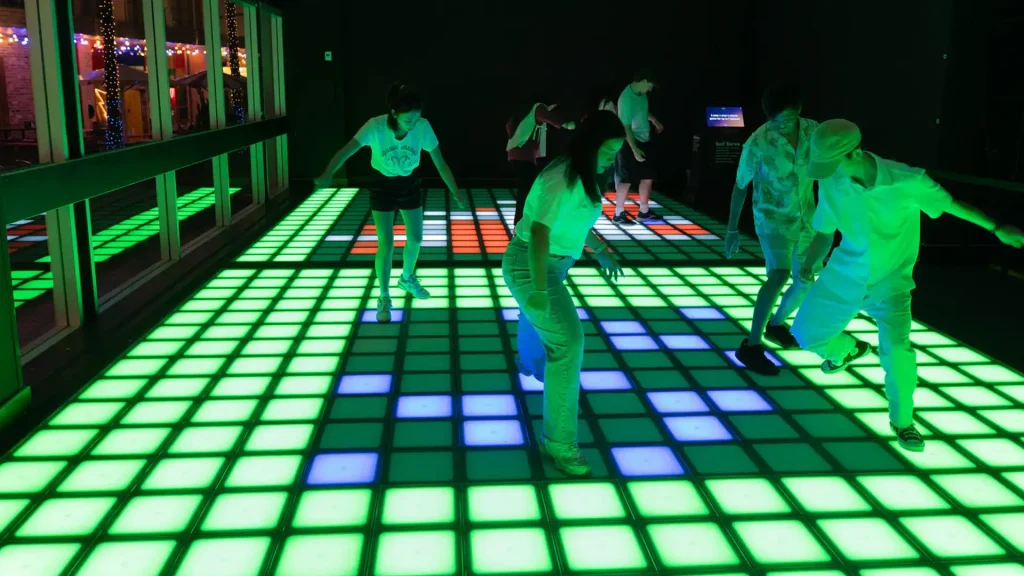
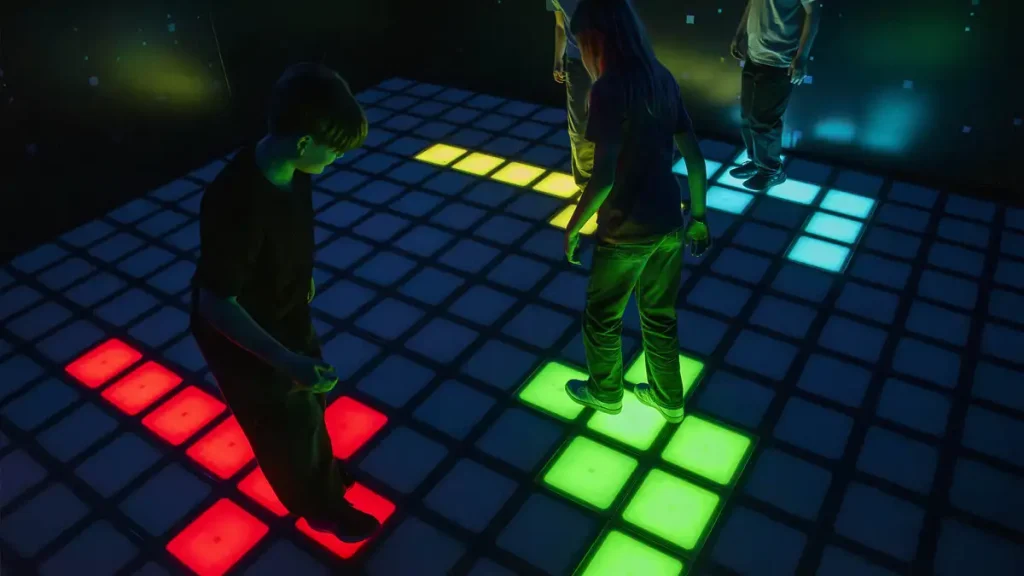
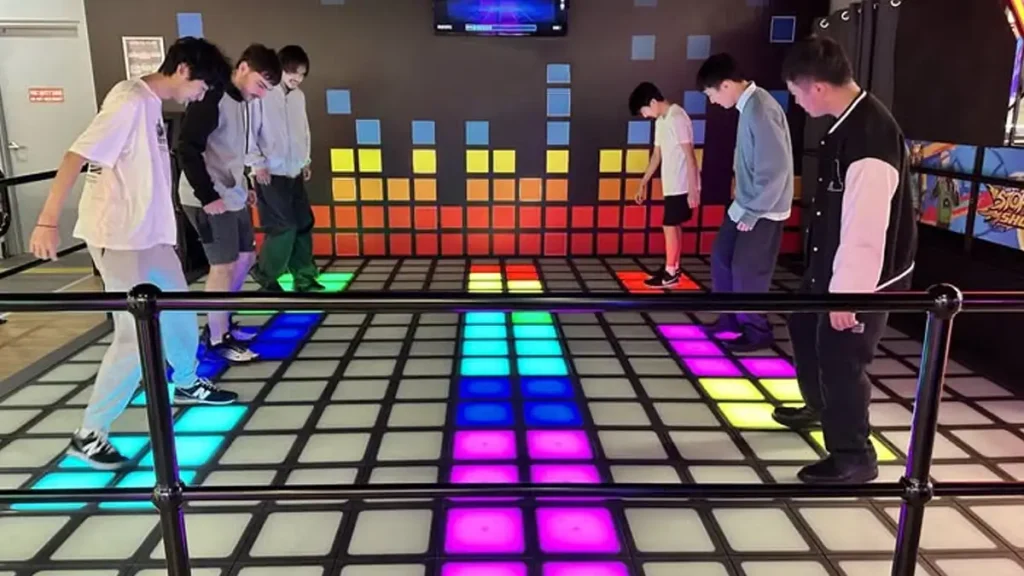
The interactive game floor is the primary walk-in conversion driver. Its visibility from outside the venue — players running across illuminated LED tiles — converts passing foot traffic into paying customers without advertising spend. Placement at the venue entrance is one of the highest-impact active gaming room ROI decisions available to an operator.
The push button game wall drives replay rate. Sessions end in under two minutes. Failure is specific — a missed button, a wrong pattern, a mistimed press. Players replay immediately because the correction feels achievable. High replay rate extends session length, which improves active gaming room ROI through secondary spending and stronger perceived value.
The commercial laser maze extends session length for players who fatigue quickly in high-speed rooms. A venue where every room requires maximum physical effort will lose some visitors before their session ends. The laser maze creates a lower-intensity challenge that keeps more players engaged for the full session duration.
The interactive hoops game improves corporate and teenage group booking conversion. The competitive format — clear winner, clear rematch motivation — appeals specifically to audiences that want direct competitive outcomes rather than cooperative gameplay. This makes it a meaningful contributor to the group booking ratio that drives active gaming room ROI.
The evil eyes hide game drives referral traffic and repeat visits through post-session word-of-mouth. Players who struggle in the hide room — and most do, regardless of performance in other rooms — have a specific and unusual reason to return. Venues we have worked with consistently find that the hide room is the attraction guests describe most specifically when recommending the venue to others.
The interactive climbing wall reduces customer acquisition cost through social media content generation. Vertical challenge produces visually distinctive content that players share more readily than floor-based games. Lower organic acquisition cost is a direct active gaming room ROI contributor that compounds over time.
The interactive ball pipe wall improves corporate team-building rebooking rates. Its explicit team coordination requirement produces outcomes that corporate clients can describe clearly when justifying a repeat booking — which matters for venues targeting annual corporate event budgets.
Layout Decisions That Operators Underestimate
Layout is the most underestimated variable in active gaming room ROI. Most operators treat it as secondary to equipment selection. In practice, the layout determines how the equipment performs.
The three layout decisions with the highest active gaming room ROI impact are anchor placement, player flow design, and waiting area sightlines.
Anchor placement at the entrance means the interactive game floor is visible to people who have not yet decided to enter. That visibility converts ambient foot traffic into paying customers without any active marketing effort. Moving the floor to an interior zone removes this effect entirely — the venue now has to work harder to attract the same number of walk-in visitors.
Player flow design determines whether groups move naturally between rooms or require staff direction. A venue where players can complete a full rotation without asking where to go next generates longer average sessions than one where unclear circulation causes groups to skip rooms or leave early.
Waiting area sightlines determine whether time spent waiting becomes pre-session excitement or frustration. A waiting area facing the game floor creates anticipation that improves the experience rating of the session that follows, even before the session has started. That improvement in perceived experience quality shows up in repeat visit rates and referral behavior — both of which affect long-term active gaming room ROI.
For venue planning by size, our interactive gaming room layout guide covers room combination and circulation recommendations from 200㎡ to 500㎡.
Planning an Active Gaming Room for Maximum ROI
Planning an active gaming room is not only about selecting equipment.
In most projects we work on, operators already know they want an interactive attraction. The real challenge is deciding which room types create the strongest commercial performance within the available space — and how the layout, booking model, and game mix work together to maximize active gaming room ROI from the first month of operation.
Before making equipment decisions, it is worth reviewing:
- Which game mix matches your target audience and revenue model
- Whether your layout supports continuous room rotation during peak hours
- How many simultaneous groups your venue can handle at full capacity
- Which attractions generate repeat visits rather than one-time play
- How your venue can increase group bookings without increasing floor space
If you already have a floor plan, send it to us. We will help review your room combination, player circulation, equipment selection, and overall active gaming room ROI strategy based on your venue size and business goals.
→ Contact us on WhatsApp
→ View our Interactive Game Floor product page
→ Read our Interactive Gaming Room Layout Guide
→ Compare Activate Games vs Independent Active Gaming Room
Active Gaming Room ROI FAQ
Why do some active gaming rooms achieve ROI faster than others with similar equipment?
The difference is almost never the equipment itself. Faster active gaming room ROI comes from three operational factors: higher peak hour capacity utilization, a stronger group booking ratio, and game mixes that generate longer average sessions. Venues that address all three from opening day consistently outperform those that rely primarily on walk-in traffic and single-visit revenue.
What is the most important layout decision for active gaming room ROI?
Anchor attraction placement at the venue entrance is the single highest-impact layout decision for active gaming room ROI. An interactive game floor visible from outside the venue converts passing foot traffic into paying customers without advertising spend. This effect is eliminated when the floor is placed in an interior location — and the resulting difference in walk-in conversion compounds significantly over the first year of operation.
How does game mix affect active gaming room ROI beyond individual attraction performance?
Game mix affects active gaming room ROI primarily through session length and group booking appeal. A mix covering four or more distinct player states keeps more visitors engaged for the full session duration. A mix that includes corporate-friendly competitive formats — hoops, push wall — improves group booking conversion. A mix that includes high word-of-mouth rooms — the hide game — improves referral rates. Each of these effects is independent but cumulative.
How can operators increase active gaming room ROI without expanding the venue?
The highest-leverage improvements to active gaming room ROI that do not require additional floor space are: increasing the group booking ratio through active sales of birthday and corporate packages, improving peak hour rotation through better player flow design, and building repeat visit mechanics through difficulty progression and leaderboard visibility. All three can be implemented in an existing venue without equipment changes.
What role does group booking play in active gaming room ROI?
Group bookings typically represent 40 to 60 percent of total revenue in active gaming venues while accounting for only 20 to 30 percent of total visitor volume. That revenue concentration makes group booking development the highest-return investment available to an active gaming room operator. Birthday parties create multi-year customer relationships through repeat bookings. Corporate events create annual recurring revenue through team-building contracts.
Can a small active gaming room achieve strong ROI?
Yes. A four-room active gaming room in 200 to 280㎡ can achieve strong active gaming room ROI when the game mix covers four distinct player states, the layout supports efficient rotation, and group bookings are developed from opening. Venue size determines capacity ceiling, not ROI potential. Small venues with well-designed game mixes and active booking programs consistently outperform larger venues with poorly selected attraction combinations and passive marketing approaches.