
Evil Eyes Hide Game: Why Stealth Rooms Work in Active Gaming Venues (2026)
Most active gaming venues discover the same thing after the first few months of operation.
The floor game carries the session. The laser maze creates the dramatic moments. But the evil eyes hide game is often where groups keep coming back.
Not because it is the fastest or the loudest room. Because it is the one room that genuinely surprised them.
Several operators we have worked with noticed this pattern early. Guests leave the venue talking about the evil eyes hide game instead of the attraction they expected to enjoy most. A near-miss behind a pillar. A teammate who moved at exactly the wrong second. A sequence completed when the eye was already turning back. Those moments are what people describe when they tell others about a venue — and that word-of-mouth is part of what makes this game type worth including in a serious multi-room active gaming project.
What Is an Evil Eyes Hide Game?
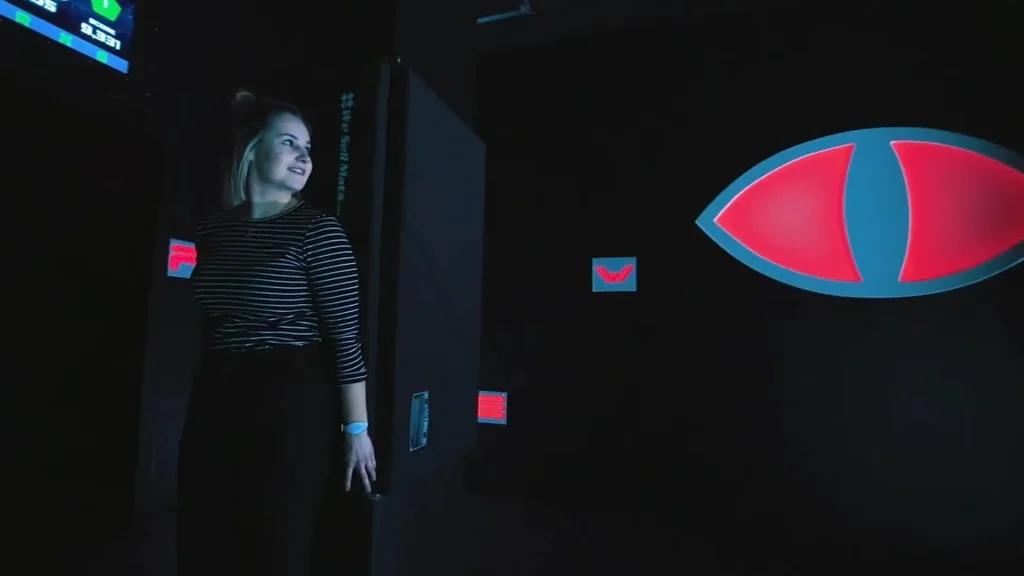
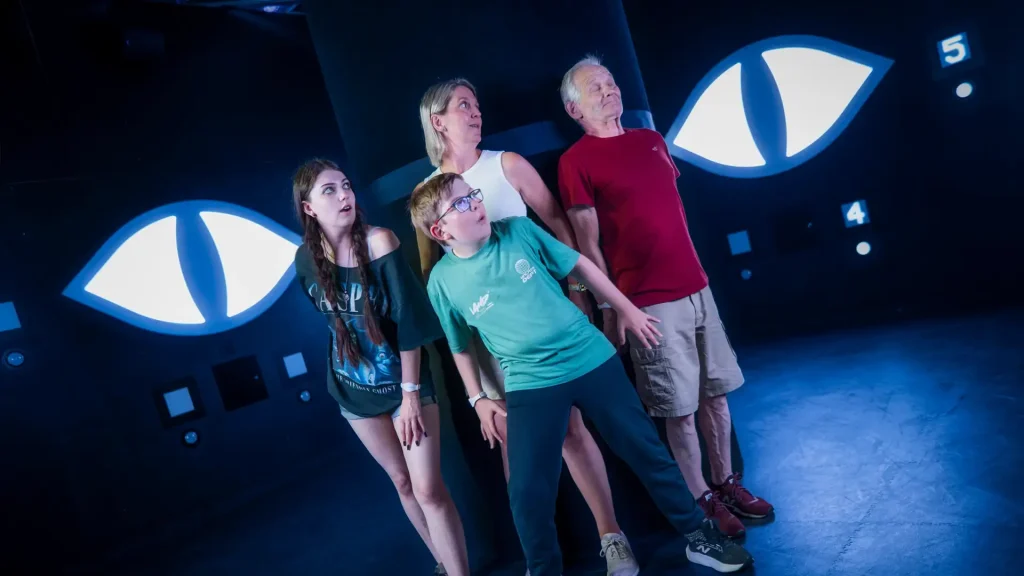
An evil eyes hide game is a stealth-based challenge room where players complete button sequence tasks on wall-mounted screens while avoiding detection by motion-sensing electronic eyes installed throughout the space.
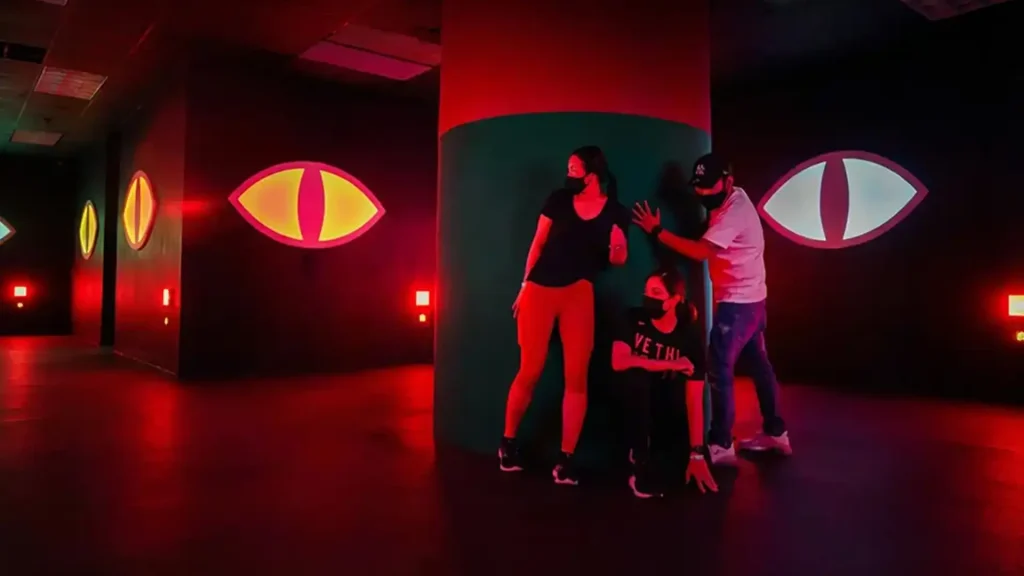
The concept is a commercial reimagining of hide and seek. Players race around the room to complete sequences, but glowing eyes mounted across the walls are watching every move. Players use pillars positioned around the room to conceal themselves, moving only when the eyes are closed or scanning away.
Wall screens display numbered targets or sequences that players must press in order within a time limit. When an eye opens and detects a player who is not behind a pillar, that player loses health points. In multiplayer mode, if any player is caught or presses the wrong target, the whole team takes the penalty — which is what turns the evil eyes hide game from a solo reaction test into a genuine team challenge.
The atmosphere is unlike any other room type in an active gaming venue. The room is quieter. Players communicate in low voices. Someone watches the eyes while someone else moves toward the next screen. The tension is real — not because anything dangerous is happening, but because the evil eyes hide game creates genuine stakes around being seen.
That atmosphere is what generates the stories players take out of the room and share with other people.
Why the Evil Eyes Hide Game Creates Strong Replay Value
Most active gaming attractions reward speed. The evil eyes hide game rewards the opposite.
Players who dominated the interactive game floor often struggle in the evil eyes hide game because moving fast is a liability when the eyes are scanning. That unexpected difficulty is one of the strongest replay drivers specific to this game type. Players who excel everywhere else have a very particular reason to come back.
The failure is always specific. A team that loses health points knows exactly what went wrong — someone moved too early, someone missed a sequence, someone chose the wrong pillar at the wrong moment. That specificity makes improvement feel achievable, which is the structural mechanism behind repeat play.
Difficulty also scales with experience in a way that keeps the game interesting across multiple visits. Early sessions are chaotic. By the third attempt, teams start assigning roles: one person watches the eyes and signals the others, one person moves to complete sequences, one person positions at the next target. That coordination improvement is visible in the score, which creates concrete goals that pull groups back.
In venues we have worked with, the evil eyes hide game often develops a smaller but dedicated group of returning players who come back specifically to improve their performance in that room — independent of how they engage with the rest of the venue.
How the Evil Eyes Hide Game Fits the Active Gaming Room Model
The evil eyes hide game works as one module inside a complete room rotation, not as a standalone attraction.
Players buy session time and move between challenge rooms throughout their visit. Each room covers a different type of engagement. The interactive game floor handles full-body movement and the highest player volume. The laser maze handles precision and patience. The push button game wall handles reaction speed and team coordination. The evil eyes hide game handles stealth, timing, and strategy.
That coverage of different player states is what creates the variety that drives repeat visits. A session that moves from the floor game to the push wall to the evil eyes hide game asks players to completely change their physical and mental approach three times. That contrast keeps groups engaged from the first minute to the last.
The footprint requirements for an evil eyes hide game are manageable. The room needs enough floor space for pillars to be positioned at useful intervals, with wall screens distributed around the perimeter. A minimum of approximately four by four meters supports smooth gameplay. Larger rooms accommodate more players and more complex movement patterns.
Pillar placement is more important than operators usually expect. Pillars need to create genuine concealment while requiring players to commit to a position. Too few pillars makes the game unfairly difficult. Pillars placed too close to the screens removes the risk of moving. Getting the layout right is worth discussing with the manufacturer before finalizing the room design.
For full venue planning, our how to build an interactive gaming room guide covers the complete room combination process.
How the Evil Eyes Hide Game Performs Across Booking Types
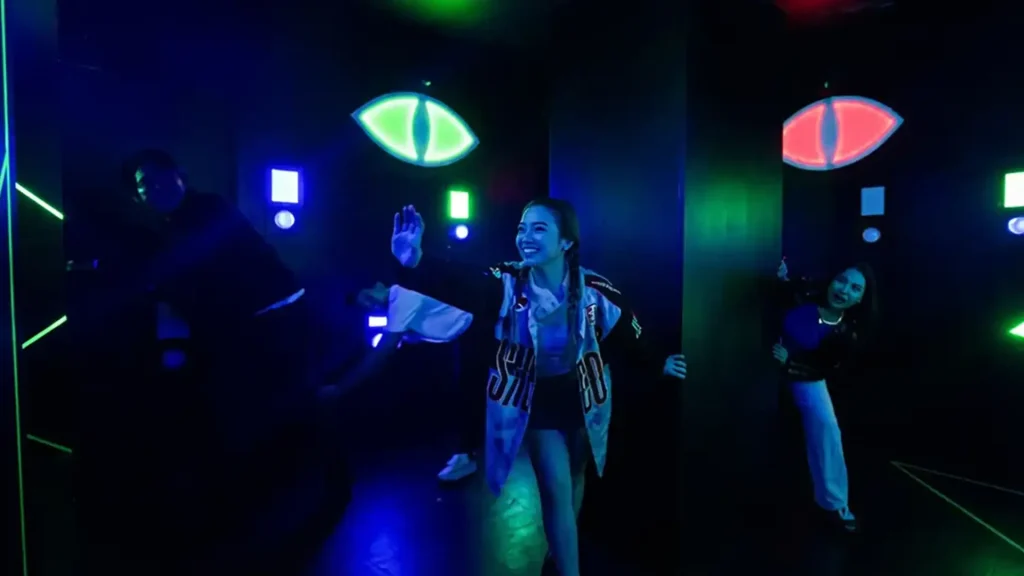
Birthday parties. The evil eyes hide game tends to generate the most conversation of any room during birthday sessions. Groups argue about who got caught, who gave the wrong signal, who made the clutch move at the last second. That social energy extends dwell time and increases the likelihood that groups return or refer other bookings.
Corporate team-building. The evil eyes hide game is particularly effective for corporate groups because success is explicitly tied to communication and role assignment. A group that enters without a plan loses health points quickly. The same group with an assigned lookout, a designated screen-runner, and a clear signaling system will complete levels that felt impossible on the first attempt. That improvement is directly attributable to how well the team communicated — which is exactly what corporate clients pay for.
School groups. The hide-and-seek concept is universally familiar, and the evil eyes hide game version adds enough novelty to feel distinct from anything students have encountered before. Lower difficulty settings work well for younger visitors without changing the hardware configuration.
Regular visitors. The evil eyes hide game holds returning players better than most attraction types because the skill ceiling is different. Becoming genuinely good at it requires reading eye patterns, developing communication shorthand with teammates, and staying calm under pressure. Players who develop those skills feel a kind of mastery that keeps them coming back.
What Makes an Evil Eyes Hide Game Perform Well Long-Term
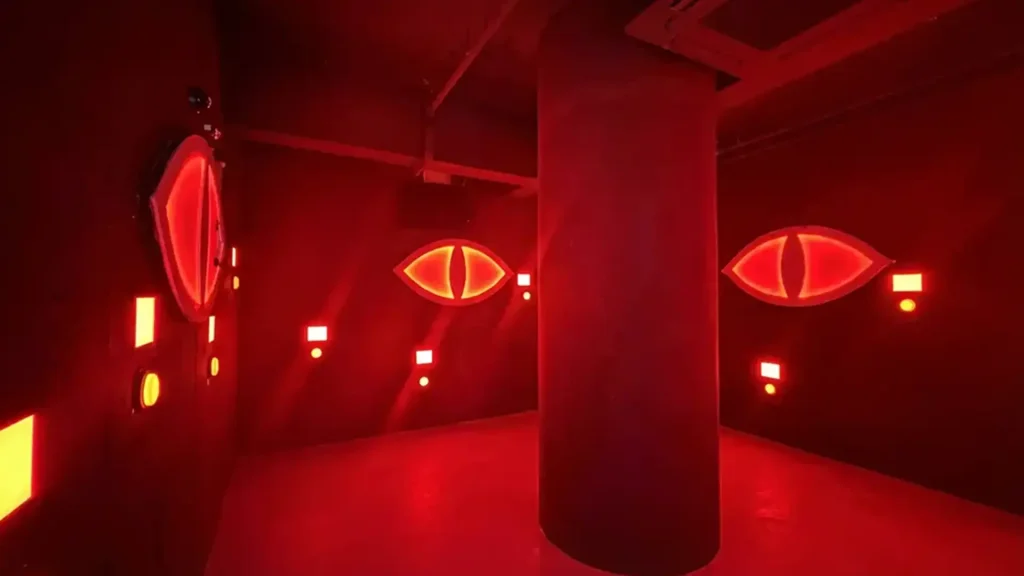
Game mode variety. A room with only one challenge mode will feel familiar to regular visitors within a few weeks. Systems that support multiple modes — sequence challenges, question-and-answer formats, cooperative rounds, and varied eye scan patterns — give returning players something new to work toward.
Configurable eye behavior. The tension of the evil eyes hide game depends on the eyes being genuinely unpredictable. If players memorize a fixed scan pattern after two sessions, the challenge disappears. Systems with adjustable eye speed, scan angle, and detection sensitivity keep the game honest for experienced players.
Room atmosphere. The evil eyes hide game is the only active gaming attraction where lighting, sound, and ambient design directly affect gameplay quality. A room that is too bright or too noisy from adjacent spaces reduces the tension that makes the game compelling. Operators who invest in the atmosphere of this room specifically see measurably stronger player feedback from it.
Staff briefing before entry. A thirty-second explanation — move only when the eyes are closed — transforms the first session from confusion to genuine engagement. Unlike the floor game, where players understand the concept within seconds, the evil eyes hide game benefits from a brief orientation before the timer starts.
Common Planning Mistakes
Undersizing the room. A room that is too small removes the strategic element. Players cannot genuinely hide — they can only crouch. The game becomes frustrating rather than tense. Confirming minimum dimensions before designing the space avoids this entirely.
Treating it as optional. Operators who leave the evil eyes hide game out of a six or seven room venue to reduce initial cost typically find the game mix feels one-dimensional. The contrast the hide room creates with faster room types is part of what makes a full session feel complete.
Ignoring software depth. A system with limited game modes and no update path will exhaust its novelty faster than the venue needs it to. Before purchasing, confirm how many modes are included, whether difficulty can be adjusted per session, and whether new content can be added after installation.
Ready to Add an Evil Eyes Hide Game to Your Venue?
A well-planned evil eyes hide game room is consistently one of the most talked-about attractions in multi-room active gaming venues. It serves player types and booking categories that faster rooms do not cover, and it adds the strategic dimension that turns a good game mix into a complete one.
Send us your floor plan and project details. We will review:
- Room dimensions and pillar layout options
- Game mode configuration for your target audience
- How the evil eyes hide game connects to your full attraction mix
- Custom branding and theming options
- Installation requirements and timeline
View our Evil Eyes Hide Game product page for full configuration details Contact us on WhatsApp to discuss your project directly
Still building out your full venue plan? Our interactive gaming room games guide covers the complete attraction mix and how each room type contributes to session engagement and ROI.
Evil Eyes Hide Game FAQ
What is an evil eyes hide game? An evil eyes hide game is a stealth-based challenge room where players complete button sequences on wall screens while avoiding detection by motion-sensing electronic eyes. Players use pillars to conceal themselves and move only when the eyes are closed or scanning away. It tests timing, observation, and team coordination rather than speed.
How is the evil eyes hide game different from other active gaming attractions? Most active gaming attractions reward speed and reaction time. The evil eyes hide game rewards patience, strategic movement, and team communication. Players who excel at faster room types often find the evil eyes hide game unexpectedly difficult, which is one of the main drivers of replay behavior specific to this room.
How many players can use an evil eyes hide game room at once? Most commercial evil eyes hide game rooms support two to six simultaneous players. Multiplayer formats introduce role assignment as a core mechanic — one player watches the eyes, another moves to complete targets. Larger groups can rotate through in team sessions.
What room size does an evil eyes hide game require? A minimum of approximately four by four meters supports smooth gameplay. Larger rooms allow more pillars, more wall screens, and more complex movement patterns. Confirm minimum dimensions with the manufacturer before finalizing the room layout.
Does the evil eyes hide game work for birthday parties and corporate groups? Very effectively for both. Birthday groups find it generates the most memorable moments of the session. Corporate groups benefit directly from the team coordination requirement — the performance gap between the first and third attempt is attributable to how well the team communicated.
Can the eye behavior and game modes be customized? Yes. Commercial evil eyes hide game systems support customization of eye scan patterns, detection sensitivity, game duration, difficulty levels, and game modes. Visual design, sound, and branding can also be configured to match the venue theme.
Ready to Add an Evil Eyes Hide Game to Your Active Gaming Venue?
An Evil Eyes Hide game is not designed to replace your anchor attraction. Its role is to add a completely different player experience to the room rotation.
While interactive game floors focus on movement, laser mazes reward precision, and push button game walls test reaction speed, a hide room introduces stealth, timing, observation, and team strategy. This variety is often what keeps active gaming venues engaging after the first visit.
If you are planning a new active gaming venue, upgrading an existing FEC, or adding more challenge rooms to increase replay value, the first step is understanding how the hide room fits into your overall attraction mix.
Our team can help you evaluate:
✔ Room size requirements
✔ Recommended player capacity
✔ Hide room layout planning
✔ Game mode customization options
✔ Integration with interactive game floors, laser mazes, push button walls, and other active gaming attractions
✔ Venue planning for FECs, malls, trampoline parks, and indoor entertainment centers
Before investing in equipment, send us your floor plan or project requirements. We can help determine whether an Evil Eyes Hide game is the right fit for your venue and how it can work alongside your other active gaming rooms.