
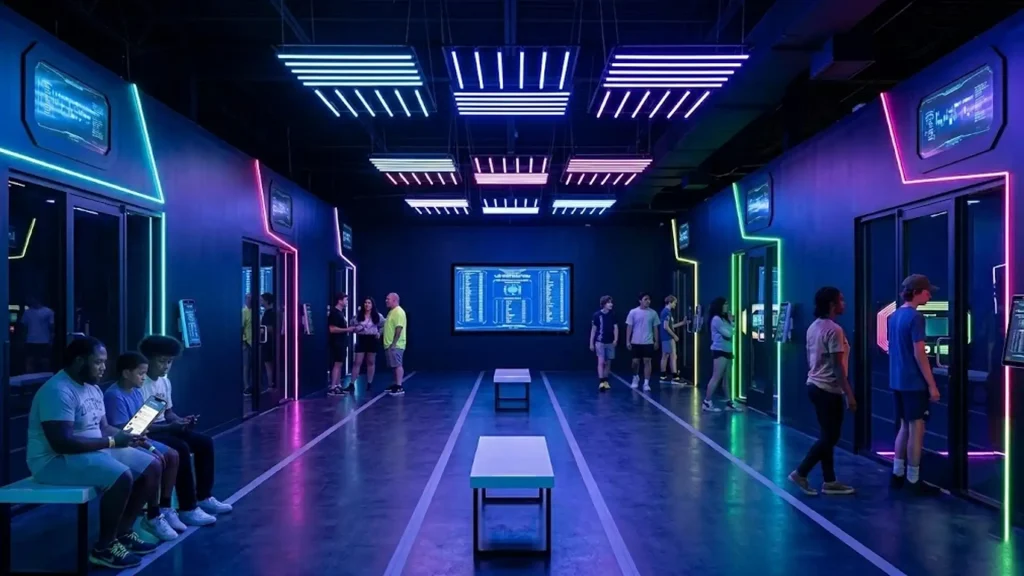
What Games Are Inside an Interactive Gaming Room? Complete Guide for FEC Operators (2026)
Interactive gaming room games, also searched as interactive game room attractions or active game rooms, are physical-digital attractions where players move, react, compete, hide, climb, press buttons, avoid lasers, and complete challenges inside a connected game space. For FEC operators, the goal is not just to install exciting equipment, but to create a room that drives repeat visits, group bookings, birthday parties, and strong revenue per square meter.
A few years ago, one of our clients in New Zealand came to us with a specific problem.
She had a 150㎡ space inside a leisure complex, a workable budget, and a clear goal: she wanted families to come back every month, not just once a year.
She had looked at traditional arcade machines. She had looked at soft play. Neither felt right for her audience, which skewed toward 8-to-16-year-olds who were increasingly hard to impress.
What she built was an interactive gaming room: an LED game floor, a laser maze, and a Hide-style sensor challenge. Within six months, the venue had players posting score records online and booking repeat sessions to beat each other.
That is what well-planned interactive gaming room games actually do. They do not just entertain once — they create reasons to return.
What Is an Interactive Game Room or Active Gaming Room?
An interactive game room is a commercial entertainment space where players physically interact with digital systems. Instead of holding a controller and staring at a screen, players move through a room where the floor, walls, lights, sensors, buttons, and scoring system respond to what they do.
The defining idea is simple: the player becomes the controller.
A room may include:
- interactive game floor
- pixel floor game
- interactive LED floor
- LED floor grid
- laser maze game
- Hide-style stealth room
- push button game wall
- interactive climbing wall
- interactive hoops game
- motion platform game
- team scoring screen
This format became more visible as brands like Activate Games expanded active gaming centers. Industry coverage from Blooloop describes active gaming as a physical, team-based experience that combines movement and game logic. Independent FEC operators can use the same market direction without copying one brand exactly.
For operators, the important point is this: an interactive gaming room is not one product. It is a combination of game types, each with its own space requirement, audience fit, and revenue contribution.
Why Interactive Gaming Room Games Are Growing So Fast
Interactive gaming room games are growing because they solve several problems that traditional FEC attractions often struggle with.
They create physical activity, replay value, group competition, visible energy, and strong revenue potential from controlled indoor space.
Physical Activity
Modern visitors increasingly want attractions that involve movement.
Arcade machines still have value, but many families, teenagers, and groups now prefer experiences where they can run, dodge, step, climb, press, and react.
That is why active game rooms are becoming more attractive to FEC operators. They give players a reason to move and compete together.
Replay Value
Replay value is one of the strongest reasons these attractions work.
A good interactive game room does not only provide one challenge. It provides scores, levels, timers, team battles, harder modes, and rotating missions.
Visitors return because they want to beat a previous score, unlock a harder level, compete with friends, try a new game mode, improve reaction speed, or win as a team.
This is where interactive gaming room games outperform many static attractions.
Group Competition
Group competition creates energy.
When players compete in teams, the room becomes social. Friends cheer. Parents record videos. Birthday groups get excited. Teenagers replay because they want a better score.
Group gameplay also helps commercial operation because it supports higher throughput than one-player attractions.
Social Media Appeal
Interactive rooms are naturally visual.
LED floors flash. Laser beams glow. Players run and react. Scoreboards change. Teams celebrate.
This makes interactive game room attractions easier to share on TikTok, Instagram, YouTube Shorts, and local venue marketing pages.
High Revenue Per Square Foot
A well-planned interactive gaming room can produce strong revenue per square foot because it supports walk-in sessions, birthday parties, group bookings, school trips, team-building events, membership programs, and premium challenge packages.
If you want to calculate the investment side, read our Interactive Game Floor Cost guide for ROI, throughput, and payback planning.
Pixel Floor Games and Interactive Floor Games: The Core Attraction
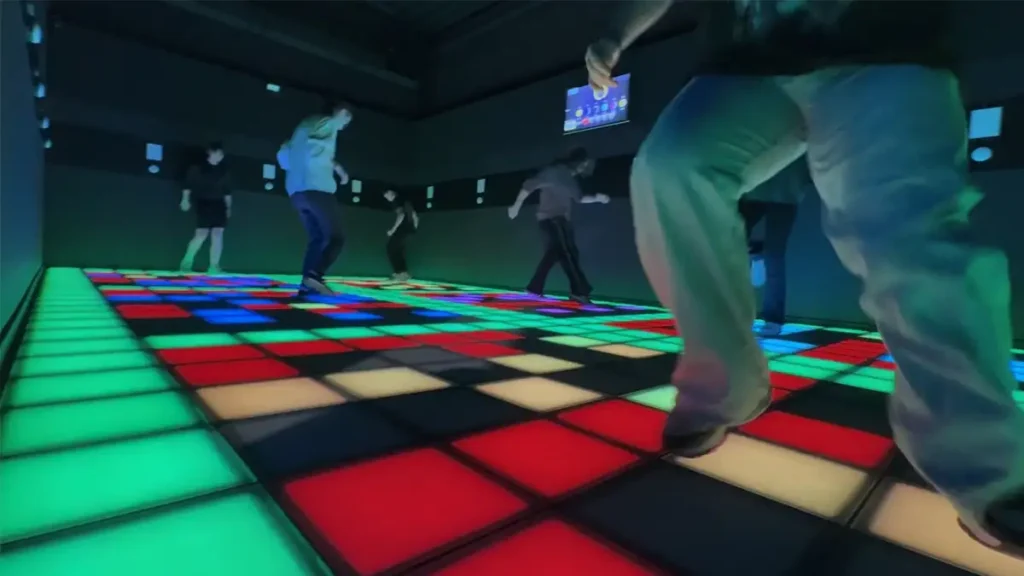
Interactive floor games are usually the foundation of the room.
They are visible, easy to understand, and flexible enough to support different age groups and game modes.
What Is an Interactive Game Floor?
An interactive game floor is a sensor-based LED floor system that reacts to player movement.
Players step on tiles, avoid colors, chase lights, solve patterns, or compete in teams. The floor detects movement and responds through light, sound, scoring, and game logic.
A commercial Interactive Game Floor can become the anchor attraction inside a larger interactive gaming room.
Pixel Floor Game and Other Popular Names
The term pixel floor is growing because many venues use it to describe interactive LED floor systems built from light-up tiles. A pixel floor game usually focuses on short, repeatable rounds, group play, and visible movement.
Buyers may also search for:
- interactive LED floor
- LED floor grid
- pixel floor game
- interactive floor games
- mega grid game
- super grid game
- activate floor
- active gaming floor
- interactive pixels LED floor game
These names often describe similar concepts: a light-based, sensor-driven floor attraction where players interact through movement.
Popular Game Modes
Popular interactive floor games include:
| Game Mode | How It Works | Best For |
|---|---|---|
| Floor Is Lava Game | Players avoid dangerous colored tiles | Children, families, parties |
| Color Chase | Players step on target colors quickly | Fast turnover |
| Memory Challenge | Players repeat light patterns | Family play |
| Reaction Training | Players respond to flashing tiles | Teenagers |
| Team Battle | Teams compete for score zones | Parties and groups |
One of the easiest game modes for visitors to understand is the floor is lava game. Players must avoid dangerous tiles while stepping only on safe zones. This simple rule makes it ideal for children, birthday parties, and family groups.
Why Every FEC Starts With an Interactive Game Floor
Most FEC operators start with an interactive game floor because it offers the best balance of visibility, flexibility, and commercial value.
It works for children, teenagers, families, and group bookings. It also creates visible movement in the room, which helps attract spectators.
For a detailed investment breakdown, read our Interactive Game Floor Cost & ROI guide.
Laser Maze and Laser Maze Game Attractions

Laser maze games are among the most searched interactive attractions in this category, and they work well inside FECs because the rules are instantly clear: avoid the beams, finish the route, and beat the clock.
How Laser Maze Works
A laser maze room uses laser beams arranged across a corridor or open space. Players must move through the room without breaking the beams.
They may need to crawl, duck, twist sideways, step over beams, complete a timed route, and press a finish button.
When a beam is broken, the system registers a penalty. The goal is to finish as quickly as possible with the fewest mistakes.
Most commercial laser maze games include timers, difficulty levels, score displays, and leaderboards.
Why Laser Maze Works for Families
Laser maze requires no special strength or training.
A child and a parent can understand the challenge instantly. That makes laser maze one of the most family-friendly interactive gaming room games.
It also creates natural spectator moments. When someone moves carefully through the beams and accidentally triggers one, the people watching react.
Best Venues for Laser Maze
Laser maze games fit well in FECs, shopping malls, indoor playgrounds, team-building centers, adventure parks, and active gaming venues.
For smaller rooms, laser maze can be a compact secondary attraction. For larger rooms, it can become one station inside a multi-game route.
Evil Eyes Hide Game: A Stealth Challenge for Interactive Gaming Rooms
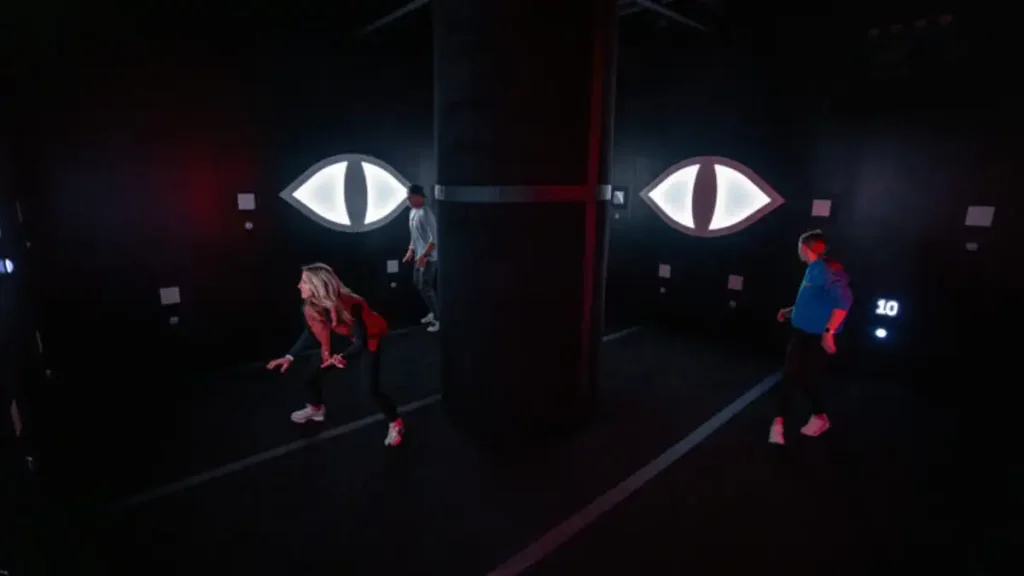
Evil Eyes Hide is a stealth-style interactive game designed for active gaming rooms, FEC attractions, and team challenge venues. Unlike fast reaction games where players only run, jump, or press buttons, this game adds timing, observation, hiding, and route planning into the room experience.
For operators, the value of Evil Eyes Hide is that it creates a different emotional rhythm inside the interactive gaming room. After players finish high-energy floor games or laser maze challenges, a stealth-based game gives them a slower but more strategic challenge.
If you are planning a room with multiple interactive gaming room games, an Evil Eyes Hide interactive game can work as a strong secondary attraction alongside the interactive game floor, push button wall, and laser maze.
How Evil Eyes Hide Works
In an Evil Eyes Hide game, players move through a room while trying to avoid detection from “eyes” displayed through lights, sensors, screens, or projection zones.
The room may include hiding pillars, wall targets, safe zones, timed sequences, sound alerts, and score penalties. Players need to move from cover to target areas, complete tasks, and return to safety before being detected.
The objective is not only speed. Players must observe the scanning pattern, plan their movement, wait for the right timing, and coordinate with teammates.
This makes the game feel different from a pixel floor game or a laser maze game.
Why Evil Eyes Hide Creates Strong Replay Value
Evil Eyes Hide creates replay value because players feel they can improve with better timing and strategy.
At lower levels, players learn the basic rules. At higher levels, detection zones can become faster, less predictable, or more demanding. Groups also develop strategies: one player watches the eye movement, another calls the next target, and another moves when the timing is safe.
That teamwork is exactly what makes interactive gaming room games valuable for FEC operators. Players do not only finish a challenge. They discuss it, replay it, and try to beat their previous result.
Best Fit for FEC Operators
Evil Eyes Hide works best as a secondary or signature room inside an interactive gaming room.
It is suitable for:
- FECs
- active game rooms
- shopping mall attractions
- team-building centers
- birthday party venues
- teen activity zones
It is especially useful when the operator wants more variety than only LED floor games and wall button challenges. A room that combines an interactive game floor, laser maze, push button wall, and Evil Eyes Hide feels more complete because each game creates a different type of challenge.
Interactive Climbing Walls
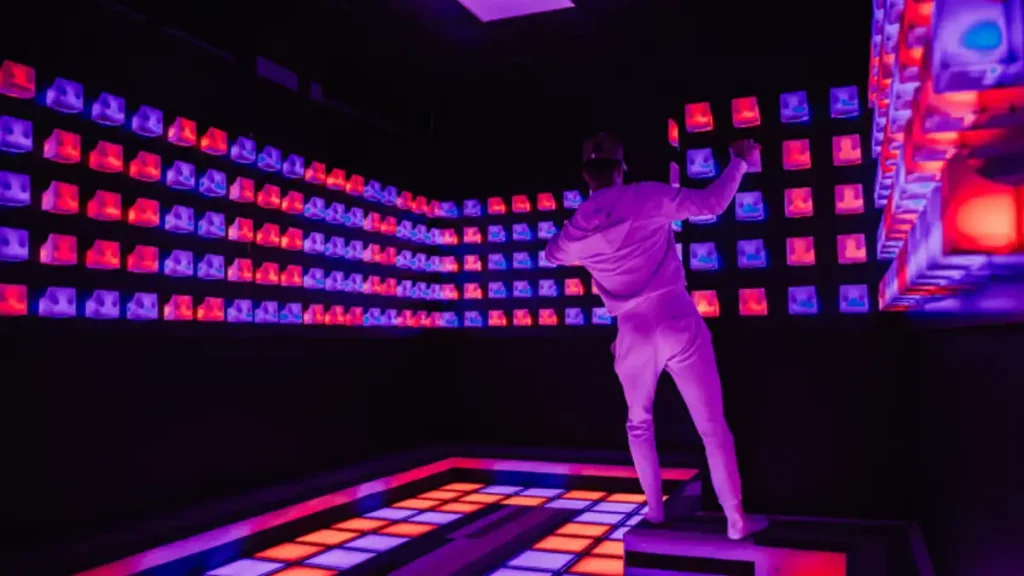
Interactive climbing walls add vertical movement to the room.
This is important because many interactive gaming room games happen on the floor or wall surface. A climbing wall changes the physical rhythm of the space.
How Interactive Climbing Walls Work
An interactive climbing wall combines climbing holds with LED targets, sensors, or projection effects.
Players may touch lit targets, climb in a sequence, race another player, reach score zones, complete time challenges, or follow a projected route.
Benefits for Family Entertainment Centers
Interactive climbing walls help FECs attract older children and teenagers.
They provide a stronger physical challenge, clear visual movement, competition, event value, wall-space utilization, and better replay than static climbing.
Interactive Climbing Wall vs Traditional Climbing Wall
| Feature | Traditional Climbing Wall | Interactive Climbing Wall |
|---|---|---|
| Gameplay | Climb up and down | Climb with targets, scores, missions |
| Replay Value | Medium | Higher |
| Digital Feedback | No | Yes |
| Competition | Limited | Strong |
| Event Use | Basic | Better for parties and groups |
Before installing one, operators should check ceiling height, wall structure, padding, local safety requirements, and supervision needs.
Push Button Reaction Walls
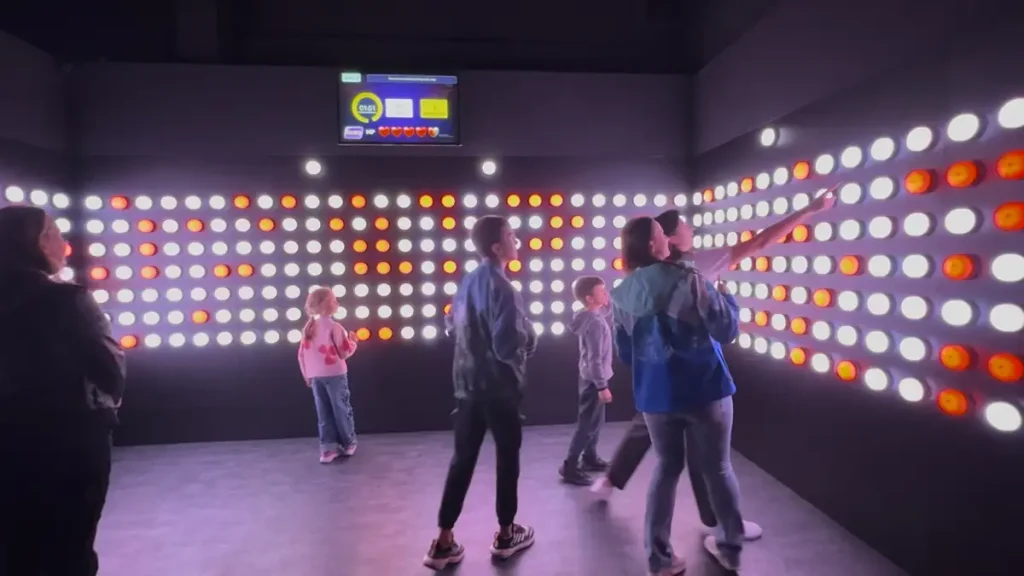
Push button walls are the workhorses of interactive gaming rooms.
They are simple, fast, competitive, and easy for guests to understand.
How Push Button Walls Work
Wall-mounted buttons or illuminated panels light up in sequences. Players press the correct button as quickly as possible.
The system measures reaction time, accuracy, total score, missed targets, team performance, and time remaining.
Why Push Button Walls Work Commercially
Push button walls have fast turnover.
A round can last 60–120 seconds, which helps during busy periods. They also fit into small wall spaces, corners, or narrow rooms.
This makes them practical interactive gaming room games for venues that need high engagement without using too much floor area.
Best Age Groups
Push button walls are suitable for children aged 6+, teenagers, families, school groups, and team-building groups.
Difficulty can be adjusted by speed, target quantity, and round time.
Interactive Hoops Challenges
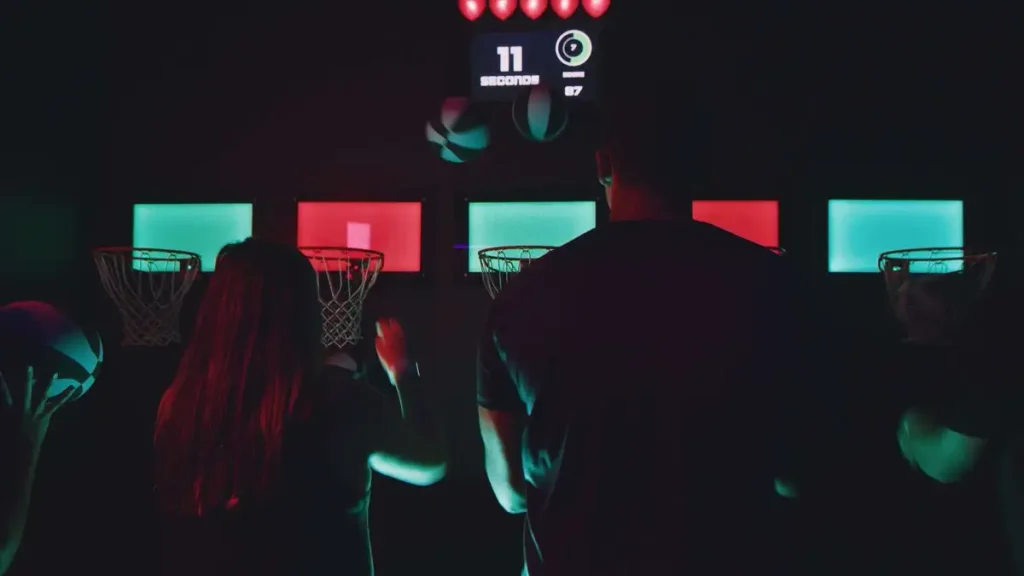
Interactive hoops games combine basketball-style shooting with digital scoring.
They are familiar, competitive, and especially attractive to teenagers.
How Interactive Hoops Works
Players shoot balls at baskets or targets. The digital system tracks successful shots and displays scores in real time.
Advanced versions may include timed rounds, moving targets, point multipliers, team modes, leaderboards, and challenge levels.
Why Teenagers Come Back
Teenagers are often harder for FECs to engage than younger children.
Interactive hoops works because it connects to a familiar skill. Players can practice, improve, compare scores, and challenge friends.
Best Locations for Hoops Games
Interactive hoops games work well in FECs, trampoline parks, shopping mall attractions, sports entertainment venues, teen activity zones, and school group centers.
They are best placed near other active attractions rather than quiet children’s areas.
Motion Platform Games
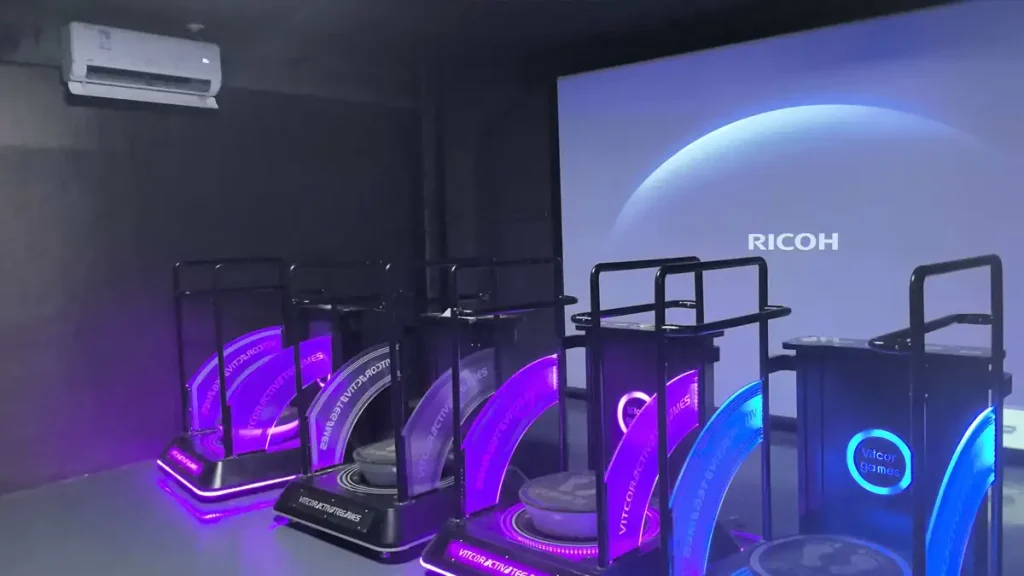
Motion platform games are usually premium attractions inside larger interactive gaming rooms. They use physical movement of the platform, such as tilting, vibration, rotation, or ride-like response, synchronized with game content.
For operators, the main question is not whether motion platforms look impressive. They usually do. The better question is whether the venue has the right audience, staffing model, safety plan, and maintenance capacity to support them.
In most first-time FEC projects, motion platforms work better as a phase-two attraction after the core room has proven revenue. Once the interactive game floor, laser maze, and wall challenges are performing consistently, a motion platform can become a premium upsell or entrance attraction.
For larger venues, motion platform games can create strong visual impact and justify higher ticket tiers, but they should not replace the core high-throughput attractions that keep the room busy.
How to Combine Interactive Game Room Attractions Commercially
Knowing each game type is useful. But the real business question is how to combine them into a room that works.
Small Rooms: 80–120㎡
A small room can support two or three core attractions.
A practical starting combination includes an interactive game floor, a laser maze or push button wall, and a scoreboard system.
This supports walk-in sessions, birthday parties, and school groups without requiring a large staff team.
Medium Rooms: 120–250㎡
A medium room can offer more variety.
A balanced combination may include an interactive game floor, laser maze, Hide-style challenge, push button wall, hoops challenge, and central scoring screen.
This size can support walk-in play, party bookings, and corporate events.
Large Projects: 250㎡+
Large FEC projects should be planned as zones rather than one simple room.
Possible zones include an LED floor game zone, stealth Hide zone, laser maze zone, reaction wall zone, climbing wall zone, hoops zone, and central scoreboard lobby.
At this scale, the key is not just equipment selection. It is player flow, queuing, supervision, and session design.
For full layout strategy, see our How to Build an Interactive Gaming Room guide.
Best Interactive Gaming Room Layout for FEC Operators
The best layout depends on the business model.
Operators should not only ask which games look exciting. They should ask how the room produces revenue.
Throughput
Throughput means how many players can complete sessions per hour.
A room with short, clear games can handle more visitors during peak times.
Revenue Per Visitor
Interactive gaming room games can increase revenue per visitor through premium tickets, combo packages, birthday upgrades, memberships, and private group sessions.
Group Bookings
Group bookings are important because they can fill non-peak hours.
Interactive rooms are suitable for schools, companies, youth groups, and sports teams.
Birthday Parties
Birthday parties often create strong revenue.
A room with floor games, laser maze, wall buttons, Hide-style challenges, and scoreboards can be sold as a premium party experience.
Team Building Events
Team building events work well because interactive gaming room games naturally create cooperation, competition, communication, and replayable scoring.
What FEC Operators Get Wrong When Planning the Room
After working with venue operators across multiple markets, a few mistakes appear again and again.
Buying Too Many Games at Once
Opening with seven attractions sounds impressive, but it can create problems if the venue does not have enough marketing, staffing, or foot traffic.
A better approach is often to start with three strong attractions, measure player response, add phase-two games later, and expand around proven revenue.
Underestimating Throughput
The question is not only how many games fit in the space.
The better question is: how many player sessions can the room handle per hour?
If throughput does not match visitor volume, the room may create long queues or underused equipment.
Choosing Games by Visual Appeal Only
A motion platform may look impressive in a video. But if your venue mostly serves families with children under ten, it may not be the best first investment.
Interactive gaming room games should match audience behavior, not only visual excitement.
Poor Flow Between Attractions
Visitors should know where to go next.
If players finish the game floor and then stand around unsure what to do, the room loses momentum.
A good layout creates a natural path from one attraction to the next.
Work With an Interactive Gaming Room Manufacturer
A complete interactive gaming room requires more than buying separate games.
A manufacturer should help with floor plan review, game combination, hardware configuration, software difficulty, player flow, installation planning, OEM branding, spare parts, maintenance support, and future expansion.
If you are comparing factories, read our How to Choose an Interactive Game Floor Manufacturer guide before confirming a supplier.
A reliable manufacturer should not only sell one product. They should help operators design a room that fits the venue, audience, and revenue model.
Before choosing your game mix, it helps to understand how each attraction fits into your venue layout. See our interactive gaming room layout guide for room planning by venue size.
Interactive Gaming Room Games FAQ
What games are included in an interactive gaming room?
Common interactive gaming room games include interactive game floors, pixel floor games, laser maze games, Hide-style rooms, push button walls, interactive climbing walls, hoops challenges, motion platform games, projection games, and team scoring challenges.
What is the difference between a pixel floor game and an interactive game floor?
A pixel floor game is a common market name for an interactive LED floor system made of light-up tiles. An interactive game floor is the broader product category and may include different sensor types, software modes, scoring systems, and commercial customization options.
Is a laser maze good for an interactive game room?
Yes. A laser maze is one of the easiest attractions to understand and works well as a secondary game inside an interactive game room. It supports families, teenagers, team-building groups, and birthday parties.
What is the minimum space needed for an interactive gaming room?
A small interactive gaming room can work in approximately 80–120㎡ with a game floor and one or two secondary attractions. Most commercial operators target 120–250㎡ for a stronger session-based model.
Which game type works best for birthday parties?
Team-based games work best for birthday parties. Interactive game floors, laser maze challenges, Hide rooms, and push button walls all work well when they include clear scores, team competition, and short rounds.
Can I add games to an existing room over time?
Yes. Most commercial interactive gaming room systems can be expanded. A floor can add more tiles, wall games can add panels, and new attractions can be installed later if the initial layout allows for growth.
Plan Your Interactive Gaming Room Games With a Factory Team
Every venue starts from a different point.
Some operators already have a room and need to know which games fit. Some have a budget and need to understand what it can realistically deliver. Some want to start with an interactive game floor and add laser maze, Hide, hoops, or push button wall later. Others are planning a full multi-game room from the beginning.
Send us your floor plan, room size, and target audience. We will come back with a practical game combination and investment overview — usually within one business day.