
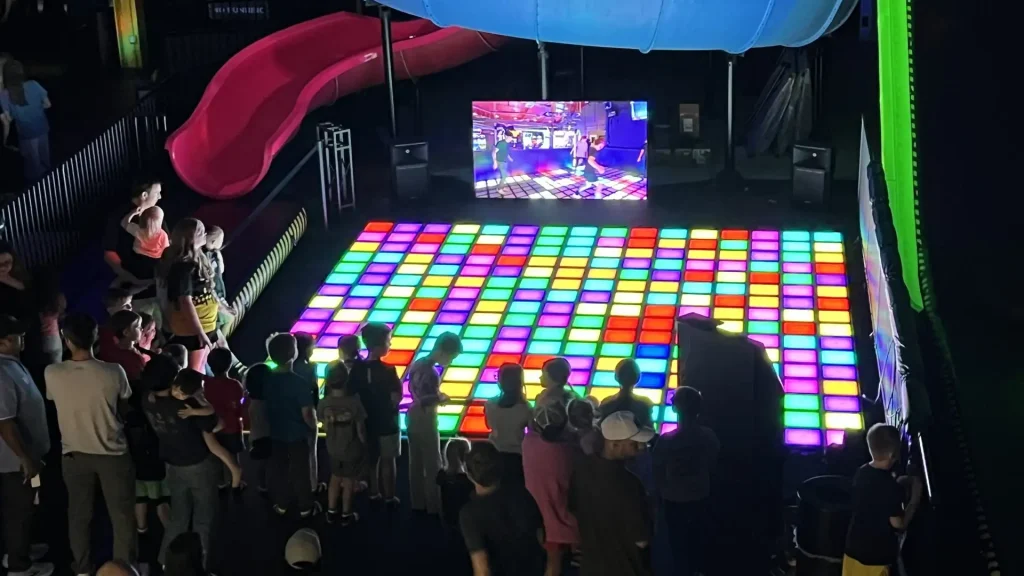
What Is Activate Games? The $37M Business Model Behind Its Global Expansion
In 2017, a company in Winnipeg, Canada opened an entertainment venue that did not fit neatly into any existing category. It was not a gym. It was not a traditional arcade. It was not an escape room. Players walked in, put on wristbands, and spent a timed session using their bodies to complete challenges inside a series of technology-driven game rooms.
That concept became Activate Games.
Today, Activate Games is one of the clearest examples of a new entertainment category: active gaming. Instead of sitting in front of a screen or playing one attraction at a time, guests move between interactive rooms that test speed, memory, teamwork, balance, accuracy, and reaction time.
For FEC owners, arcade operators, mall developers, and entertainment investors, the more important question is not only “What is Activate Games?” The real question is why the Activate Games business model works, what it costs to build this type of venue, and whether an independent operator can create a similar active gaming room without buying into a franchise system.
This article breaks down the model from an operator’s point of view: how Activate-style venues work, why the format drives repeat visits, which rooms are usually included, what cost factors matter, and how FEC operators can plan an independent active gaming venue.
Comparing the franchise cost to building your own? Jump to the franchise vs. independent cost breakdown, or skip to how to build without a franchise.
What Is Activate Games?
Activate Games is an active gaming venue where players use physical movement instead of handheld controllers to complete challenges inside multiple interactive rooms.
A typical Activate-style venue includes game rooms such as LED floor grids, laser mazes, illuminated button walls, interactive climbing walls, basketball-style target games, hide-and-seek rooms, and team coordination challenges. Players usually book a timed session, check in with a wristband or scoring system, and move through several rooms during the visit.
The product is not just one game. The product is the full room-rotation experience.
That distinction matters. A single interactive attraction can be exciting for a few minutes. A complete active gaming venue gives players multiple reasons to keep moving, compare scores, change strategies, and come back to beat previous results.
For operators, Activate Games is important because it has helped prove that active gaming can work as a commercial entertainment format, not only as a novelty attraction.
Why Is Activate Games Growing So Fast?
Activate Games has grown because it solves several problems that traditional entertainment venues often struggle with.
First, the concept is easy to understand once people see it. Short videos of players running across LED floor tiles, dodging lasers, hitting light-up buttons, or racing through team challenges are naturally shareable. This gives the format strong social media visibility.
Second, it appeals to groups. Families, birthday parties, corporate teams, teenagers, and friend groups can all play together because the rooms test different skills. One player may be strong at speed-based floor games, while another may perform better in a laser maze or memory challenge.
Third, the venue model encourages repeat visits. Players do not just finish a ride and leave. They see scores, levels, missed challenges, and rooms they want to improve in next time.
For operators, this combination is powerful: group bookings, repeat visits, short-form video exposure, and a compact attraction format that can fit inside malls, FECs, arcades, and mixed-use entertainment centers.
How the Activate Games Business Model Works
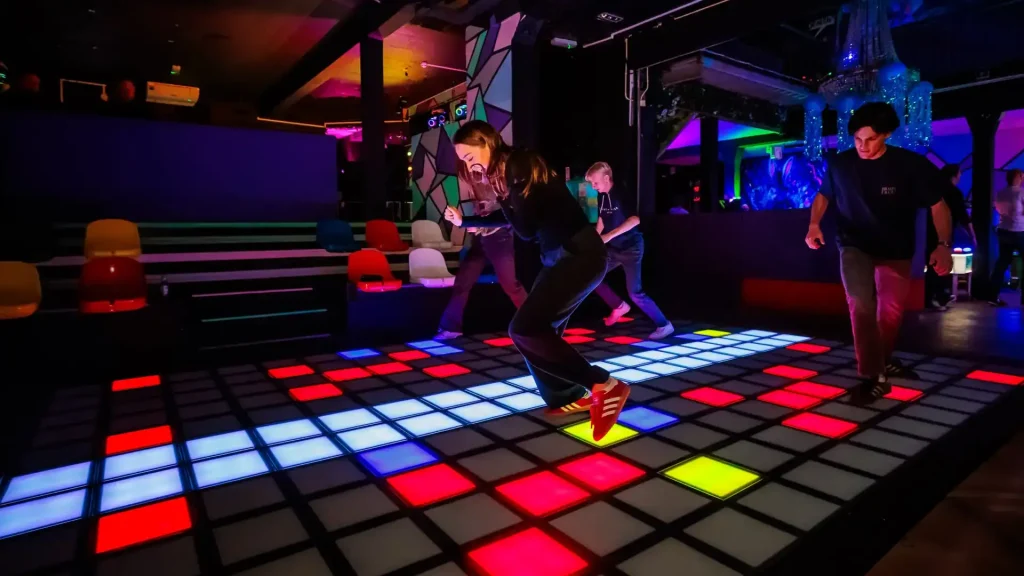
The Activate Games business model is built around four core mechanics: timed sessions, progress tracking, room variety, and social visibility.
Timed Sessions Instead of Per-Game Pricing
Traditional arcades often rely on credits, tokens, or per-game spending. Activate-style venues usually work differently. Guests pay for a timed session, often around 60 to 75 minutes, and then move between rooms during that period.
This creates a clearer revenue model for the operator. Instead of hoping each guest continues spending, the venue earns a predictable amount per player or per group at the time of booking.
Timed sessions also create urgency. Players want to use the full session, try more rooms, and make the most of their time. That keeps energy high and helps the venue manage capacity more efficiently.
RFID Wristbands and Repeat Visits
Many active gaming venues use wristbands, cards, profiles, leaderboards, or scoring systems to track performance. This is one of the most important parts of the model.
Players return because they have something specific to improve: a level they could not complete, a team score they want to beat, or a room where they performed badly compared with friends.
For an FEC operator, that is much stronger than general entertainment value. “That was fun” may create one visit. “We were so close to beating Level 5” creates a reason to return.
Multi-Room Rotation Format
An Activate-style venue is not designed around one hero attraction. It is designed around a mix of rooms that create different player states.
The interactive game floor creates fast movement and visual excitement. The laser maze rewards precision and patience. A push button wall tests reaction speed and memory. A hide room creates timing and strategy. A hoops game adds sports-style competition.
This variety allows one venue to serve different ages, fitness levels, and personality types within the same group.
Social Media-Friendly Game Design
The best active gaming rooms are easy to film. LED floors, colorful targets, laser beams, countdown timers, and visible player movement all work well in short videos.
This matters commercially. When visitors record and share gameplay, the venue receives organic marketing. The attraction itself becomes the content engine.
For independent FEC owners, this is one reason the interactive game floor is often used as the anchor attraction. It is highly visual, easy for people outside the room to understand, and strongly connected to the active gaming format.
What Game Rooms Are Used in an Activate-Style Venue?
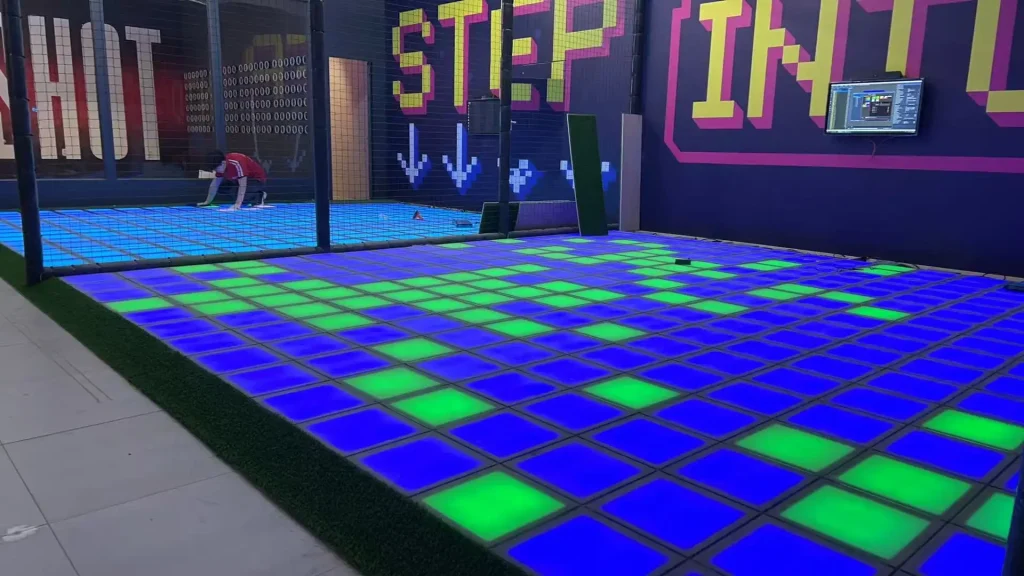
An Activate-style venue usually combines several room types. The exact mix depends on venue size, budget, audience, and operating model.
Interactive Game Floor (Grid / Mega Grid)
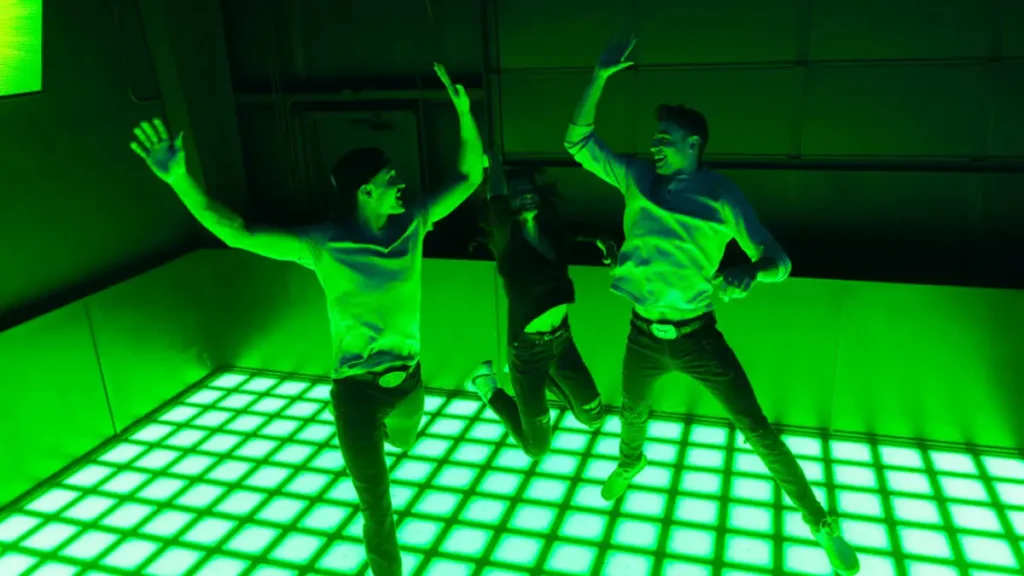
The interactive game floor is often the most recognizable room in an Activate-style active gaming venue. Players move across a reactive LED tile floor while following light patterns, avoiding red tiles, racing against time, or completing team objectives.
This room is important because it creates the strongest visual first impression. It also connects naturally with several high-interest game concepts, including pixel floor games, LED floor grid games, floor is lava LED games, color match challenges, and team grid games. For many FEC operators, the interactive game floor becomes the anchor attraction because it is easy for visitors to understand, highly visual in short videos, and flexible enough to support multiple interactive floor games within the same hardware system.
Related guide: commercial interactive game floor system
Laser Maze (Laser / Mega Laser)
A laser maze challenges players to move through laser beams without triggering sensors. It creates a very different player experience from a fast floor game because it rewards control, patience, and body awareness.
Related guide: commercial laser maze game
Push Button Wall (Push / Press)
A push button wall uses illuminated buttons or targets that players must hit in patterns or sequences. It works well for reaction training, memory games, and team coordination challenges.
Related guide: push button game wall
Interactive Climbing Wall (Climb)
An interactive climbing wall adds a vertical movement element. Light-up holds or touch targets guide the player through routes, challenges, or timing-based games.
Related guide: interactive climbing wall
Interactive Hoops (Hoops)
Interactive hoops combine basketball shooting with changing light targets, scoring rules, and timed challenges. This adds a sports attraction to the active gaming room mix.
Related guide: interactive hoops game
Hide Room (Hide / Evil Eyes)
A hide room or “evil eyes” style game uses sensors, lights, and timing rules. Players must move, hide, press buttons, or complete tasks while avoiding detection.
This type of room is valuable because it adds strategy. Not every player wants only speed-based games.
Related guide: hide room game
Ball Pipe Wall (Pipes)
A ball pipe wall or team passing game requires players to identify the correct path, pass balls, and coordinate under time pressure. It is useful for team-building and corporate group sessions.
Related guide: interactive ball pipe wall
How Much Does an Activate-Style Venue Cost?
The cost of an Activate-style active gaming venue depends on the venue size, number of game rooms, equipment mix, software system, scoring method, installation requirements, shipping, and local buildout costs.
A full franchise-style venue usually requires a larger footprint and higher capital investment. An independent active gaming room can often start smaller by choosing a focused mix of interactive attractions, such as an interactive game floor, laser maze, push button wall, hide room, and team challenge game.
For FEC operators, the better question is not only how much one game costs. The real question is how many different challenge types are needed to support a paid 60-minute session and encourage repeat visits.
The most important cost factors usually include:
- Total venue size
- Number of game rooms
- Equipment type and room complexity
- RFID, scoring, or leaderboard system
- Software customization
- Shipping and installation
- Interior decoration and room partitioning
- Local safety and labor requirements
- Spare parts and after-sales support
As a rough anchor: a focused independent room mix (game floor, laser maze, push button wall) typically starts in the low-to-mid five figures in equipment budget, before shipping and buildout. See the full cost breakdown by venue size in our Activate Games cost guide.
Activate Franchise vs Independent Active Gaming Room
Operators usually have two paths: invest in a branded franchise model or build an independent active gaming room.
| Factor | Activate Franchise | Independent Active Gaming Room |
|---|---|---|
| Brand recognition | Strong existing brand | Must build local brand |
| Capital requirement | Reportedly US$[X]–[X] | US$[X]–[X], scalable by room count |
| Venue size | Larger format | Can start smaller |
| Equipment sourcing | Franchise-approved system | Manufacturer-direct options |
| Game customization | Limited by brand system | More flexible |
| Royalty fees | Reportedly [X]% of revenue | None |
| Local market control | Lower | Higher |
| Total investment | US$[X]–[X] | US$[X]–[X] |
| Time to open | Longer (approval process) | [X] weeks from order |
| Best for | Investors wanting a proven brand | FEC owners wanting flexible expansion |
The trade-off is simple: a franchise buys you a brand and an operating system. An independent build buys you the same room types with no franchise fee, no ongoing royalty, and full control over the room mix — typically at a fraction of the total investment.
For a more detailed comparison, see our guide to Activate Games vs an independent interactive gaming room.
If you’re evaluating this trade-off for your own venue, send us your floor plan and we’ll quote the same room types — game floor, laser maze, push button wall — factory-direct, with no franchise fee and no royalty.
This is why many FEC owners study Activate Games not because they want to copy the brand, but because they want to understand the active gaming model behind it.
For a more detailed comparison, see our guide to Activate Games vs an independent interactive gaming room. If you’re evaluating this trade-off for your own venue, send us your floor plan and we’ll quote the same room types — game floor, laser maze, push button wall — factory-direct, with no franchise fee and no royalty.
Can You Build an Activate-Style Venue Without a Franchise?
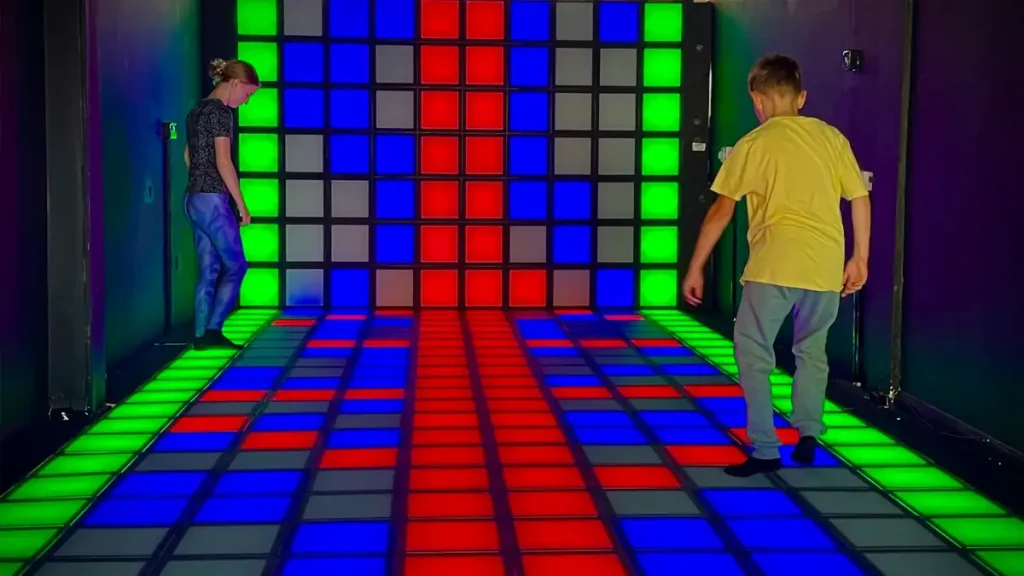
Yes, an operator can build an Activate-style active gaming venue without buying a franchise, as long as the concept is positioned as an independent active gaming room and does not use protected brand assets.
The operating principles are not exclusive to one company:
- Timed sessions
- Multi-room rotation
- Physical challenges
- Score tracking
- Difficulty levels
- Repeat-visit goals
- Social media-friendly game design
What matters is execution. A weak room mix will not perform well just because it uses interactive equipment. The venue needs enough variety to keep groups engaged for a full session.Send us your floor plan and we’ll suggest a room mix sized to your space — no obligation.
If you are still comparing attraction formats, our Activate Games vs VR guide explains why active gaming often works differently from headset-based attractions in FEC environments.
Recommended Room Mix for an Independent Active Gaming Venue
For most independent venues, the strongest starting mix includes:
- One interactive game floor as the visual anchor
- One laser maze or precision room
- One push button wall or reaction room
- One strategy room such as hide game
- One team coordination game
- Optional sports or climbing attraction
This creates a balanced experience for families, friend groups, birthday parties, corporate events, and repeat local visitors.
Want specs and factory-direct pricing for this exact mix? Reach out with your venue size and we’ll put together a quote.
For a deeper look at room combinations, read our interactive gaming room games guide.
What This Means for FEC Operators
The success of Activate Games shows that active gaming is not just a temporary trend. It reflects a larger shift in entertainment: players want physical, social, competitive experiences that are easy to understand and easy to share.
For FEC owners, this creates an opportunity. You do not need to build a giant venue immediately. You need to design a room mix that supports three commercial outcomes:
- A paid timed session
- A reason for players to return
- A visual experience people want to record and share
If your venue can deliver those three outcomes, an active gaming room can become more than a side attraction. It can become a traffic driver for the entire facility.
You can also read our guide on how Activate Games works to understand the player flow, room rotation, and scoring logic in more detail.
Planning an Active Gaming Venue?
If you are planning an Activate-style active gaming venue, the most important decision is not which individual game to buy first. It is how the full room mix works together.
A strong active gaming venue should include different challenge types: movement, reaction, precision, strategy, teamwork, and competition. Each room should serve a clear purpose and give players a different reason to keep playing.
Victor Activate Games helps FEC operators, arcade owners, and entertainment investors plan independent active gaming rooms with commercial interactive game floor systems, laser maze games, push button walls, interactive hoops, climbing walls, hide rooms, and team challenge attractions.
Send us your floor area, ceiling height and target hourly capacity. Within 24 hours you’ll get back a room mix proposal sized to your space, a full equipment list with factory-direct pricing, and a session-pricing and payback estimate based on your local ticket price. No franchise fee, no royalty — equipment built in our own factory and shipped worldwide.
Call-to-action links:
- Contact us
- View our Interactive Game Floor product page
- Explore our Interactive Gaming Room Games Guide
- Read the Activate Games Cost Breakdown
FAQ
What is Activate Games?
Activate Games is an active gaming venue where players use their bodies to complete challenges inside multiple interactive rooms. Instead of playing one arcade machine at a time, guests move through rooms with LED floors, lasers, light-up buttons, sensors, scoring systems, and team-based challenges.
What is the Activate Games business model?
The Activate Games business model is based on timed sessions, multi-room rotation, player scoring, repeat-visit progression, and social media-friendly physical gameplay. Guests pay for a session and move between several interactive challenge rooms during that time.
How much does an Activate-style venue cost?
The cost depends on venue size, number of rooms, equipment type, software, scoring system, installation, shipping, and buildout. A full franchise-style venue requires a larger investment, while an independent active gaming room can start with a smaller room mix and expand over time.
Can I build an Activate-style active gaming room without a franchise?
Yes. Operators can build an independent active gaming room using similar operating principles, such as timed sessions, room rotation, score tracking, and interactive challenge rooms. The key is to avoid using protected brand assets and position the venue as an independent active gaming concept.
What games are used in an Activate-style venue?
Common game rooms include interactive game floors, laser mazes, push button walls, interactive climbing walls, hoops games, hide rooms, and team coordination challenges. A strong venue uses a balanced mix so different player types all have something they enjoy.
What is the difference between Activate Games and an interactive gaming room?
Activate Games is a specific branded active gaming venue. An interactive gaming room is a broader category that can be built independently using interactive equipment, scoring systems, and multiple challenge rooms.
Is an interactive game floor important for an active gaming venue?
Yes. The interactive game floor is often the visual anchor of an active gaming venue. It creates high-energy gameplay, strong social media content, and a clear first impression for visitors. It can also support multiple game concepts, including pixel floor games, LED floor grid games, floor is lava LED games, and team grid challenges.
Who should consider building an active gaming room?
FEC owners, arcade operators, trampoline parks, shopping malls, family resorts, sports centers, and entertainment investors can consider active gaming rooms if they want a group-based attraction with repeat-visit potential.
How does the cost of an independent room compare to an Activate franchise?
An independent room typically costs a fraction of a franchise’s total investment, since there’s no franchise fee or ongoing royalty. See our full cost breakdown by venue size, or reach out for a factory-direct quote.
“If you’re evaluating building your own active gaming attraction rather than visiting one, see our Interactive Game Floor guide for how the equipment and business model work.”