
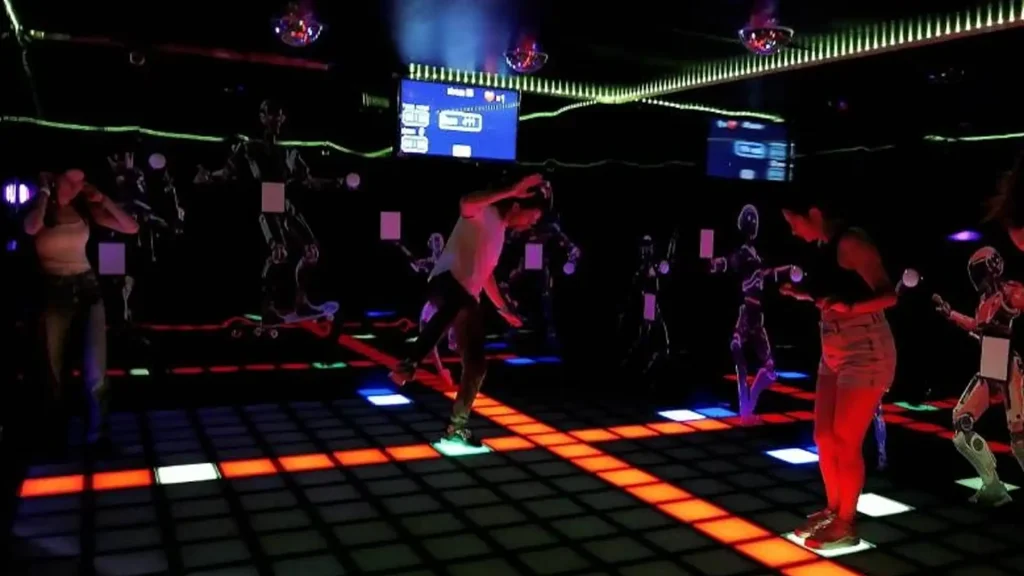
OEM Interactive Game Floor: A Guide for Distributors and Private Label Buyers (2026)
Most content about interactive game floors speaks directly to venue operators buying a single system for a single room. This guide is for an entirely different audience: distributors, regional resellers, and businesses that want to source an OEM interactive game floor and sell it under their own brand — with no intention of running a venue themselves.
The questions this buyer actually asks are different too. Not “how do I lay out my space,” but rather: “what can I actually put my name on, what’s the minimum order, and how much control do I really have?”
What “OEM Interactive Game Floor” Actually Means
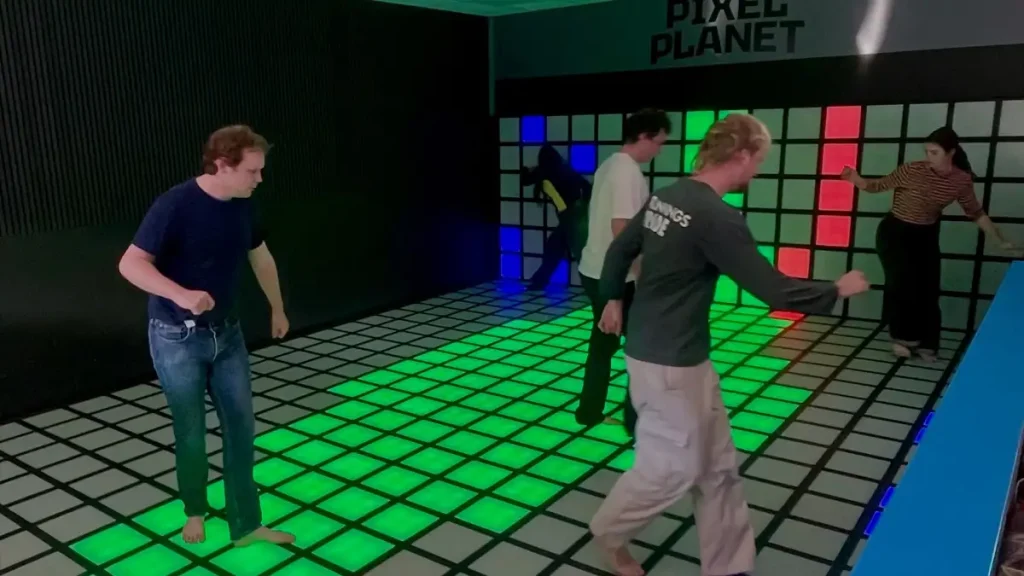
OEM (Original Equipment Manufacturer) sourcing means buying hardware and software directly from the factory that builds it, then selling it under your own brand rather than the manufacturer’s. An OEM interactive game floor — often referred to in sourcing contexts as a custom LED game floor or private label interactive game floor — encompasses several layers, far beyond a simple logo swap:
- Hardware branding — tile casings, packaging, and visible components carry your brand identity instead of the factory’s
- Software/UI branding — the control interface and game menus display your company name and visual language
- Documentation branding — manuals, warranty cards, and specification sheets are issued under your company name
- Full white label — no visible trace of the original manufacturer remains at any customer-facing touchpoint
Not every OEM buyer requires all four layers. A regional distributor reselling into a market where the factory has no direct presence may only need hardware and documentation branding. A company building a direct-to-consumer product line will typically need the full white-label package.
Why Distributors Source an OEM Interactive Game Floor Instead of Reselling As-Is
Reselling a manufacturer’s product under the manufacturer’s own name is simpler, but it comes with a structural ceiling: the end customer knows who actually made it, which limits how much margin and brand equity the distributor can build over time. OEM sourcing flips that dynamic — your brand becomes what the market sees and remembers, while the underlying factory relationship stays firmly in the background.
This distinction is especially critical for a commercial interactive game floor, a high-ticket, considered B2B purchase. Buyers evaluating suppliers are choosing the brand in front of them, not searching for the original interactive game floor supplier — which is precisely the strategic position OEM sourcing is designed to create.
What to Ask a Manufacturer Before Committing to an OEM Relationship
Before entering an OEM relationship, you need a different set of questions than a single-venue buyer would typically ask:
| Item | Question to Ask |
|---|---|
| Branding scope | Which layers (hardware, software, documentation) can actually be rebranded, and which are fixed? |
| MOQ | What’s the minimum order quantity for a private label run, and how does it scale with customization level? |
| Sample process | Can I receive a branded sample or prototype before committing to a full production run? |
| Software customization | Can the game library and UI be modified under my brand, or only reskinned? |
| Exclusivity | Does the manufacturer offer regional exclusivity, or could the same product be sold to a competing distributor in my market? |
| Lead time | How does production lead time compare between standard and private label orders? |
| Quality control | What QC process applies specifically to private label runs, not just standard production? |
| Ongoing support | Who handles end-customer technical support after the sale — my team, or the factory behind the scenes? |
That last point is critical. If your end customers will expect support under your brand, confirm upfront whether the factory provides white-labeled support documentation and training, or whether you’ll need to build that capability internally.
As a factory-direct manufacturer, we see these questions consistently from OEM buyers evaluating a partnership — which is precisely why we address them clearly upfront. Victor Activate Games has manufactured interactive game floors and LED grid game systems for 12 years, based in Guangzhou, China, with OEM and ODM support integrated into standard production rather than treated as a special request. All our systems are CE and RoHS certified — an important factor for distributors reselling into markets with import compliance requirements.
How MOQ and Customization Scale for an OEM Interactive Game Floor Order
Minimum order quantities for an OEM interactive game floor run vary based on customization depth rather than a fixed threshold. In many OEM projects, customization depth usually has a bigger impact on MOQ than the product category itself. A general pattern worth understanding before you request a quote:
- Minimal branding (packaging and documentation only) — typically carries a lower MOQ tier, since the production process itself does not change
- Hardware branding (custom tile casings, visible components) — generally requires a higher MOQ, as tooling or casing modifications affect production runs
- Full software/UI customization — MOQ depends less on unit count and more on development time, since custom software work is typically a fixed cost spread across the order rather than a per-unit cost
Instead of asking “what’s the MOQ” as a single number, ask how MOQ scales across these tiers for your specific level of branding. That is the question that ultimately determines whether an OEM relationship makes financial sense for your order size.
Margin Structure: What to Actually Evaluate
We won’t quote specific margin percentages for an OEM interactive game floor deal here — they vary too widely by market, order volume, and branding tier to be useful as a general figure, and publishing one would risk misleading rather than helping. Instead, consider these factors:
- Factory-direct pricing versus trading-company markup — going direct removes at least one layer of margin that a middleman would otherwise take
- Volume-based tiers — most manufacturers offer better per-unit pricing at higher volumes, which affects how quickly a private label line becomes profitable
- Support cost allocation — if the factory handles technical support under your brand, that saves you cost; if you’re expected to build that capability yourself, factor it into your margin calculation before committing to a volume
Where a Direct Factory Relationship Matters Most for OEM Buyers
For a single-venue buyer, factory-direct sourcing primarily affects after-sales support. For an OEM distributor, it impacts far more — production consistency, brand control, and the ability to actually modify software and hardware all depend on working with the manufacturer directly rather than through an intermediary who cannot authorize those changes.
→ Read: Active Gaming Room Supplier — Factory Direct vs Local
Why Interactive Game Floors Are Attractive for Distributors
Beyond the mechanics of OEM, it’s worth stepping back to the more fundamental question: why is an OEM interactive game floor worth building a distribution line around?
- Visual product advantage — the format sells itself. A working interactive floor at a trade show booth draws immediate attention, making it far easier to shorten the sales conversation than with static equipment.
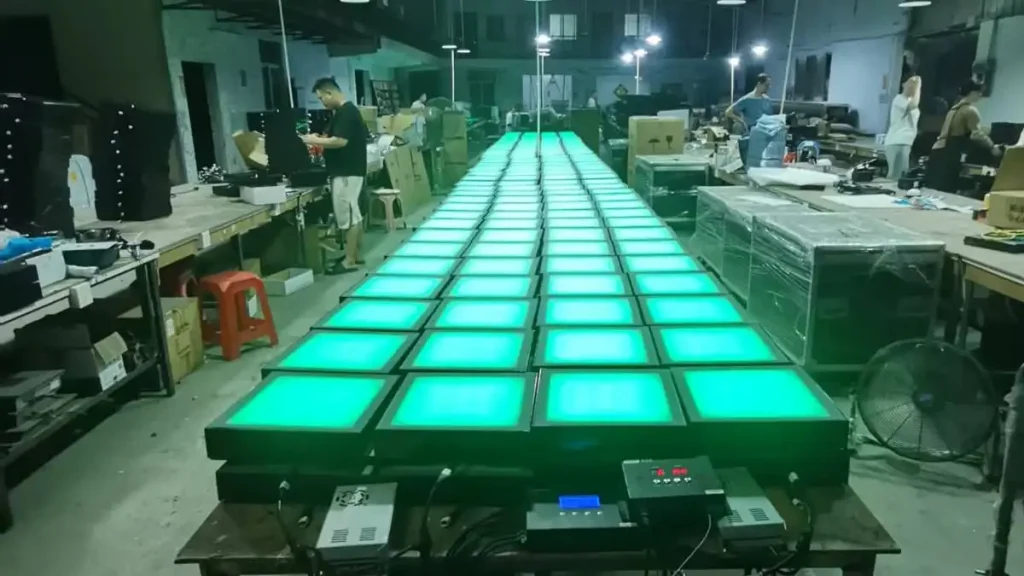
- Modular shipping and setup — because the system ships as individual tiles rather than one large fixed unit, it’s easier to demo, transport between shows, and install across different venue shapes without requiring custom engineering for each site.
- Repeatable installation process — once your team learns the setup once, that knowledge scales across multiple customer installations without needing to be reinvented for each new venue type.
- Cross-market applicability — the same core product serves FECs, malls, trampoline parks, hotels, and event spaces, meaning you are not limited to one narrow vertical to build volume.
Unlike many entertainment products that require large, fixed installations, a modular interactive floor lets you demonstrate, package, and scale the same core product across diverse venue types — a critical advantage when building a sales pipeline rather than fulfilling a single order.
Common OEM Partnership Risks to Avoid
A private label OEM interactive game floor relationship is a longer-term commitment than a single product order. Some risks worth screening for before signing anything:
- Component substitution without notice — confirm whether the manufacturer commits to consistent components across production runs, or reserves the right to substitute parts (sensors, LEDs, controllers) between orders without informing you
- No documentation control — if you don’t own or control the technical documentation, you may not be able to switch manufacturers later without starting over on specs and certifications
- No spare parts plan — confirm how spare parts are sourced for your branded units specifically, not just standard production, since private label buyers may not be able to source generic replacements locally
- Unclear software ownership — if your brand’s UI or custom game modes were developed specifically for you, clarify in writing whether you own that work or the manufacturer retains rights to reuse it for other clients
- No exclusivity agreement in writing — a verbal understanding about regional exclusivity is not the same as a documented agreement; get it in writing if it matters to your business model
None of these are reasons to avoid OEM sourcing — they are standard questions that any experienced distributor asks before committing. A manufacturer with nothing to hide should be able to answer all of them directly.
Quality Control Before Shipment
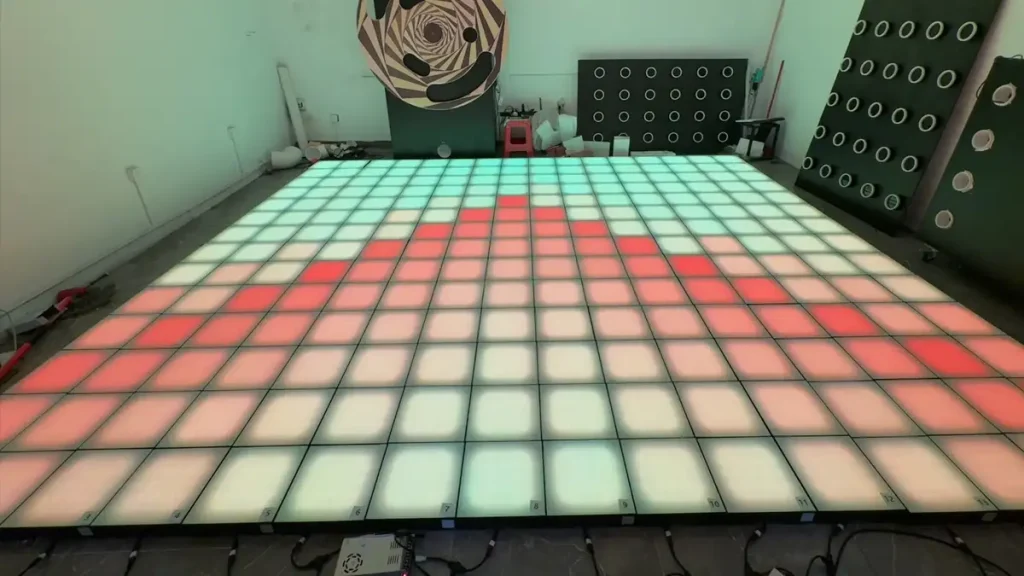
For a single-venue order, QC failures affect one installation. For a distributor sourcing an OEM interactive game floor, a QC issue affects your brand across every customer who receives that batch — which significantly raises the stakes. Confirm before your first order:
- What’s tested on every unit versus what’s spot-checked on a sample basis across a production run
- Whether QC documentation is provided per batch, so you have a record to reference if issues surface after units have shipped to your customers
- What happens if a batch fails QC — whether the manufacturer reworks, replaces, or delays shipment, and how that’s communicated to you before it affects your delivery timeline
A manufacturer that treats QC as a visible, documented process — not just an internal assurance — is generally the safer long-term partner for a brand you’re building your own reputation around.
Common Mistakes Distributors Make When Sourcing an OEM Interactive Game Floor
Committing to a full production run without a branded sample. A sample validates not just build quality, but whether the branding actually works in practice — colors, logo placement, and UI elements often need adjustment after seeing a real unit, not just a rendering.
Underestimating post-sale support obligations. If end customers expect support under your brand, that capability must exist before the first unit ships — not built reactively after the first support request comes in.
Treating MOQ as a fixed number rather than a function of customization. As covered above, MOQ shifts based on what you’re actually asking the factory to change — going in with a fixed unit target without discussing branding scope first often leads to a mismatched quote.
Logistics and Compliance for Private Label Orders
A few additional logistics questions matter specifically for buyers sourcing an OEM interactive game floor, beyond product quality itself:
Packaging under your brand. If end customers will unbox a product carrying your name, packaging design and labeling need to be part of the production conversation from the start — not an afterthought addressed after units are already manufactured.
Multi-market compliance. If you’re distributing across multiple countries, certification requirements (CE, RoHS, or region-specific standards) need to be confirmed for each target market before committing to a production run, since compliance gaps can delay customs clearance after shipment. For EU-bound orders specifically, it’s worth understanding what an EU Declaration of Conformity actually requires before assuming your OEM interactive game floor units are automatically covered — CE marking is a manufacturer’s self-declaration, not a government-issued certificate, so responsibility for accuracy sits with whoever’s name is on the documentation.
Batch consistency across reorders. Private label buyers reordering months later need the same build quality and branding specifications as the original run — confirm how the manufacturer documents and repeats a private label spec for future orders, rather than treating each reorder as a fresh negotiation.
Freight and import planning. Distributor orders are often larger than single-venue orders, which changes freight economics — sea freight becomes more cost-effective at higher volumes but extends lead time, which matters if you’re planning a launch date around inventory arrival.
How This Differs From Sourcing for a Single Venue
It’s worth being explicit about this distinction, since the two buyer types often read the same product pages without realizing the sourcing conversation is different. A single FEC operator typically optimizes for one installation, one room, one project timeline. A distributor sourcing an OEM interactive game floor optimizes for a repeatable, scalable relationship — consistent quality across multiple orders, a branding standard that holds up over time, and a factory partner who can support a growing business rather than a one-time purchase.
→ Read the Interactive Game Floor guide for single-venue buyers if you’re sourcing for one location rather than building a distribution business — the considerations are sufficiently different that it’s worth reading the right guide for your situation.
Frequently Asked Questions
What’s the difference between OEM and ODM for this product? OEM typically means the buyer’s brand goes on a manufacturer’s existing product design. ODM (Original Design Manufacturer) involves the manufacturer developing custom hardware or software specifically for the buyer’s specifications — a deeper level of customization than standard OEM branding.
Can the game software be fully rebranded, or just the hardware? Both are typically possible, but the depth of software customization affects MOQ and lead time — a full custom UI and game library requires more development work than hardware branding alone.
Do I need a minimum number of venues or a signed distribution agreement to source OEM? This depends on the manufacturer, but most OEM relationships start with a quote based on order volume and branding scope rather than requiring a formal distribution agreement upfront — worth clarifying directly before assuming either way.
How long does a private label production run take compared to standard orders? Lead time for an OEM interactive game floor generally increases with customization depth — documentation-only branding adds minimal time, while custom hardware tooling or software development adds more. Get a specific timeline for your branding scope rather than assuming standard lead times apply.
Is regional exclusivity available for OEM buyers? Some manufacturers offer this, some don’t — raise this question explicitly during initial discussions rather than making assumptions.
Considering an OEM interactive game floor or private label line? Send us your branding requirements and target order volume for a tailored proposal