
Active Gaming Room Safety Guide: Equipment, Layout, Insurance & Compliance (2026)
Active gaming room safety is usually the last question operators ask, but it should be one of the first. By the time most operators reach this stage, they have already chosen a room mix, planned a layout, and selected a supplier. The safety conversation often happens right before signing — triggered by an insurance broker, a landlord’s lease requirements, or a local authority asking for equipment certification.
That timing is backwards. Many operators only begin thinking seriously about certification after a purchase order has already been signed. By then, changing the layout, adding emergency access points, or replacing non-compliant equipment becomes expensive and time-consuming. Planning these requirements before ordering is almost always simpler and far less costly than retrofitting them afterward.
This guide covers what active gaming room safety actually involves — equipment certification, venue layout considerations, staffing requirements, and what insurers and landlords typically expect to see before approving a commercial venue.
Why Active Gaming Room Safety Is Different From Traditional FEC Equipment
Traditional commercial play equipment — climbing structures, trampolines, soft play areas — has well-established international safety frameworks. Depending on your market, operators may be asked to comply with standards such as ASTM F2970 for amusement rides, EN 1176 for playground equipment, or local equivalents that have existed for decades and are well understood by inspectors, insurers, and landlords.
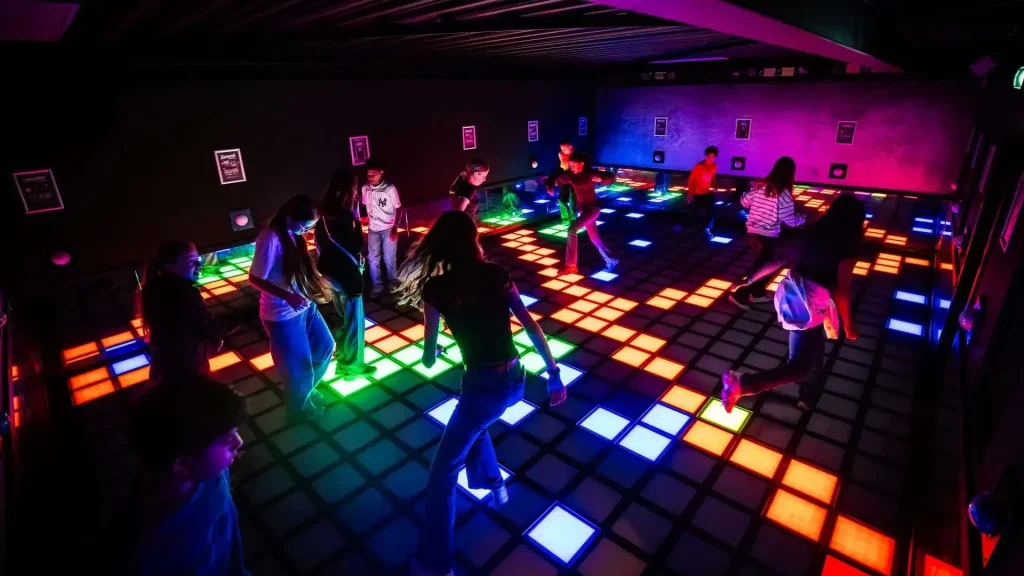
Active gaming room equipment is a relatively newer category. LED interactive floors, motion-sensing challenge rooms, and laser-based attractions do not always fit neatly into existing commercial play equipment frameworks, which means active gaming room safety considerations are sometimes assessed using a mix of electrical safety standards, general commercial equipment standards, and venue-specific risk assessment rather than a single dedicated code.
The practical risks are also different from traditional play equipment. There is less concern about fall height and more concern about ground-level collision, slip resistance, electrical safety in a high-density sensor environment, and software reliability — specifically, whether a room can be paused or stopped immediately if something goes wrong during multiplayer gameplay.
Equipment Standards to Verify Before Purchase
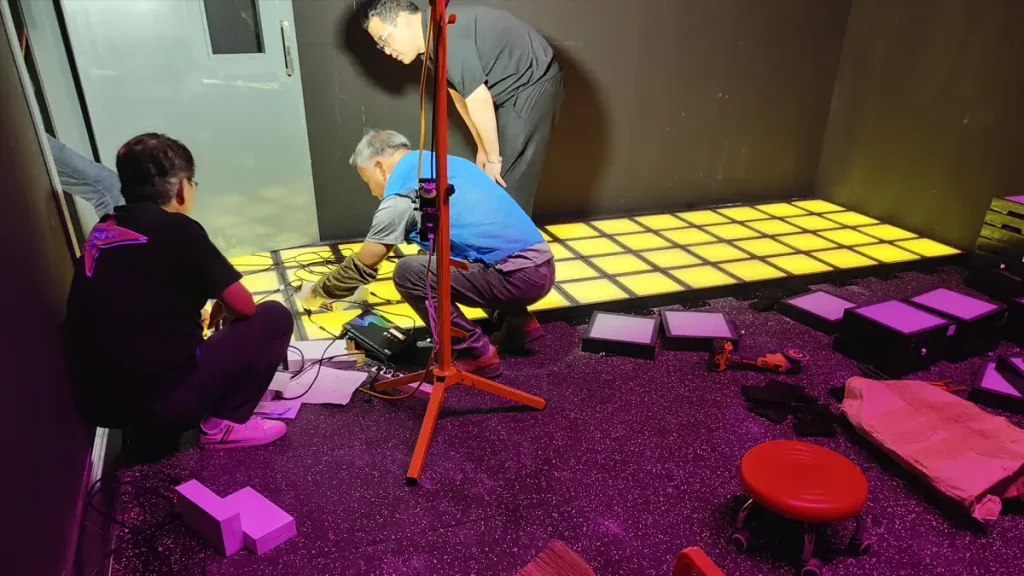
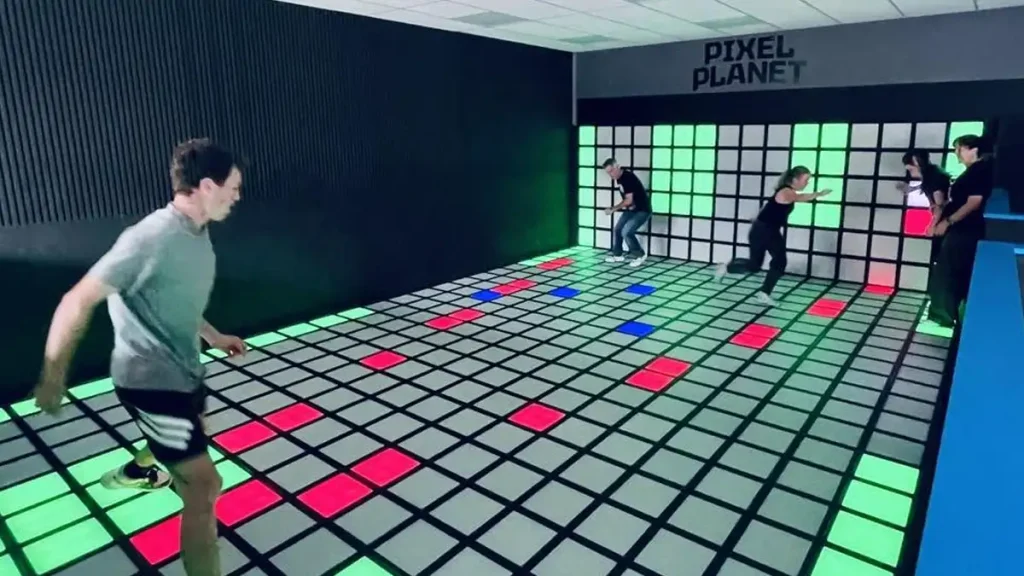
Floor system safety. Commercial interactive play equipment floors should carry a verified slip resistance rating appropriate for high-traffic use, tempered or impact-resistant surface material, and a dynamic load rating — not just a static one. Dynamic load accounts for the actual force generated when players jump or land repeatedly, which is meaningfully different from the weight rating used for stationary equipment.
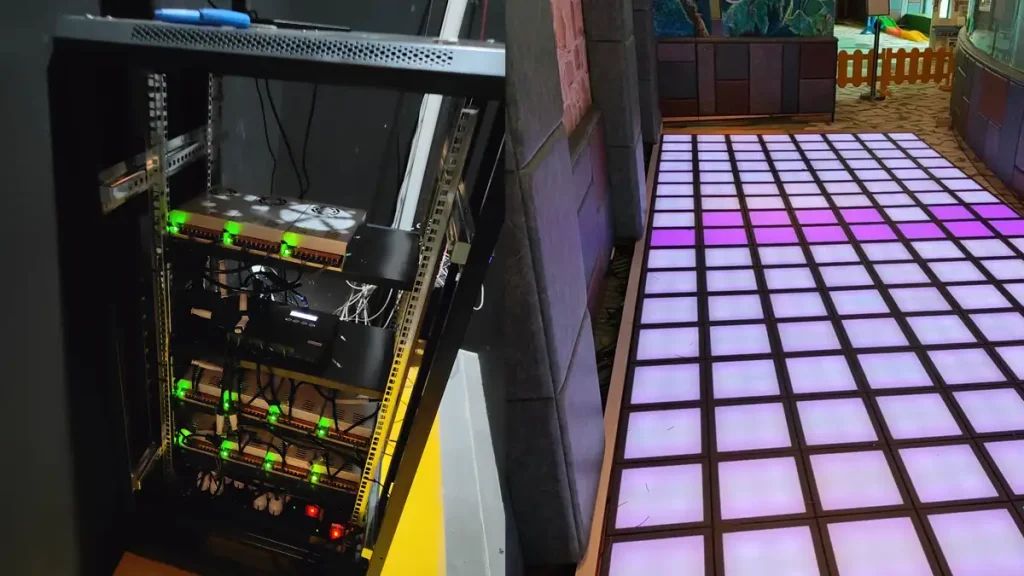
Electrical and sensor safety. Active gaming equipment typically combines high-density LED lighting with embedded sensors, which means electrical certification matters as much as structural safety. Ask whether the system carries CE conformity, UL electrical certification, or the equivalent standard required in your market, and confirm the IP rating for moisture and dust resistance appropriate to your venue environment.
Emergency stop functionality. Every active gaming room should have a way to immediately pause or stop a room if a player is injured or equipment malfunctions. Confirm whether this is a manual override accessible to staff, a software-based pause function, or both — and how quickly it activates.
Laser maze specific requirements. Laser systems used in commercial interactive play equipment must be Class 1 or Class 2 to be considered eye-safe for unsupervised player interaction. If the system includes fog or haze effects to enhance laser visibility, confirm that the fluid used meets commercial venue air quality requirements.
Climbing wall specific requirements. Touch sensors and grip points should be tested for repeated load under active use, and the area beneath the climbing surface should account for unintended contact even when the equipment is designed for hand-touch interaction rather than full climbing.
Venue Layout Decisions That Affect Active Gaming Room Safety
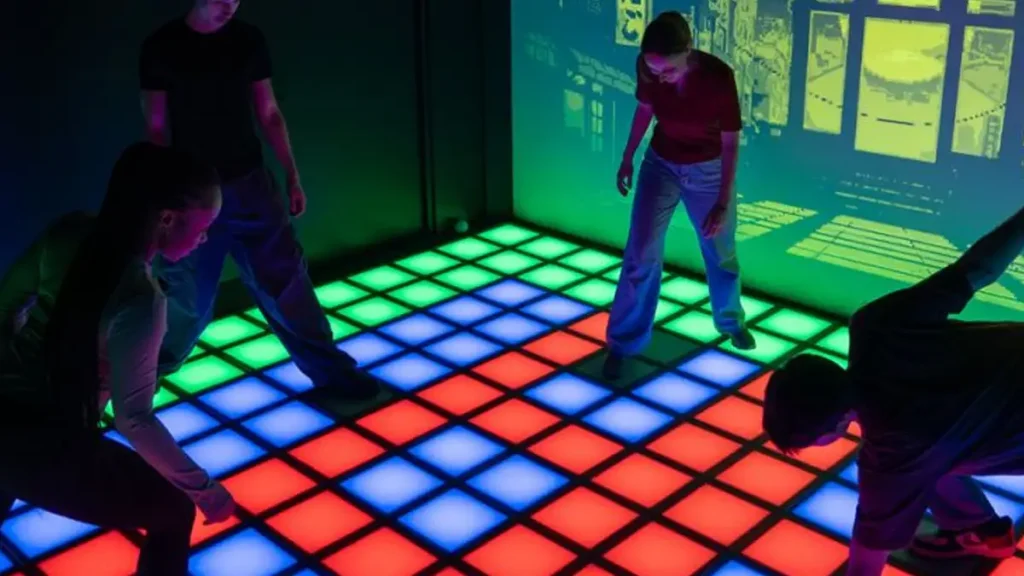
Layout planning is part of active gaming room safety, not a separate consideration that happens afterward.
Sightline supervision. Staff need to be able to observe all active rooms simultaneously, or each room needs an independent supervision point. This needs to be addressed during layout planning — not discovered as a blind spot after the venue opens. For broader layout planning guidance, our interactive gaming room layout guide covers room positioning and player flow design.
Collision buffer zones. High-energy rooms — the interactive game floor and climbing wall in particular — need clear space around the active play area to prevent players from colliding with walls or adjacent equipment during fast movement.
Emergency egress paths. Multi-room active gaming venues need evacuation routes that comply with local fire code, with clearly marked emergency exits from every individual room, not just the main venue exit.
Surface transitions. The change from an LED interactive floor to standard flooring between rooms should be visually distinct. Players moving quickly between attractions can trip on unexpected surface or level changes if the transition is not clearly marked.
Staffing and Supervision Requirements
Active gaming room safety depends heavily on supervision ratios that are appropriate for the game type and audience.
Most commercial active gaming venues maintain one staff member supervising two to three simultaneously running rooms, though this ratio should increase for venues primarily serving younger children or large group bookings where attention is divided across more participants.
Staff training should cover the emergency stop procedure for each room type, basic first aid response, and recognition of early equipment warning signs — unusual sounds, irregular lighting behavior, or delayed sensor response that may indicate a developing fault before it becomes a safety issue.
Clear age and physical condition guidance should be communicated at check-in. Different room types carry different physical demands — a high-intensity reaction room is not the same risk profile as a strategy-based room — and operators should have clear, consistently applied guidance for participants who may be pregnant, recovering from injury, or have relevant health conditions.
Insurance and Compliance Considerations
Insurance requirements for commercial indoor attraction safety vary significantly by market, and understanding the local emphasis matters before finalizing equipment and documentation plans.
In North American markets, insurers typically place heavy weight on liability documentation and equipment certification history. In European markets, CE conformity and electrical compliance documentation tend to carry the most weight in both insurance and venue licensing. In Middle Eastern markets, civil defense approval is often a distinct and separate requirement from general business insurance. In many Asian markets, fire safety certification and local building compliance are frequently the primary gating requirement before a venue can open.
Insurers commonly request equipment safety certification, professional installation completion documentation, ongoing maintenance records, and proof of staff safety training. A waiver signed by players at check-in reduces but does not eliminate operator liability — particularly in cases where equipment was not properly maintained or did not meet the safety standard claimed at purchase. A waiver is not a substitute for actual compliance.
The most common reasons insurance claims are denied in this category are uncertified equipment, missing maintenance records, untrained staff handling an emergency situation, or equipment operated beyond its rated capacity.
What to Ask Your Supplier About Active Gaming Room Safety
A reliable supplier should be comfortable answering every one of these questions directly during a live conversation, not through a delayed written response.
About certification. What safety certifications does your equipment carry for our specific market? What is the rated dynamic load capacity, and how was it tested? Can you provide installation certification documents that our insurer is likely to request?
About emergency systems. Is there an emergency stop mechanism for each room, and how is it activated? What happens to the system if power is interrupted mid-session? How quickly can a malfunctioning component be isolated without affecting the rest of the system?
About installation and maintenance. Do you provide professional installation, or is that the operator’s responsibility? What documentation is provided after installation for insurance purposes? What is the recommended maintenance schedule, and is it documented in writing?
For a fuller framework on evaluating suppliers beyond safety specifically, our active gaming room supplier guide covers the complete evaluation process.
Building Safety Into Your Active Gaming Room From the Start
Active gaming room safety is not a final checklist item before opening. It is a set of decisions that should be made alongside equipment selection, layout planning, and supplier evaluation — not after them.
If you are planning an active gaming room project, send us your floor plan and project details. We will review:
✓ Equipment certification documentation relevant to your market
✓ Layout considerations for supervision and emergency access
✓ Installation and maintenance documentation for insurance purposes
✓ Recommended staffing and supervision structure for your room mix
→ Contact us on WhatsApp
→ View our Interactive Game Floor product page
→ Read our Active Gaming Room Supplier Guide
→ Read our Interactive Gaming Room Layout Guide
Active Gaming Room Safety FAQ
What safety certifications should active gaming room equipment have?
Depending on your market, look for CE conformity, UL electrical certification, or local equivalents, along with a documented dynamic load rating for floor and climbing equipment. Laser-based attractions should specifically confirm Class 1 or Class 2 laser certification. Ask your supplier which certifications apply to your specific country before finalizing a purchase.
How many staff are needed to supervise an active gaming room safely?
Most commercial venues maintain one staff member per two to three simultaneously running rooms, with higher ratios recommended for venues primarily serving younger children or large group bookings. The right ratio depends on room type, audience, and how easily staff can maintain sightlines across all active areas — which should be considered during layout planning.
Does active gaming room equipment require special insurance?
In most markets, yes. Insurers typically request equipment certification, professional installation documentation, and ongoing maintenance records before approving commercial coverage for active gaming attractions. Requirements vary significantly by country — confirm with a local insurance broker early in the planning process rather than after equipment has already been ordered.
What is dynamic load rating and why does it matter for active gaming room safety?
Dynamic load accounts for the actual force generated when players jump, land, or move quickly across equipment — which is different and typically higher than static weight ratings used for stationary equipment. Active gaming room floors and climbing systems should have a documented dynamic load rating, not just a static one, since gameplay routinely involves jumping and rapid movement.
Are there age or health restrictions for active gaming room attractions?
Different room types carry different physical demands, and operators should provide clear guidance at check-in regarding age ranges and health considerations such as pregnancy or recent injury. High-intensity rooms like the interactive game floor carry different risk considerations than lower-intensity strategy rooms, and this should be communicated consistently to all visitors.
What documentation should a supplier provide for safety compliance?
A reliable supplier should provide equipment certification documents relevant to your market, dynamic load test results, professional installation completion certificates, and a documented maintenance schedule. These documents are typically required by insurers and may also be requested by landlords or local licensing authorities before a venue can open.