
Commercial Interactive Climbing Wall: Complete Guide for FECs and Entertainment Venues (2026)
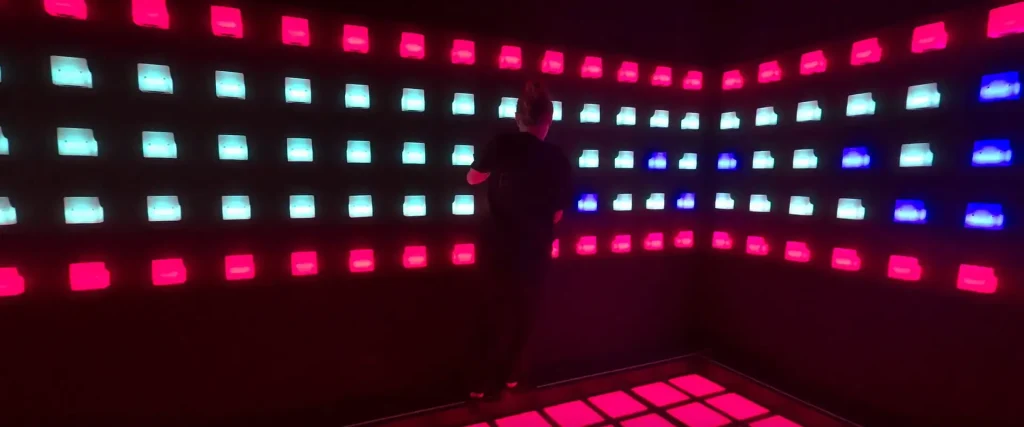
A commercial interactive climbing wall changes something important about how visitors experience a venue: it gives them a reason to look up.
Most FEC attractions happen on the floor. Game floors, laser mazes, push button walls — they are all horizontal. A commercial interactive climbing wall for FEC venues introduces vertical movement, which creates a different visual dynamic and reaches a specific audience that floor-based games often struggle to fully engage: older children and teenagers who want something physically demanding.
Across different venues, operators often report a similar pattern. Once players discover the competitive game modes and leaderboard system, a percentage of visitors begin returning specifically to beat their previous scores. Over time, the climbing wall often becomes a natural part of birthday party packages and group bookings because it creates visible competition that parents and organizers can easily understand.
That is the commercial case — not that it looks impressive in photos, but that it builds a competitive player base that returns.
What Is a Commercial Interactive Climbing Wall?
A commercial interactive climbing wall is a climbing attraction that uses touch sensors, LED targets, scoring software, and game logic to turn physical climbing into a structured game. Players climb and touch illuminated targets in sequence, race a timer, compete with other players, or complete a mission — and the system tracks everything and updates scores in real time.
The distinction from a traditional wall matters commercially. A traditional wall gives visitors a fixed physical route. They climb it, finish, and there is limited reason to do it again. A commercial interactive climbing wall gives visitors a score, a ranking, and a harder mode to unlock — three elements that create the repeat visit behavior that makes an attraction profitable.
When evaluating an interactive climbing wall, operators will generally encounter two common detection methods: capacitive touch systems and projection-based systems.
Capacitive touch systems use sensors mounted directly on the wall surface — players trigger targets by touching them, and the system responds immediately regardless of ambient lighting conditions. Projection-based systems use cameras to track player position and map touches onto projected game content, which can create more dynamic visual displays but requires more controlled lighting and careful calibration. Sidijk’s ValoClimb is one well-known example of the projection approach — their ValoClimb page shows how this technology is applied specifically in entertainment venues.
Both approaches can produce strong commercial results when properly specified for the venue environment.
What Is a Commercial Interactive Climbing Wall?
It Serves the Audience Other Attractions Often Lose
The demographic that most commonly falls through the gap in FEC design is 10-to-16-year-olds. They have outgrown soft play, find basic arcade games uninteresting, and are not yet adults who respond to themed dining or escape room experiences.
A commercial interactive climbing wall for family entertainment centers speaks directly to this group. It is physically demanding, competitively scored, and has a clear difficulty progression. A teenager who beats the medium mode and sees a hard mode waiting has a specific reason to return — and that is not true of most FEC attractions for this age group.
Replay Value Through Score Progression
The game modes with the strongest replay rates are those where players see a clear path to improvement. Easy, medium, hard, and a timed speed challenge give players four distinct goals to work through. Operators who add a persistent leaderboard report that it becomes one of the most effective drivers of weekly return visits — players whose names appear on the board have a stake in coming back.
Strong Birthday Party and Group Value
Birthday groups where participants vary in athletic ability can all engage with a digital climbing wall game because the difficulty adapts, and watching someone attempt a high target is entertaining regardless of whether you are playing. The most effective party packages combine a fixed number of rounds with a score certificate for the best performer — a format that sells itself because parents describe it specifically to other parents.
Vertical Movement Adds Visual Variety
A room where everything happens at floor level becomes visually monotonous after a first visit. A commercial interactive climbing attraction adds movement at height, visible from across the venue, and creates a different kind of spectator energy. Families who watch the wall often decide to try it without any staff involvement.
Why Add a Climbing Wall to an Existing FEC?
Many operators approach us not as first-time venue builders but as established FEC owners looking to strengthen an existing attraction mix. This is one of the most common conversations we have — and the commercial logic for adding a commercial interactive climbing wall to an existing FEC is different from planning it from scratch.
Extend Visitor Dwell Time
An FEC that currently runs 60-90 minutes of average visitor dwell time can extend that significantly by adding a vertical challenge that takes a different kind of energy than floor games. Players who have finished the interactive game floor often want a different type of challenge rather than another round of the same thing. A climbing wall gives them that next option without requiring them to leave the venue.
Attract Older Children and Teenagers
As children grow, many FEC attractions lose their appeal. Soft play zones, toddler rides, and basic arcade games all have natural age ceilings. A commercial interactive climbing wall for family entertainment centers is one of the few FEC additions that specifically extends the venue’s appeal upward into the 10-18 age bracket — a demographic that typically has both spending power and social influence over where groups choose to visit.
Add Vertical Play to an Existing Attraction Mix
Most active gaming rooms are floor-heavy by design. Adding a commercial interactive climbing wall creates spatial variety that changes how the room feels to visitors. The visual contrast between floor games and wall games — horizontal vs vertical, fast group play vs focused individual challenge — makes the overall venue experience feel more complete.
Create New Birthday Party Packages
An interactive climbing wall creates a natural upsell within birthday party packages. Venues that previously offered only a game floor session can now offer a combined floor and wall challenge, with separate scoring and a winner’s certificate for the climbing round. This justifies a higher package price and creates a more memorable party experience.
How a Commercial Interactive Climbing Wall Works
Touch Sensors and LED Feedback
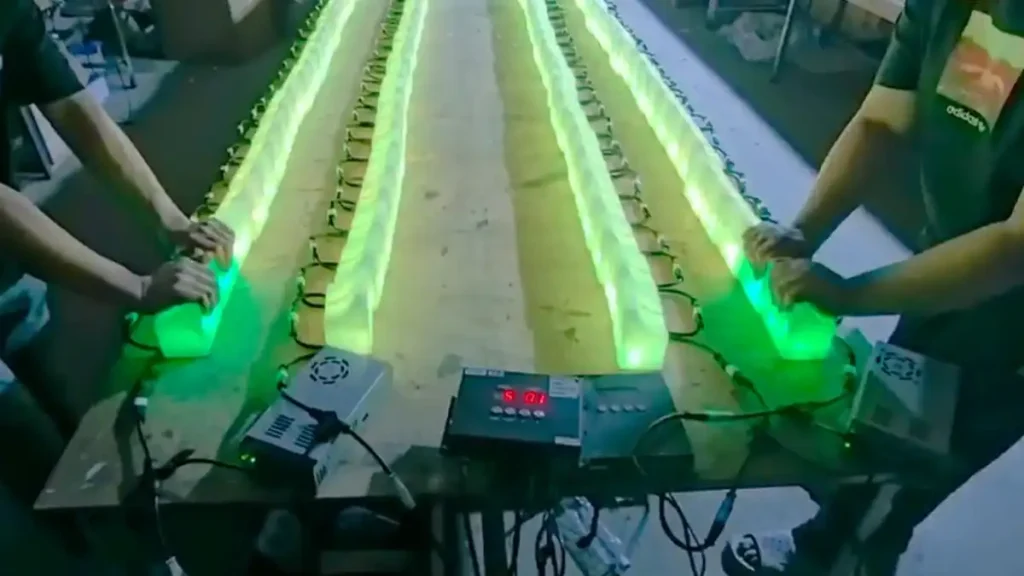
Capacitive touch targets are mounted across the wall surface at varying heights. When a player touches a target, the sensor signals the control system, which updates the game state, triggers LED feedback, and adjusts the score.
Detection consistency is the most important quality factor for any commercial interactive climbing wall in a public venue. A target that misses occasional touches in a session running hundreds of players per week will frustrate players and undermine their trust in the attraction. This is where lower-cost systems most commonly cut corners — sensitivity settings that require firm, deliberate contact rather than a natural climbing touch.
When evaluating any interactive climbing attraction, ask specifically about detection accuracy in real operating conditions — not controlled demonstrations. References from operators who have been running the system for at least six months will tell you more than any spec sheet.
The LED system communicates game state through light rather than text — active targets glow in one color, successful touches change color, wrong touches flash differently. Players understand what to do immediately, which means younger children can engage without long explanations and groups with mixed language backgrounds can play without staff guidance.
Game Modes
| Game Mode | How It Works | Best For |
|---|---|---|
| Reaction Climbing | Touch targets as they light up in sequence | Teenagers, competitive groups |
| Memory Route | Repeat an increasing sequence of lit targets | Families, mixed ages |
| Speed Challenge | Complete a fixed route as fast as possible | Return visitors, leaderboard play |
| Team Mode | Two players compete simultaneously on the wall | Birthday parties, group bookings |
| Level Progression | Difficulty increases progressively across rounds | Membership players, repeat visitors |
Speed Challenge is usually the strongest driver of leaderboard competition because scores are directly comparable — one player finished in 43 seconds, another in 38 seconds. That clarity drives return visits more reliably than any other mode.
Space and Layout Planning
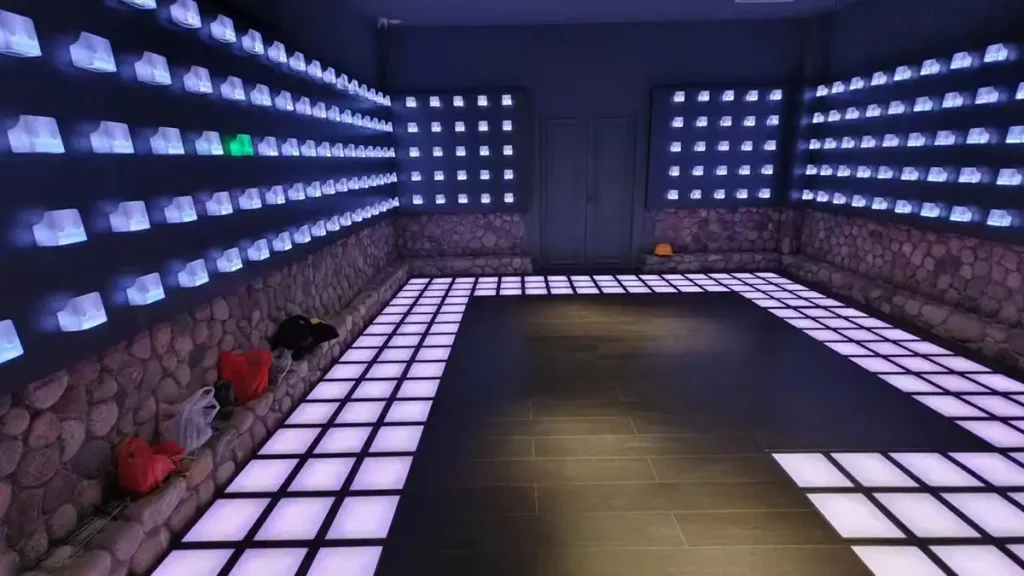
The space a commercial interactive climbing wall needs covers three zones: the wall itself, the safe landing area in front of it, and spectator space. Most operators underestimate the spectator distance requirement. A wall placed with no viewing room in front loses half its visual impact — the crowd energy that attracts passing visitors requires enough distance for several people to watch simultaneously.
Compact installation — 50–80㎡: Works as a supporting attraction alongside a primary game floor. Focus on one or two wall sections, child-friendly target heights, a padded landing area, and a clear sightline from the main traffic path.
Standard FEC installation — 80–150㎡: Supports a fuller wall configuration, multiple game modes, a proper waiting area, and a staff position with full visibility of the wall. At this scale the climbing wall for FEC venues can anchor birthday party bookings and school group visits as a paid standalone activity.
Multi-attraction room — 150㎡+: The wall becomes one zone in a wider active gaming environment. At this scale, wall placement should be planned from the start of the room layout process alongside the game floor, laser maze, and other attractions — not added after other equipment has been positioned.
Planning an Interactive Climbing Wall Project
Before selecting a commercial interactive climbing wall, venue operators should focus on project planning rather than comparing specifications in isolation.
Unlike standard amusement equipment, interactive climbing walls are customized according to venue size, target age groups, gameplay requirements, safety regulations, and overall attraction mix. A compact indoor playground may only require a small climbing zone for younger children, while a larger FEC may combine an interactive climbing wall with an interactive game floor, laser maze, push button wall, and other attractions to create a complete active gaming experience.
Because every venue is different, experienced operators start by evaluating available space, expected visitor volume, target demographics, and operational goals before finalizing equipment specifications. The most successful projects are planned around long-term player engagement rather than hardware specifications alone.
Key Factors to Consider
- Available wall height and installation area
- Target age group and player skill level
- Throughput capacity requirements
- Integration with existing attractions
- Safety standards and local regulations
- Game variety and software update capability
- Future expansion possibilities
A well-planned commercial interactive climbing wall should not operate as a standalone attraction. It should support a broader entertainment strategy that encourages longer visitor stays, stronger group participation, and repeat visits. For operators planning a complete active gaming environment, it is worth reviewing how interactive climbing walls work alongside attractions such as interactive game floors, laser maze games, and full interactive gaming rooms to create a balanced mix of challenge, competition, and replay value.
Interactive Climbing Wall vs Interactive Game Floor
| Feature | Commercial Interactive Climbing Wall | Interactive Game Floor |
|---|---|---|
| Movement Plane | Vertical | Horizontal |
| Simultaneous Players | 1–4 | 4–20+ |
| Throughput | Medium | High |
| Spectator Appeal | High | High |
| Birthday Party Value | Good | Excellent |
| Physical Demand | Higher | Lower |
| Target Age Sweet Spot | 8–18 | All ages |
| Natural Role in Room | Secondary anchor | Primary anchor |

These two attractions serve overlapping audiences in complementary ways. The game floor is faster, more inclusive, and higher throughput — which is why it works better as the core anchor. The climbing wall has more physical intensity and personal competitive depth — which is why it works better as the secondary attraction that the game floor’s most engaged visitors naturally move toward.
A Commercial Interactive Game Floor as the primary anchor, with the climbing wall as the signature secondary attraction, is the combination most commonly recommended for venues building a complete active gaming room from scratch.
EP Climbing has published useful context on how interactive climbing fits into entertainment center environments at their entertainment center solutions page.
For full room planning strategy, see our Interactive Gaming Room Games guide.
Common Buying Mistakes
These are the errors we see most often when operators are sourcing a commercial interactive climbing wall for the first time.
Evaluating specifications without checking sensor quality. Detection consistency is the single most important variable in daily public operation. Ask for references from operating venues rather than relying on demo videos or controlled demonstrations.
Ignoring safe landing space. Local regulations in most markets specify padding area requirements for public climbing attractions. Operators who do not plan this from the start sometimes find their wall cannot pass local inspection without modifications that add cost and delay opening.
Placing the wall where it cannot be seen. Visibility from the main traffic path is how an interactive climbing attraction generates interest without staff involvement. A wall installed in a corner or behind another attraction loses most of its commercial value.
Buying only one game mode. A wall with one mode loses its most engaged players within a few months. Difficulty progression and multiple modes are what sustain the repeat visit behavior that drives revenue.
Not asking about software updates. A supplier who cannot update game modes or difficulty settings after installation is offering a static product. Ask before signing — content flexibility after installation is one of the most important long-term value factors.
How to Combine With Other Attractions
With an Interactive Game Floor: The most effective combination in an active gaming room. The floor handles group throughput and visible energy; the climbing wall handles individual challenge and physical depth. Both attract the same audience and reinforce each other’s repeat visit behavior. See our Interactive Gaming Room Games guide for how these work together in a complete room plan.
With a Commercial Laser Maze Game: The laser maze adds a precision mission challenge that balances the physical intensity of the climbing wall. Players who enjoy the competitive timing of the laser maze often become the most engaged climbing wall competitors. See our Commercial Laser Maze Game guide for layout and planning detail.
With a Push Button Reaction Wall: Fast reaction gameplay at floor level that creates a natural contrast with the vertical climbing challenge. Both attract competitive players who respond to direct score comparison.
With a Hide Room: A stealth challenge that adds a different kind of engagement — slower, more strategic, and team-oriented. In a room combining a climbing wall, a Hide game, and a game floor, operators cover a wider range of player personalities and visit motivations.
FAQ
What is a commercial interactive climbing wall? A climbing attraction designed for public entertainment venues that uses touch sensors, LED targets, scoring software, and multiple game modes to turn climbing into a competitive game with strong replay value.
How do I plan a commercial interactive climbing wall project? The best approach is to evaluate available space, target age groups, expected visitor volume, and the role of the climbing wall within your overall attraction mix. Most commercial projects are customized according to venue requirements rather than following a fixed configuration.
How much space does an interactive climbing wall need? A compact installation works in 50–80㎡ including landing zone and spectator space. A standard FEC installation typically uses 80–150㎡. For multi-attraction rooms, the wall is planned as part of the wider layout from the start.
What age group is best suited for an interactive climbing wall? An interactive climbing wall for family entertainment centers works best for players aged 8 and above. Younger children can participate with adult supervision when target heights and difficulty are set appropriately. The strongest engagement is typically in the 10–18 age bracket.
How many players can use the wall at the same time? Most standard commercial interactive climbing walls support one to four players simultaneously depending on configuration. Team modes allow two players to compete side by side. For higher simultaneous capacity, operators can install multiple wall sections.
Can an interactive climbing wall be installed in an existing venue? Yes. Most walls can be added to an existing FEC or active gaming room without major structural changes, provided there is sufficient wall height, landing area, and power access. The key planning points are local safety certification requirements and integration with the existing visitor flow.
Is it safe for children? Yes, when installed with appropriate padding, child-appropriate target heights, and adjusted difficulty settings. Local safety requirements vary by market — confirm these before finalizing installation plans.
What drives repeat visits to a commercial interactive climbing wall? A persistent leaderboard, multiple difficulty levels, and clear score progression. Players working through difficulty levels have an ongoing goal that requires return visits, and players whose names appear on the leaderboard have a social stake in defending their position.
Can it be combined with an interactive game floor? Yes — this is the combination most commonly recommended. The game floor anchors the room with group throughput; the climbing wall provides individual competitive depth that turns first-time visitors into regular players.
Plan Your Project
Whether you are adding a commercial interactive climbing wall to an existing active gaming room or planning it as part of a new venue build, the right configuration depends on your space, audience, and how the wall fits with your other attractions.
Send your floor plan, room dimensions, target age group, expected visitor volume, and preferred game types through the contact page. We will come back with a wall configuration recommendation, a layout suggestion showing how it integrates with your other attractions, and a project overview specific to your venue — usually within one business day.