
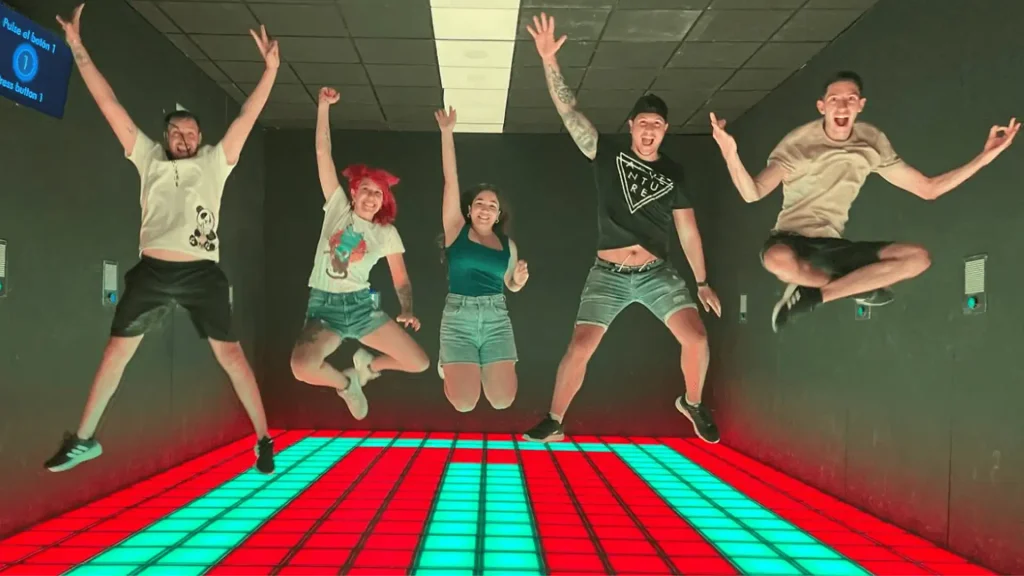
Interactive Game Floor for Schools: Gamified PE Guide (2026)
Physical education has a participation problem that predates any specific technology, and it’s documented, not anecdotal. The CDC’s Youth Risk Behavior Survey found that in 2023, 27% of U.S. high school students reported attending PE classes daily, compared with 29% in 2013, and only 25% of students met the recommended 60 minutes of daily physical activity in 2023. Schools have tried a lot of things to address this — new curricula, fitness trackers, more varied units. Gamified movement technology is a newer entry into that same effort.
Two different technologies fall under “interactive floor,” and it’s worth being precise about which is which. Projection-based interactive floor systems — motion sensors paired with a projector, from companies like EyeClick — already have real, verifiable adoption in schools. Some of these products are marketed specifically for education and have documented use of funding streams such as Title I and IDEA, subject to district and program eligibility requirements that vary by school. LED-tile interactive game floors, the category Victor manufactures, are a different hardware approach — still concentrated mostly in FECs and commercial entertainment venues, with limited public evidence of school-specific installations so far. This guide is honest about that distinction: it’s not claiming LED floors are already common in schools. It’s making the case, based on real gamified-PE research and the established presence of projection-based systems in education, for why LED-based interactive game floors represent a reasonable next application to explore.
What Research Says About Gamified Physical Education
This is worth grounding in actual education research rather than assuming the connection is obvious. A systematic review published via PMC examining gamification and motivation in adolescent physical education — drawing on 19 studies focused specifically on secondary and high school students — found that gamification enhances motivation in PE, whether used on its own or combined with other teaching methods, with additional benefits reported for autonomy, social skills, and classroom atmosphere.
The honest takeaway: research specifically on gamified PE — not just gamification generally — supports real motivation and engagement benefits for secondary students, though the effect depends heavily on implementation, not just the technology itself. This research studied gamified PE as a concept; it did not test LED-tile interactive game floors specifically, and this guide isn’t implying otherwise.
Interactive Floor Technology Already Has a Place in Education — With an Important Caveat
Separately from the research on gamification itself, it’s worth being direct about what kind of interactive floor technology is actually established in schools today. Projection-based systems — motion sensors combined with a projector that turns any flat surface into an interactive display — are real, commercially established products in the education sector. Companies in this category market directly to K-12 schools, and some have documented use of federal education funding streams including Title I and IDEA (subject to district and program eligibility requirements), which is a practical signal of genuine institutional adoption, not just marketing claims.
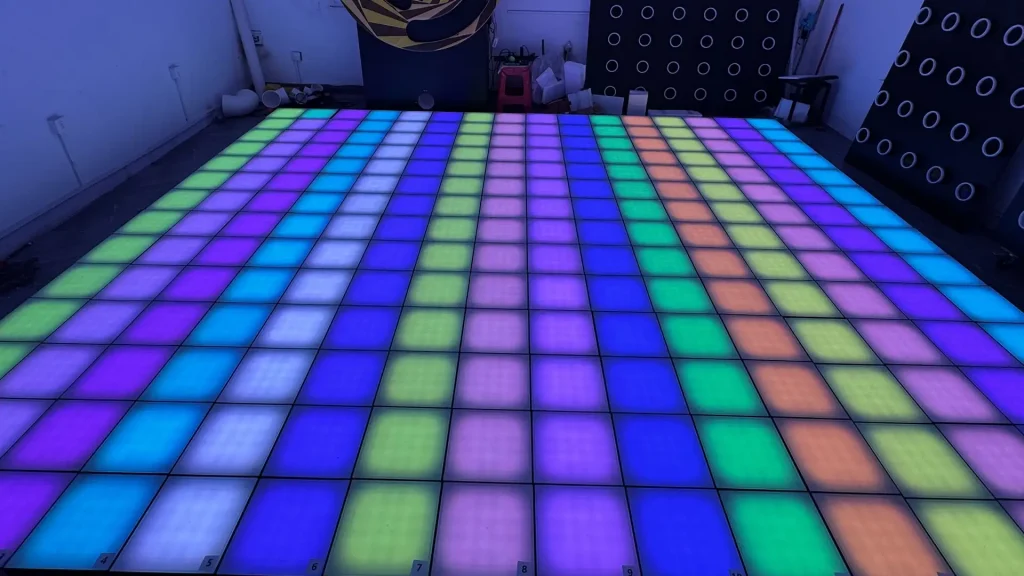
What this does not establish is that LED-tile interactive game floors — a physically different hardware category, built from illuminated sensor tiles rather than a projector and motion sensor — have the same level of school adoption. They don’t, at least not yet in any way that’s publicly documented. The application logic still holds: both technologies deliver a similar underlying experience (movement-based, gamified, real-time feedback), just through different hardware. An LED-tile system represents another way to deliver a similar movement-based, gamified experience that projection-based systems have already demonstrated in educational settings — worth exploring on that basis, not on a claim that LED floors themselves are already widespread in education.
Why Schools Are Looking at an Interactive Game Floor for Schools
Schools may consider interactive movement technology when they’re looking for ways to diversify PE activities, increase participation opportunities, or support inclusive programming — needs that show up across many programs, even without a single data source quantifying each one individually:
- Format variety helps reach students who disengage from traditional activities. Not every student responds to conventional team-sport formats, and a wider range of activity types is a common way programs try to reach more of the class.
- Programs are increasingly looking for “active” technology rather than screen-based alternatives. Rather than competing with screens by banning them, some programs favor technology that requires physical movement as the input.
- Inclusive and adaptive PE is a growing priority. Game-based formats with adjustable difficulty and low physical-contact requirements can offer an entry point for students who don’t engage well with traditional team sports formats.
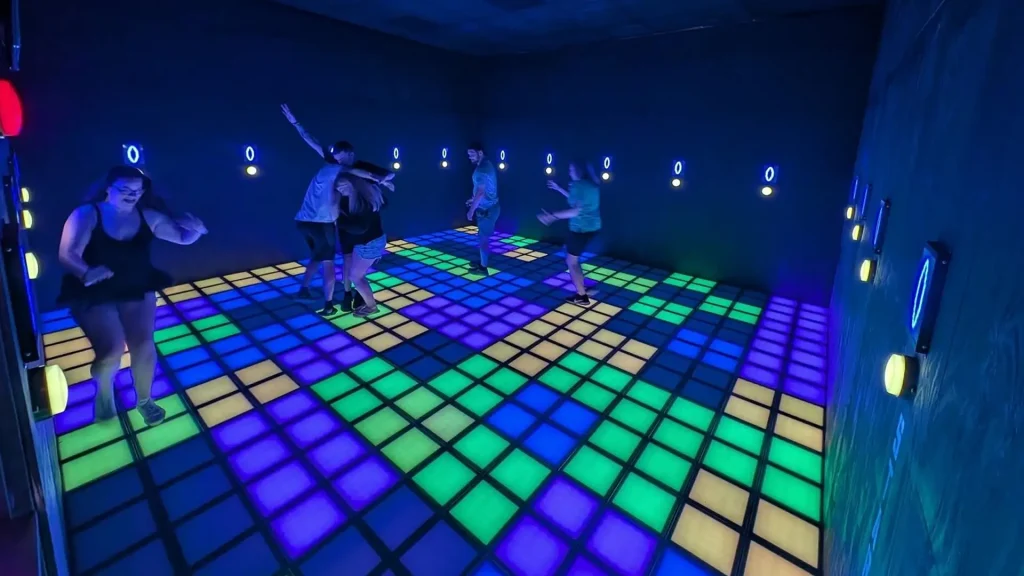
Where an Interactive Game Floor for Schools Fits Into a School Setting
| Setting | How It’s Used |
|---|---|
| PE class units | A rotation option alongside traditional units, particularly useful for warm-ups or short-format activities between longer lessons |
| Recess or break periods | Structured or self-directed activity that can supplement supervised recess programming |
| Before/after-school programs | Structured activity for extended-day programs that need engaging, low-barrier options |
| Adaptive and inclusive PE | Adjustable difficulty and non-contact game modes can offer participation options for students who disengage from traditional team sports |
| Special events | Field days, fitness fairs, and open-house events benefit from a visually engaging, easy-to-explain activity |
School Procurement Considerations for an Interactive Game Floor for Schools
Buying for a school is a different process than buying for a commercial venue, with different priorities:
- Safety and compliance documentation matters more here than almost anywhere else. Schools and districts often require safety certifications and supporting documentation when evaluating equipment used by children, and this is rarely something a procurement committee will skip.
- Budget cycles and funding sources are different from commercial buyers. School purchases often run through annual budget cycles, grant funding, or PTA/booster fundraising rather than a standard commercial purchase order — worth planning quote timing around.
- Durability under high-turnover, low-supervision-per-student use is a real design constraint. A single class period can put dozens of different students through a system in under an hour, which is a different usage pattern than a supervised commercial attraction.
- Teacher training and curriculum integration affect adoption more than the hardware itself. Equipment that PE teachers can’t quickly learn to incorporate into existing lesson plans tends to sit unused regardless of how capable it is.
Interactive Game Floor for Schools vs. Traditional PE Equipment
| Traditional PE Equipment | Interactive Game Floor |
|---|---|
| Skill-specific (requires sport-specific ability) | Lower barrier to entry for many game modes, less dependent on prior athletic skill |
| Individual or team-sport format | Flexible group sizes, multiplayer by design |
| Fixed activity structure | Configurable game modes and difficulty levels |
| Standard for most programs | Novel, higher initial engagement |
| Often limited built-in game-style feedback | Immediate scoring and feedback built in |
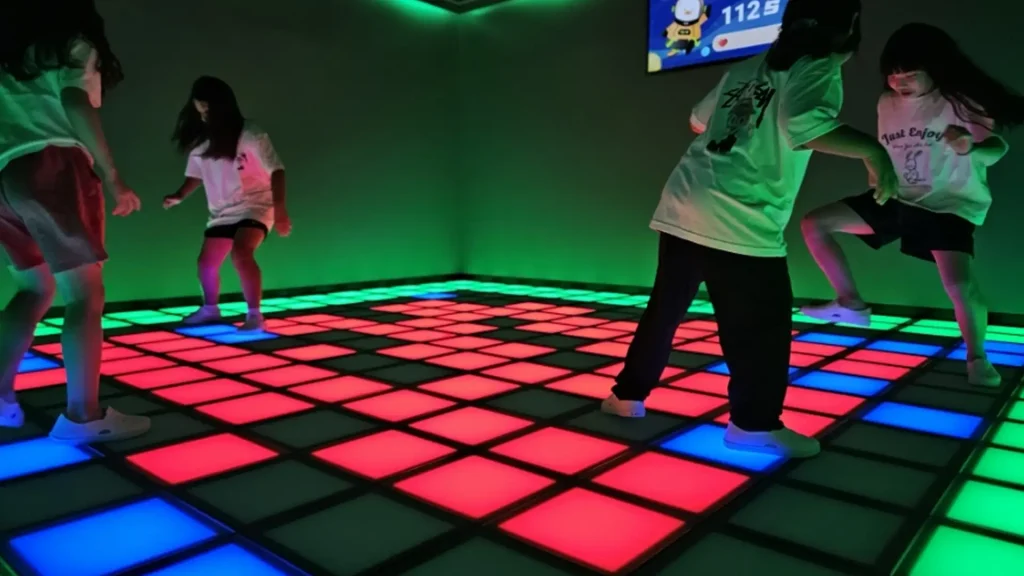
As with fitness facilities, an interactive game floor for schools isn’t a replacement question — it’s a complement to existing PE curricula, particularly useful for the students traditional formats engage least effectively.
How to Evaluate an Interactive Game Floor for Schools
| Question | Why It Matters |
|---|---|
| What safety certifications and documentation are available? | Often required or expected during procurement review in school districts |
| Can difficulty and game modes be adjusted for different age groups? | A single system often needs to serve multiple grade levels |
| How much teacher training is required to use it in a lesson? | Low training burden matters for actual classroom adoption |
| How durable is it under high-turnover, multi-class-per-day use? | School usage patterns differ from a single supervised commercial installation |
| Does the supplier offer support for grant or budget-cycle purchasing timelines? | School purchasing often doesn’t follow standard commercial timelines |
| Can branding or curriculum-aligned content be customized? | Some districts want content aligned with specific PE standards or programs |
For School Districts Planning Multi-Campus Rollouts
District-wide rollouts of an interactive game floor for schools share some of the same procurement priorities as multi-site commercial projects: consistent specifications, repeatable deployment, and reliable manufacturer support across every campus.
Read the OEM Interactive Game Floor guide if you’re evaluating a district-wide or multi-campus purchase rather than a single school.
How This Compares to Gyms and Fitness Centers
Schools and fitness facilities share some of the same underlying logic — using gamified movement to improve engagement and participation rather than measuring direct ticket revenue — but the buyer, procurement process, and safety requirements differ considerably.
Read: Interactive Game Floor for Gyms and Fitness Centers for the commercial fitness angle on the same underlying technology.
Getting a Recommendation for Your Program
Because the right configuration for an interactive game floor for schools depends on grade levels, program goals (PE curriculum, recess, adaptive programs), and school-specific procurement timelines, a generic size recommendation tends to miss what matters most for approval and adoption. Sharing your program goals, target grade levels, and procurement process leads to a more useful recommendation than starting from a fixed package.
Frequently Asked Questions
Is there research supporting gamification specifically in physical education, the concept behind an interactive game floor for schools?
Yes — systematic reviews focused on adolescent PE specifically (not just gamification generally) show real motivation and engagement benefits, though results depend heavily on implementation quality, not just the technology used.
Have schools actually adopted an interactive game floor for schools?
It depends on the technology type. Projection-based interactive floor systems (motion sensors plus a projector) already have real, documented adoption in schools, and some have documented use of federal education funding streams, subject to district eligibility. LED-tile interactive game floors — the category covered in this guide — are still concentrated mostly in commercial entertainment venues, with limited public evidence of school-specific installations so far. This guide makes the case for the application based on gamified-PE research and the established presence of projection-based systems, not on widespread existing LED-floor adoption in schools.
Does an interactive game floor for schools replace traditional PE equipment and curricula?
No — it’s positioned as a complement, particularly useful for engaging students who disengage from traditional sport-specific activities, and for adaptive or inclusive PE programs.
How does school procurement differ from a commercial buyer?
Schools often require safety certification and supporting documentation during procurement review, frequently purchase through budget cycles or grant funding rather than standard commercial terms, and need equipment that’s straightforward for teachers to incorporate into existing lesson plans.
Can one system serve multiple grade levels?
Configurable difficulty and game modes can often accommodate a range of ages, but it’s worth confirming this specifically for your target grade range before purchasing.
Considering an interactive game floor for schools, a district, or a PE program? Send us your program goals and grade levels for a recommendation