
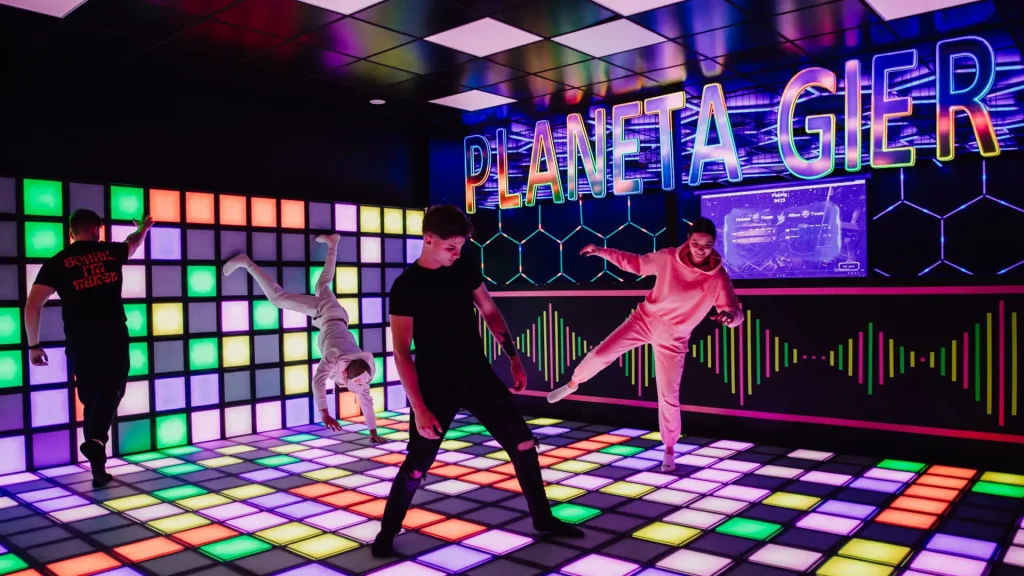
Interactive Game Floor Guide for FEC & Commercial Venue Buyers (2026)
Choosing an interactive game floor is a venue-planning decision, not only an equipment purchase. FEC and commercial entertainment buyers need to match the floor system to player age, available space, session model, supervision, installation conditions and long-term support.
This guide explains how interactive game floors work, which commercial venues they fit, what to compare in a quotation, and which information to prepare before contacting a supplier. For the product itself, see interactive game floor for commercial venues.
What Is an Interactive Game Floor?
An interactive game floor is a modular, sensor-based LED floor system that turns physical movement into real-time gameplay. When a player steps, runs, jumps, or moves across the floor, the system detects the action and responds with lights, targets, scores, or changing game conditions.
Suppliers may use terms such as interactive LED floor, floor game system, or active gaming floor. Confirm that the system includes movement detection and game software — a decorative LED or dance floor is not automatically an interactive game floor.
An LED dance floor is primarily a visual/display surface, while an interactive game floor is organized around movement detection, rules and scoring. Confirm the actual hardware and software in supplier documentation, because product names are used inconsistently across the market.
How Does an Interactive Game Floor Work?
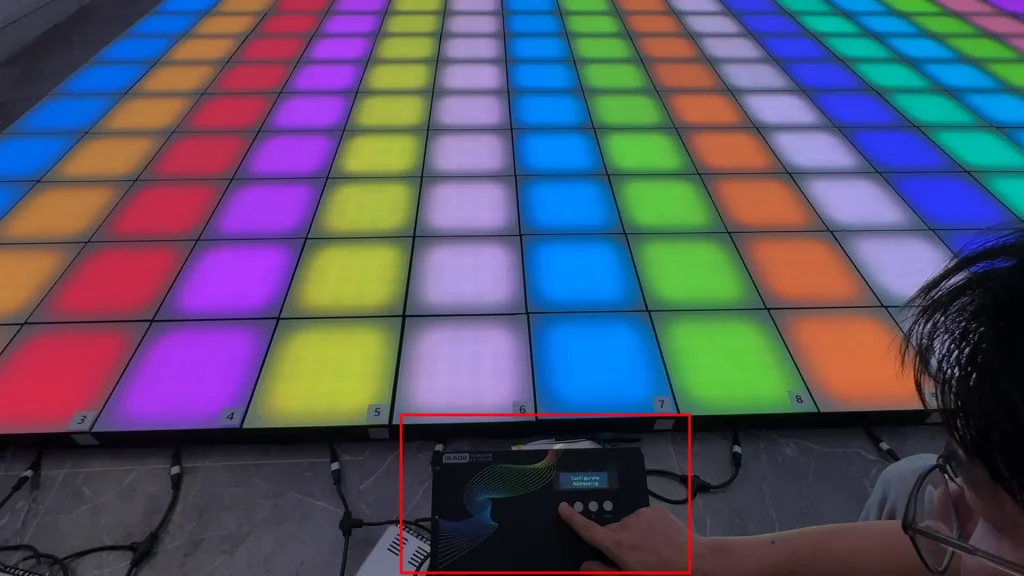
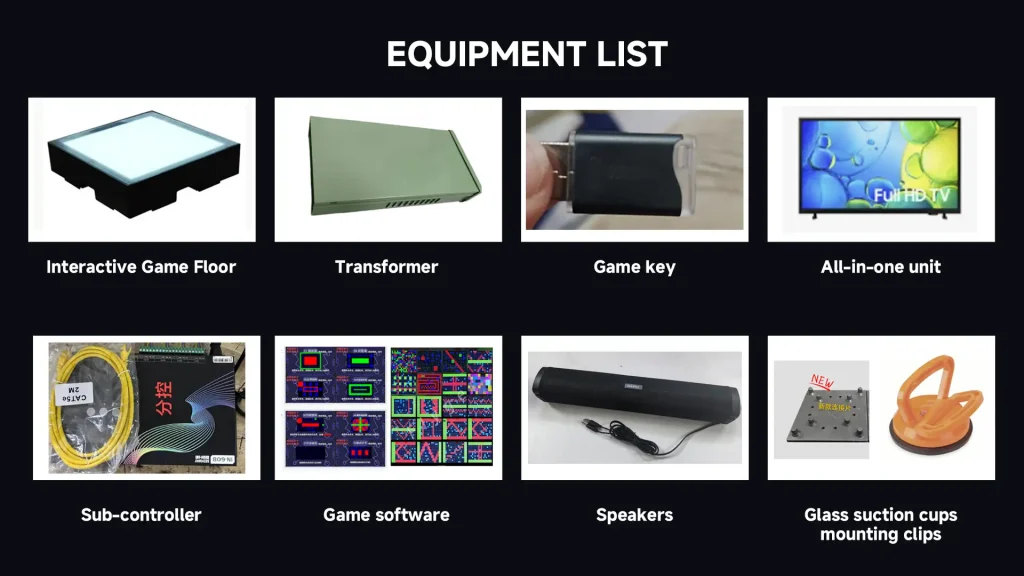
A commercial interactive game floor combines modular tiles, movement detection, a controller and game software.
A commercial system normally includes four connected elements:
- Floor modules that create the playable surface
- Sensors that detect stepping or movement
- A controller that manages system communication and scoring
- Game software that runs the rules, visuals, timing, and player interaction
The exact sensor technology, tile construction, controller design, and game library vary by supplier. Buyers should request product-specific documentation and a live demonstration before comparing systems.
Victor’s interactive game floor system uses 30 cm x 30 cm floor modules, and venue layouts are planned around this module size.
Why Software Matters as Much as Hardware
The floor hardware creates the playing surface, but software determines whether the attraction remains interesting after the first visit.
A commercial game library should include different types of challenges: speed, memory, reaction, avoidance, teamwork, competition, and cooperative play. If every game feels similar, repeat-play value can become limited even when the floor itself performs well.
Before ordering, ask which game modes are included, how updates are handled, whether new modes can be added, and whether game difficulty can be adjusted for different age groups.
Is an Interactive Game Floor Right for Your Venue?
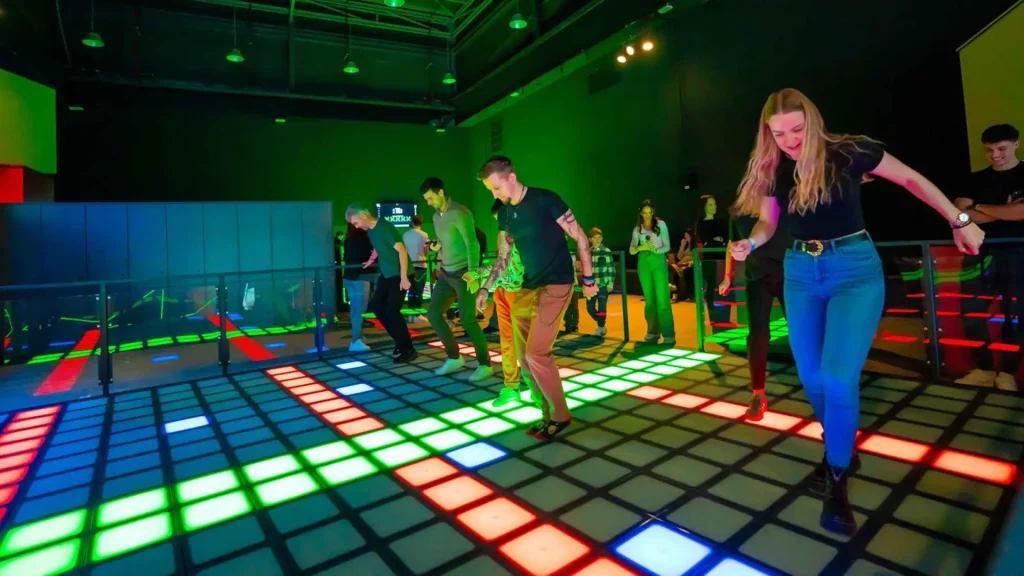
Layout planning should consider the target age group, player flow, supervision and the commercial role of the attraction.
An interactive game floor for commercial venues can be a strong fit when a venue needs a visible, movement-based attraction for groups, families, teenagers, adults, or mixed-age visitors.
It May Be a Good Fit If You Need To:
- Add a multiplayer attraction to an FEC or active gaming room
- Give older children an activity beyond toddler soft play
- Create a short-session, high-visibility attraction in a mall
- Add a non-trampoline activity zone to a trampoline park
- Build a party, school-group, or team-building experience
- Combine multiple interactive attractions into one commercial entertainment area
Define the Job Before Choosing the System
The same floor can serve very different business purposes. It may be included in general admission, sold as a timed activity, used as a party add-on, placed near a waiting area, or built into a larger active gaming room. These choices affect the required size, game selection, player flow, staffing model, and quotation scope.
Before contacting suppliers, decide:
- Who will play: younger children, teenagers, adults, families, or corporate groups?
- Will the attraction be supervised or self-directed?
- Will it be a standalone paid activity or part of general admission?
- Is the goal to increase dwell time, group bookings, repeat visits, or visual foot traffic?
- Is the floor one attraction, or part of a multi-attraction active gaming room?
Interactive Game Floor vs. Arcade Games and VR
Interactive floors, arcade machines, and VR attractions can all work in a commercial entertainment venue, but they support different operating models.
| Feature | Interactive Game Floor | Arcade Games | VR Attractions |
|---|---|---|---|
| Play style | Physical, group-based movement | Individual, machine-based | Individual or small-group, immersive |
| Throughput | Multiple players per session | One player per machine | Limited by headset count and session length |
| Maintenance | Ask supplier about tile/sensor servicing | Standard arcade cabinet servicing | Headset cleaning, hardware and software updates |
| Social interaction | High — built for group and team play | Low — mostly solo play | Low to moderate — mostly individual |
| Typical footprint | Open floor area | Individual machine footprint | Bounded play space per headset |
There is no universal winner. The right choice depends on your target audience, available area, ticket model, staffing plan, and wider attraction mix.
Interactive Game Floor vs. LED Dance Floor
An interactive game floor and an LED dance floor may both use illuminated floor panels, but they are designed for different jobs.
| Comparison point | Interactive Game Floor | LED Dance Floor |
|---|---|---|
| Primary purpose | Movement-based games, targets, rules and scoring | Lighting effects and visual display for events |
| Player input | Stepping and movement are detected by the game system | Usually no game detection or scoring |
| Control software | Game rules, timing, targets and player feedback | Lighting patterns and display controls |
| Victor module reference | 30 x 30 cm floor modules | Common market panels are around 50 x 50 cm or 60 x 60 cm |
| Typical commercial use | FECs, active gaming rooms, indoor playgrounds and malls | Weddings, events, stages and party venues |
The names used by suppliers are not always consistent. A product described as an interactive LED floor, floor game system, or LED game floor should be checked for movement detection, game software and scoring before it is compared with an interactive game floor. A decorative LED or dance floor is not automatically a game system.
How to Choose the Right Interactive Game Floor System
There is no single “best” configuration — the right system depends on how the venue will actually use it. Work through these five factors before requesting a quotation:
- Venue size: How much floor area can realistically be dedicated to the attraction? Victor’s factory uses approximately 20–50 m² as an early planning allowance for an Interactive Game Floor, based on its 30 cm x 30 cm module size. Final dimensions depend on the equipment configuration, player clearances, circulation, supervision, floor plan and local requirements. Combining multiple interactive attractions into one active gaming room needs a larger total area — plan the space around your actual game mix rather than a fixed number.
- Target player age: Younger children, teenagers, adults, and families respond differently to game speed, difficulty, and visual style.
- Number of players: A system built for solo or pair play has different space and game-mode requirements than one designed for group or team play.
- Game types: Speed, memory, reaction, and team-based games serve different session goals — decide which experiences matter most for your audience before comparing suppliers.
- Operating model: A supervised, timed-session attraction has different staffing, layout, and software needs than a self-directed, general-admission one.
Once these five points are defined, most of the remaining decisions — tile quantity, game library, layout, and staffing — follow naturally from them rather than being guessed from a product brochure.
Where Interactive Game Floors Work Best
Family Entertainment Centers
FECs can use an interactive floor as a group attraction, a timed activity, or part of a broader active gaming zone. It may be paired with laser games, reaction walls, climbing challenges, hoops games, or other physical-digital attractions. IAAPA, the industry association for family entertainment centers, is a useful starting point for broader FEC operating and safety guidance.
Indoor Playgrounds
Indoor playgrounds may use an interactive floor as a separate activity zone for older children. This can help create a more balanced experience for families with both younger and older children. The floor should be planned as a distinct zone rather than assumed to be part of a toddler soft-play structure — consider traffic flow, parental visibility, age separation, surface conditions, and supervision.
Shopping Malls and Retail Entertainment Areas
Mall operators may use interactive floors to create visual movement, short-session entertainment, seasonal events, or a visible draw near an entertainment area. For mall projects, consider how the attraction will be seen from outside the unit, how players enter and exit, and how waiting groups will be managed.
Trampoline Parks and Active Gaming Rooms
Trampoline parks may add an interactive floor as a non-trampoline activity. In a dedicated active gaming room, the floor can become one part of a broader challenge-based experience. For examples of how multiple attractions can work together, read Interactive Gaming Room Games: Complete Guide for FEC Operators.
Space, Player Flow and Operating Model
A floor plan, dimensions, target age group and project timeline help suppliers prepare a relevant recommendation.
Space and player flow decide how well an interactive game floor actually performs once it opens — not just whether it fits the room. Before finalizing a layout, review:
- Playable zone size and clear circulation around it
- Entry and exit points for players
- Queue and spectator visibility
- Staff or supervision position
- Ceiling height and access route for installation
- Nearby attractions and how traffic moves between them
- Whether the floor sits inside a paid session or general admission area
- Party or group-booking use and how groups rotate through the space
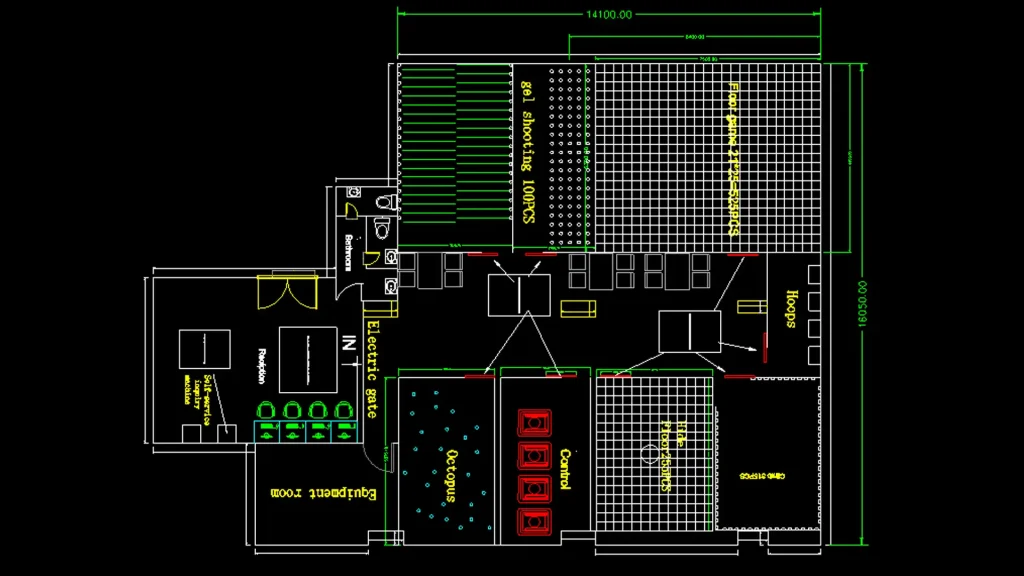
As a starting point, a single interactive game floor typically works well within a 20–50 m² footprint, based on its 30 cm x 30 cm module size. When combined with other attractions in a larger active gaming room, total space requirements grow accordingly — the floor plan also needs to account for circulation, reception, restrooms and storage, not just the play zones themselves.
Early Planning Allowance by Attraction
| Attraction | Early planning allowance |
|---|---|
| Interactive Game Floor | approximately 20–50 m² |
| Laser Maze Game | approximately 25 m² |
| Push Button Game Wall | approximately 30 m² |
| Interactive Climbing Wall | approximately 30 m² |
| Interactive Hoops Game | approximately 25 m² |
| Interactive Target Throwing | approximately 25 m² |
| Interactive Ball Pipe Wall | approximately 30 m² |
| Evil Eyes HIDE | approximately 30 m² |
| Interactive Motion Platform | approximately 25 m² |
These are Victor factory planning references for early commercial layouts. They are not fixed product footprints or universal building standards. Final dimensions should be adjusted to the actual equipment configuration, player clearances, circulation, supervision, floor plan and local requirements.
The nine game areas represent roughly 240–270 m² before adding reception, toilets or shared facilities, storage, queues, staff circulation, electrical areas and emergency access. This is not the total venue size.
Recommended dimensions should be treated as a starting point — approximately, roughly, and depending on the equipment, venue layout and local requirements — rather than as an industry-wide standard. For a full breakdown of multi-attraction space and player flow, including layout examples for different venue types, see the linked guide.
Cost and Quotation Scope
The cost of an interactive game floor depends on the full project scope, not only the number of tiles or price per square meter.
A useful quotation should clearly identify what is included: floor modules, sensors, controllers, software, game modes, customization, packing, shipping, installation support, warranty, spare parts, and any local site work. When requesting a quotation, also ask whether it covers a turnkey scope — including logistics, local duties, and maintenance spare parts — rather than equipment cost alone.
For detailed pricing guidance, read the Interactive Game Floor Cost Guide.
ROI Depends on Your Operating Model
An interactive game floor’s commercial return cannot be estimated from equipment price alone. The result depends on:
- Average ticket price
- Players per session
- Sessions per day
- Peak and off-peak utilization
- Opening hours
- Staffing requirements
- Local demand
- Marketing and group-booking strategy
- Whether the attraction is bundled or separately ticketed
A smaller installation with strong utilization may perform better than a larger installation with weak traffic flow. Use your actual venue assumptions instead of relying on a generic payback claim.
Game Modes and Repeat Play
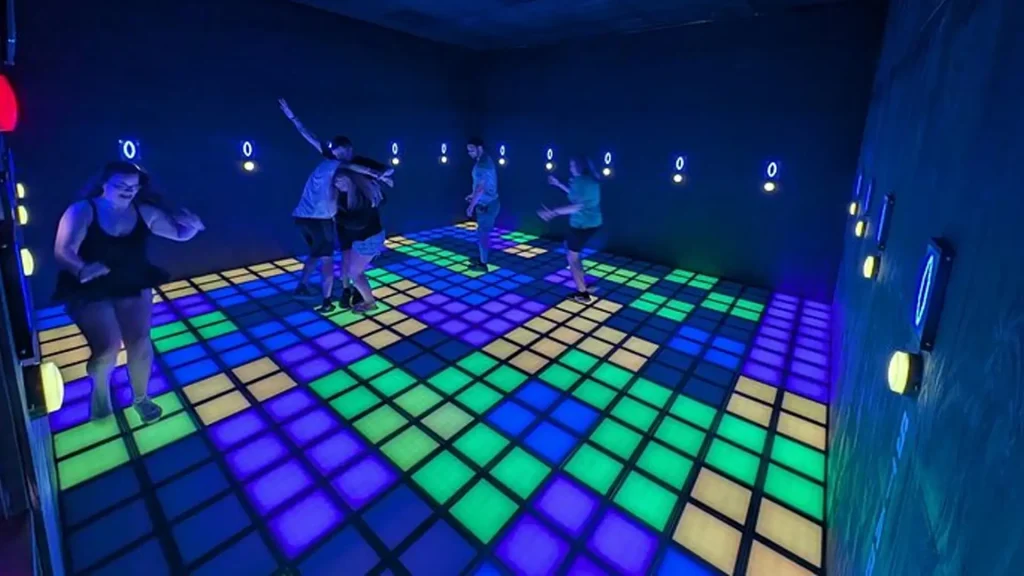
Different game types help operators create speed, memory, reaction, team and challenge-based experiences.
A game floor should offer more than one visual effect. The game mix should create different player experiences.
Common Game Categories
- Speed Challenge: Complete a stepping sequence before time runs out to test player reaction speed.
- Memory Challenge: Remember and repeat a sequence of illuminated tiles.
- Avoidance Challenge: Step away from marked zones as they appear and shift.
- Reaction Challenge: Respond to changing targets as quickly as possible.
- Team Challenge: Cooperate or compete with other players to reach a shared score.
- Timed Challenge: Complete a defined objective before the countdown ends.
When evaluating a supplier, ask to see the actual game modes that will be included in your system. Consider target age, group size, session length, replay value, and the level of supervision required.
Installation and Commissioning
Installation planning should begin before equipment ships. The venue, supplier, installer, and electrical contractor should agree on the floor condition, power requirements, controller location, access route, tile layout, system testing, and commissioning responsibilities.
Typical Project Stages
- Finalizing layout and system configuration
- Production and pre-shipment testing
- Packing and international shipping
- Customs clearance and local delivery
- On-site setup and system commissioning
- Staff training and opening preparation
Actual timing depends on the project configuration, destination, site readiness, shipping method, and local requirements. Confirm a project-specific schedule before announcing an opening date.
For detailed guidance, read the Interactive Game Room Installation Guide.
Maintenance, Safety and Support
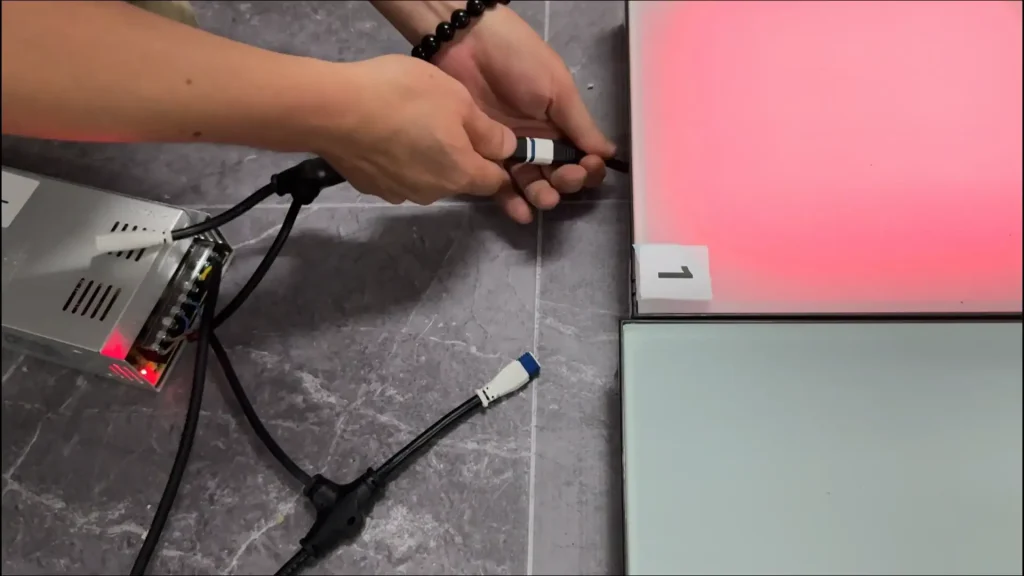
Ask suppliers about cleaning, replacement procedures, spare parts, warranty and technical support before purchase.
Maintenance requirements should be discussed before purchase, not after installation. Ask the supplier about:
- Load capacity and suitable user groups
- Slip resistance and surface grip requirements
- Electrical requirements
- Daily operating checks and cleaning requirements
- Tile and component replacement procedures
- Controller and software troubleshooting
- Warranty coverage and what’s excluded
- Compliance, insurance and safety certification relevant to your country
- Spare-parts availability and remote technical support
A commercial system should be evaluated using its own product documentation. Do not assume that all interactive floors use the same materials, sensors, surface finishes, safety features, or maintenance process — where documentation isn’t available yet, ask the supplier directly rather than treating a general claim as fact. For general industry safety and maintenance best practices, IAAPA’s safety resources are a useful reference point alongside your supplier’s own documentation.
How to Evaluate a Supplier
A commercial buyer should evaluate more than appearance, game videos, or the first quoted price. The important question is what happens after the equipment arrives at the venue.
Factory and Product Verification
Before placing an order, ask whether the supplier can provide:
- A live video walkthrough of production or testing
- Product-specific specification sheets
- A demonstration of the proposed game modes
- Clear packing and shipping information
- Written warranty terms
- Installation guidance
- Information about spare parts and replacement procedures
Questions About Software and Support
Ask these questions in writing:
- Which game modes are included in the quotation?
- Are future software updates included, optional, or separately charged?
- Can individual tiles or components be replaced?
- What information is needed to identify a replacement part?
- Who provides remote troubleshooting support?
- What is excluded from the warranty?
- What must the venue prepare before installation?
For the full interactive game floor specification and OEM options, see the product page.
Interactive Game Floor Buying Checklist
Before placing an order, confirm the following with your supplier:
- ☐ Floor dimensions and layout
- ☐ Player capacity
- ☐ Game library and modes included
- ☐ Sensor system and detection method
- ☐ Surface material and finish
- ☐ Load capacity
- ☐ Safety requirements
- ☐ Power requirements
- ☐ Software update policy
- ☐ Warranty terms
- ☐ Spare-parts availability
- ☐ Installation responsibility
- ☐ Remote technical support
- ☐ OEM or customization options
Working through this list before comparing quotations makes it easier to identify what’s actually included — and what isn’t — across different suppliers.
Customization and OEM Options
Customization may include room-specific layouts, selected game requirements, branded user interfaces, language options, logo treatment, and project-specific software or hardware configuration.
The available scope depends on the supplier’s platform, development capability, project quantity, technical requirements, and timeline. You can review commercial active gaming floor options across the full product range.
Information to Send for a Proposal
A useful recommendation starts with accurate project information. Before requesting a quotation, prepare:
- Floor plan or room dimensions
- Ceiling height and access details
- Venue type and business model
- Target player age range
- Existing attractions and traffic flow
- Supervised or self-directed operating model
- Country and expected opening date
- Branding, language, or custom game requirements
This helps the supplier recommend a system based on your actual project rather than a generic package.
Frequently Asked Questions
What is an interactive game floor?
An interactive game floor is a modular, sensor-based LED floor system that turns stepping and movement into real-time gameplay.
How much does an interactive game floor cost?
Cost depends on tile quantity, software, customization, shipping, installation support, warranty, spare parts, and site requirements. Request a quotation based on your actual floor plan.
Can an interactive game floor be customized?
Customization may include layout, branding, language, user interface, and selected game requirements. Confirm the available scope before ordering.
How long does installation take?
The timeline depends on final configuration, production, shipping, site preparation, customs clearance, and on-site commissioning. Confirm a project-specific schedule before setting an opening date.
What should I ask a supplier before ordering?
Ask about factory verification, product specifications, included software, warranty, spare parts, tile replacement procedures, installation responsibility, and remote technical support.
Where can an interactive game floor be used?
Common applications include FECs, malls, indoor playgrounds, trampoline parks, events, active gaming rooms, and other commercial entertainment spaces.
Get a Project-Specific Recommendation
Send your floor plan, venue type, target player age, country and expected opening date to receive a project-specific Interactive Game Floor recommendation.