
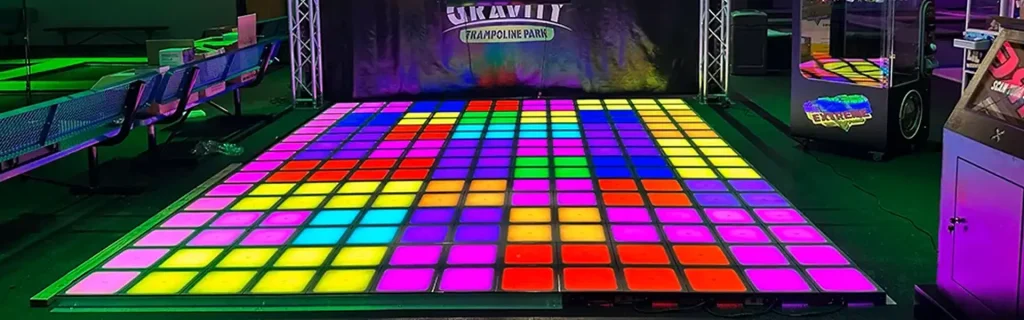
Activate Games Cost: Is It Worth the Investment for FEC Owners? (2026)
When most people first discover active gaming, the first reaction is usually the same:
“This looks expensive.”
And honestly, that reaction makes sense.
A modern active gaming room combines LED floors, wall sensors, lighting systems, game software, and multiplayer interaction into one attraction. Compared with traditional arcade machines, it immediately feels like a larger investment.
That is why the topic of activate games cost has become increasingly common among FEC owners and entertainment investors.
But after talking with operators and looking at how these attractions perform in real venues, one thing becomes clear:
Most successful operators are not evaluating active gaming based only on installation price.
They are evaluating it based on:
- repeat traffic
- player engagement
- visibility
- group participation
- revenue per square foot
And that completely changes the conversation.
Why Activate-Style Gaming Is Getting Attention
A few years ago, many FEC operators focused mainly on:
- arcade machines
- redemption games
- VR attractions
- trampoline expansion
But player behavior has started changing.
People are spending more time online, consuming shorter content, and looking for experiences that feel more social and more physical at the same time.
That shift is one reason active gaming is growing so quickly.
Instead of sitting behind a machine, players move inside the game.
They run across LED floors.
They react to light patterns.
They compete with friends in real time.
This combination of physical movement and digital interaction is exactly why discussions around activate games cost continue increasing.
What Actually Affects Activate Games Cost?
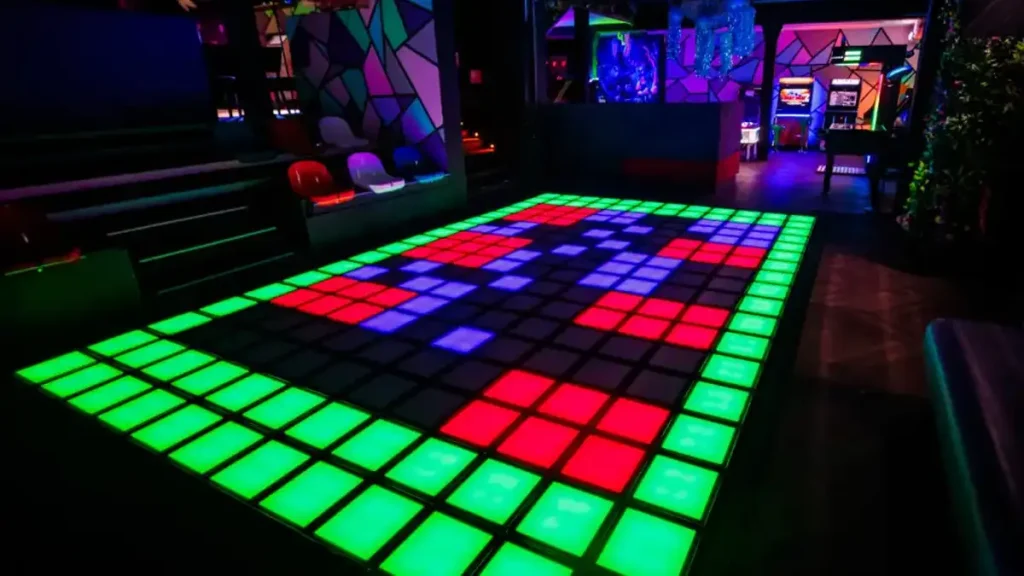
One mistake many people make is assuming there is a single standard price.
In reality, activate games cost can vary significantly depending on the project.
Room Size and Layout
The size of the room changes almost everything.
A compact room designed for smaller group gameplay will naturally require fewer components than a large multiplayer setup.
Larger rooms often need:
- more LED floor tiles
- additional wall targets
- stronger control systems
- larger sensor coverage
- more installation work
This directly affects overall investment.
Gameplay Complexity
Not all active gaming rooms are built the same way.
Some systems focus on simple reaction gameplay.
Others include:
- level progression
- multiplayer synchronization
- scoring systems
- dynamic lighting
- difficulty scaling
- custom game modes
The more advanced the gameplay becomes, the more software and hardware integration is required.
That is another major factor affecting activate games cost.
Customization and Branding
Many venues do not want a generic room.
They want something that matches their venue identity.
Operators often request:
- custom color themes
- branded visuals
- unique layouts
- special lighting effects
- custom gameplay logic
This customization can increase development requirements but also helps create a more recognizable attraction.
The Real Question Is Not Price — It’s ROI
This is the part many people misunderstand.
When experienced FEC operators discuss activate games cost, they are usually not asking:
“How cheap is it?”
They are asking:
“Will this attraction continue making money after the first few months?”
That is a completely different mindset.
A cheap attraction that nobody replays is not a good investment.
A more expensive attraction that consistently brings people back may perform much better long term.
Why Active Gaming Creates Repeat Play
One reason active gaming performs differently from traditional attractions is player behavior.
The gameplay loop is simple:
play → fail → retry → improve.
Players naturally want another round.
They want:
- a higher score
- faster reactions
- harder levels
- revenge against friends
This repeat behavior matters because repeat gameplay is one of the strongest drivers of long-term ROI.
It is one of the biggest reasons FEC owners continue evaluating activate games cost seriously.
Why Visibility Matters More Than Most Operators Realize
Many attractions only become exciting once the player is already inside.
Active gaming works differently.
People walking past can immediately understand what is happening.
They see:
- glowing LED floors
- players running
- teammates shouting
- quick reactions
- competitive movement
This creates curiosity before the customer even enters the room.
That visibility is extremely valuable in entertainment venues because spectators often become players.
Traditional arcade machines do not always create this effect.
VR attractions also struggle here because the real experience is hidden inside the headset.
Activate Games Cost vs VR Attractions
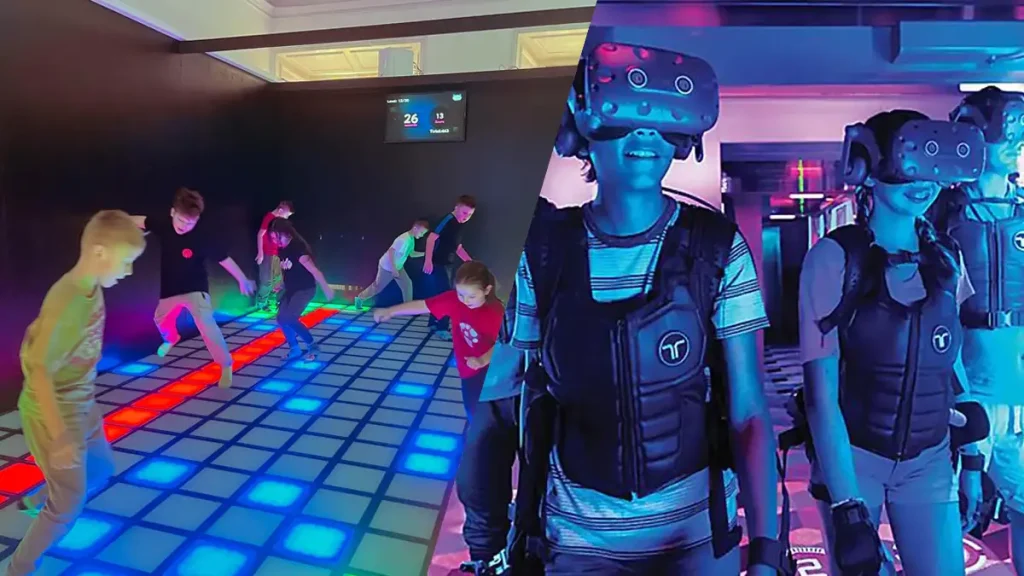
VR is one of the most common comparisons when discussing activate games cost.
At first glance, both attractions seem modern and immersive.
But operationally, they behave very differently.
If you want a full comparison, you can also read our detailed guide on Activate Games vs VR.
VR Requires More Equipment Handling
VR usually requires:
- headset preparation
- charging
- cleaning
- controller maintenance
- player assistance
This increases operational workload.
Active gaming rooms usually require less wearable equipment, making player onboarding faster.
Throughput Changes Everything
One thing operators quickly notice is player throughput.
VR sessions often involve preparation time before gameplay even begins.
Active gaming is usually faster:
players walk in → understand the rules → start moving.
That speed can significantly affect daily revenue potential.
Social Gameplay vs Isolated Gameplay
Active gaming naturally encourages group participation.
Friends watch each other, compete, laugh, and react together.
VR can be immersive, but it is often more isolated.
For many FEC environments, social energy creates stronger replay behavior.
How Active Gaming Generates Revenue

One reason more operators are evaluating activate games cost is because active gaming fits modern entertainment behavior.
Groups Spend More Than Individuals
Most active gaming rooms are designed for multiplayer participation.
This allows venues to sell sessions to:
- friend groups
- birthday parties
- families
- corporate teams
Group entertainment often creates stronger spending behavior compared with single-player attractions.
Short Sessions Improve Turnover
Many active gaming experiences use short game rounds.
That allows venues to rotate players more quickly throughout the day.
Faster turnover helps improve revenue per square foot.
Social Media Exposure
Another major advantage is visual marketing.
LED floors and interactive lighting naturally create short-form content that performs well on:
- TikTok
- Instagram Reels
- YouTube Shorts
Many venues receive organic exposure simply because customers record gameplay.
This is another reason active gaming continues growing in popularity.
Where Interactive Game Floor Systems Fit In
Many active gaming attractions are built around an Interactive Game Floor system.
The floor becomes the main gameplay interface.
Players interact directly with LED tiles through movement and reaction.
This creates gameplay that is:
- easy to understand
- visually attractive
- highly replayable
Because players physically move inside the experience, the attraction feels more active and social compared with traditional arcade systems.
Connection to Pixel Floor Games
A good example of this type of gameplay is the pixel floor game.
Players move across glowing floor tiles while reacting to changing colors and movement patterns.
The concept is simple enough for beginners, but competitive enough to encourage replay.
That replay behavior is exactly why discussions around activate games cost are becoming more common among FEC operators.
Industry Growth and Market Interest
The active gaming industry is expanding quickly.
According to Blooloop, Activate-style gaming combines physical activity with video-game-inspired interaction and continues expanding internationally.
This matters because it shows active gaming is no longer viewed as a niche attraction.
Operators increasingly see it as part of a broader shift toward social and physical entertainment experiences.
Real-World Venue Example
Imagine a medium-sized FEC reviewing its attraction lineup.
The venue already has:
- arcade machines
- redemption games
- small VR stations
But management notices a problem.
Players enjoy the attractions, but many experiences feel short-lived. Customers play once and move on.
The operators begin testing active gaming rooms.
Almost immediately, they notice several differences:
- people stop and watch
- groups naturally join together
- players retry levels
- spectators ask questions
- short sessions create faster turnover
This changes how management views activate games cost.
The conversation shifts away from upfront pricing and toward long-term engagement.
Is Activate Games Cost Worth It?
There is no universal answer because every venue is different.
But active gaming offers several advantages that continue attracting FEC operators:
- strong visual appeal
- repeat gameplay
- group interaction
- fast player turnover
- social media visibility
- flexible room design
For many venues, these factors make active gaming more than just another attraction.
They make it part of a long-term entertainment strategy.
Final Thoughts
At first, activate games cost may seem high compared with traditional attractions.
But the entertainment industry is changing quickly.
Players increasingly want experiences that combine:
- movement
- social interaction
- competition
- digital gameplay
That is exactly why active gaming continues growing worldwide.
For many FEC owners, the real question is no longer:
“How much does activate games cost?”
The more important question is:
“Can this attraction create enough replay value and visibility to justify the investment?”
For a growing number of venues, the answer is becoming yes.
FAQ
-
How much does activate games cost?
The final cost depends on room size, gameplay complexity, hardware systems, and customization requirements.
-
Why are FEC operators interested in active gaming?
Because active gaming combines social interaction, repeat gameplay, and strong visual attraction.
-
Is active gaming cheaper than VR?
Not always upfront, but active gaming often requires less wearable equipment and simpler operation.
-
Can active gaming improve repeat visits?
Yes. Many operators believe replay-focused gameplay helps encourage repeat traffic.
-
What makes active gaming different from arcade machines?
Active gaming focuses more on physical interaction, teamwork, and immersive room-based gameplay rather than individual machines.