

Active Gaming ROI: Is It Worth It for FEC Owners in 2026?
If you run or plan to open a family entertainment center, you’ve probably seen more venues adding active gaming rooms, LED floor games, and interactive challenge systems.
The big question is not whether these games look exciting.
The real question is: does active gaming ROI make sense for a commercial venue?
For many operators, the answer depends on how the attraction is planned, how many players it can handle, and whether the experience is strong enough to bring people back.
Active gaming is not just another arcade machine. It is a different type of attraction built around movement, competition, and repeat play.
What Is Active Gaming?
Active gaming is a form of entertainment where players physically move, react, and interact with a digital system in real time.
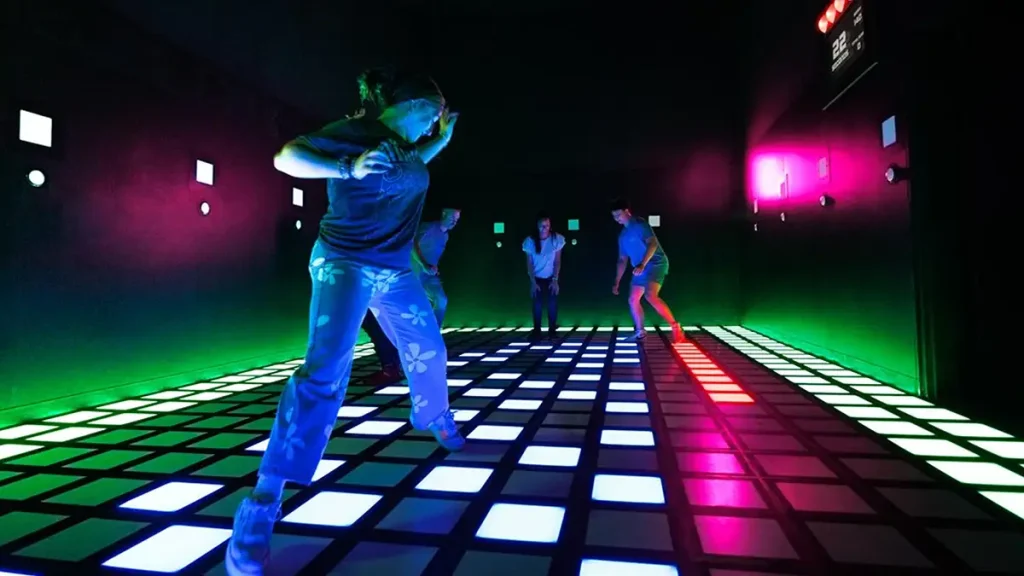
Instead of sitting in front of a screen, players become part of the game environment. They may step on LED tiles, press light-up wall buttons, avoid targets, solve patterns, or compete with teammates.
This is why active gaming feels different from traditional arcade games. The player is not just controlling the game. The player is inside the game.
Common examples include:
- Interactive LED floor games
- Reaction wall challenges
- Grid-based movement games
- Team-based challenge rooms
- Sensor-based physical games
If you want to understand the gameplay side first, you can also read our guide on how Activate-style games work.
Why FEC Owners Are Paying Attention to Active Gaming ROI
For FEC operators, the attraction itself is only one part of the decision. What matters more is whether the attraction can create repeat visits, strong player engagement, and good revenue per square foot.
That is why active gaming ROI has become an important topic.
A good attraction should not only look impressive. It should also keep players moving, attract groups, and make people want to play again.
At the same time, the industry itself is shifting toward more interactive and movement-based experiences. According to industry insights from Blooloop, active gaming — combining physical activity with digital interaction — is one of the fastest-growing segments in indoor entertainment.
It Turns Passive Visitors into Active Players
Traditional arcade games are often built around short attention spans. A player may play once, lose interest, and move on.
Active gaming works differently because the player has to move, react, and stay involved. The body becomes part of the experience.
That physical involvement creates stronger memory and stronger engagement.
It Works Well for Groups
One of the biggest advantages of active gaming is group play.
Friends, families, birthday groups, school groups, and corporate teams can play together. This makes the attraction more valuable than a single-player machine.
More players per session usually means stronger revenue potential.
It Creates Repeat Play
Players often want to try again because they believe they can improve.
They want a better score.
They want to beat friends.
They want to try a harder level.
That repeat behavior is one of the main reasons active gaming ROI can be attractive for indoor entertainment venues.
How Active Gaming Makes Money
Active gaming does not rely on one single revenue model. Different venues can use different pricing strategies depending on the local market, session length, and visitor behavior.
The most common models include pay-per-play, timed sessions, bundled tickets, party packages, or membership add-ons.
The key is to make the experience easy to understand and easy to sell.
Short Sessions Improve Throughput
Many active gaming experiences are designed around short rounds.
A game may last only 2–5 minutes, but players often play several rounds. This allows more people to rotate through the attraction during busy hours.
For operators, this matters because high throughput can improve revenue without requiring a huge space.
Group Pricing Increases Ticket Value
Because these games are naturally social, venues can sell them as group activities.
That works especially well for:
- Birthday parties
- Family visits
- Teen groups
- Team-building events
- Weekend entertainment
A group-based attraction often has better earning potential than a machine that only serves one player at a time.
Visual Appeal Brings People In
Active gaming rooms usually have strong lighting, movement, and sound effects.
That visual impact is important. People walking past the attraction can immediately understand that something exciting is happening.
This is also why LED floor attractions and pixel floor games are becoming more popular in modern entertainment spaces.
Active Gaming ROI vs Traditional Arcade Machines
Traditional arcade machines still have value, but they often serve a different purpose.
Arcade machines are usually smaller, easier to place, and familiar to players. However, many of them are single-player or short-engagement experiences.
Active gaming is more suitable when a venue wants a larger attraction that creates attention, movement, and group participation.
| Factor | Active Gaming | Traditional Arcade |
|---|---|---|
| Player type | Group or multiplayer | Mostly single player |
| Engagement | Physical + digital | Button or screen based |
| Replay value | High | Medium |
| Visual attraction | Strong | Limited |
| Social sharing | Strong | Lower |
This difference is why many operators consider active gaming ROI not only from ticket sales, but also from its ability to make the venue feel more modern and exciting.
Active Gaming vs VR: Which Has Better Business Potential?
VR became popular because it offers immersion, but many operators also understand its limits.
VR usually requires headsets, cleaning, staff support, and setup time. Some players also feel uncomfortable wearing equipment, especially in high-traffic public venues.
Active gaming avoids many of these problems.
Players do not need to wear anything. They can walk in, play, laugh, compete, and leave without long preparation.
| Factor | Active Gaming | VR |
|---|---|---|
| Equipment | No wearable gear | Headset required |
| Hygiene | Easier to manage | Requires cleaning |
| Social play | Strong | Often limited |
| Setup time | Fast | Slower |
| Throughput | High | Medium to low |
This is one reason active gaming is becoming part of a broader indoor entertainment trend.
What Affects Active Gaming ROI?
Not every project produces the same result. The final return depends on how well the system matches the venue, audience, and operating model.
Before investing, operators should look at several key factors.
Venue Size and Layout
Space matters.
A good active gaming setup needs enough room for players to move safely. It also needs a layout that is easy to see and easy to access.
If the attraction is hidden in a corner, it loses part of its visual marketing power.
Player Capacity
The more players the system can handle per session, the stronger the revenue potential.
A system designed for only one or two players may not perform as well as a setup that supports small groups.
Game Variety
Game variety affects replay value.
If players feel the experience is always the same, they may not return often. But if the system includes reaction games, memory challenges, team modes, and competitive levels, it becomes much easier to encourage repeat play.
Operating Model
The same system can perform differently depending on how it is sold.
Some venues charge per session.
Some include it in party packages.
Some use it as a premium attraction.
Some use it to increase dwell time inside the venue.
A clear pricing model is essential for improving active gaming ROI.
Where Interactive Game Floor Fits In

For many venues, the core of an active gaming attraction is the floor system.
An Interactive Game Floor can act as the main gameplay surface, visual centerpiece, and traffic driver. Players step, jump, avoid, and react directly on the LED floor, making the experience easy to understand and exciting to watch.
This is where active gaming becomes more than a game. It becomes a visible attraction.
If you are planning to build this type of attraction, a commercial Interactive Game Floor system can be the starting point.
Is Active Gaming Worth It?
For the right venue, active gaming can be worth serious consideration.
It works best when the venue needs:
- A strong visual attraction
- Group-based gameplay
- Short session cycles
- Repeatable challenges
- A modern alternative to traditional arcade or VR
The biggest mistake is treating active gaming as just another machine.
It should be planned as a featured attraction, with clear placement, pricing, and marketing support.
When those pieces are aligned, active gaming ROI becomes much easier to justify.
Final Thoughts
Active gaming is growing because it matches what today’s players want.
People want to move.
They want to compete.
They want to share the experience with friends.
They want something that feels different from a normal arcade game.
For FEC owners, the value is not only in the game itself. The value is in engagement, repeat play, group spending, and the ability to make the venue feel more exciting.
That is why active gaming ROI should be evaluated as both a revenue opportunity and a customer experience upgrade.
FAQ
-
What is active gaming ROI?
Active gaming ROI refers to the return a venue can generate from active gaming attractions through ticket sales, group sessions, repeat play, and increased visitor engagement.
-
Is active gaming better than VR for FEC venues?
For many venues, active gaming can be easier to operate because it does not require headsets, long setup time, or frequent equipment cleaning.
-
What type of venue is best for active gaming?
Active gaming works well in family entertainment centers, trampoline parks, arcades, shopping malls, and indoor activity venues.
-
Does an interactive game floor help improve ROI?
Yes, an interactive game floor can improve engagement, increase visual attraction, and support group gameplay, all of which can help improve active gaming ROI.