
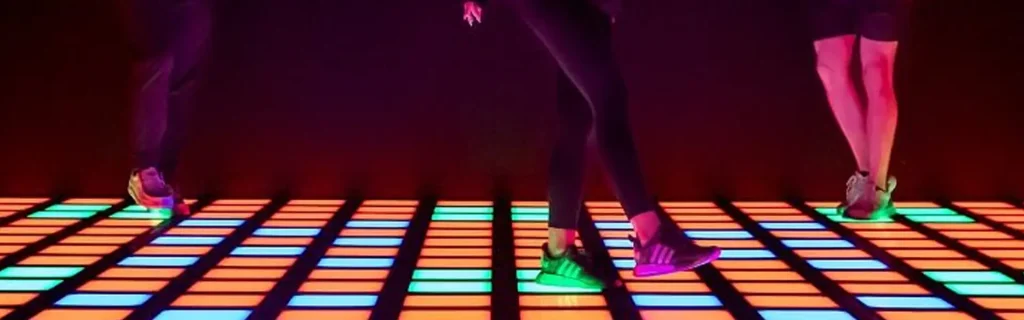
Can You Build a Custom Interactive Game Floor for Your FEC Project?
A custom interactive game floor helps FEC operators adapt active gaming systems to real venue conditions, including irregular layouts, support columns, mixed-age visitors, branding needs, and future expansion plans.
For many FEC projects, the first challenge is not choosing the most exciting game. It is understanding the space.
Some venues have support columns, L-shaped lease areas, low ceilings, narrow entrances, or shared party zones. A standard package may fit the room on paper, but still create poor traffic flow, wasted space, or difficult staff operation.
This guide explains what can be customized in an interactive game floor project, including layout, software, OEM branding, sensor structure, maintenance design, and long-term expansion planning.
Key Takeaways
- A custom interactive game floor is useful for FECs, indoor playgrounds, shopping malls, and active gaming venues with non-standard layouts.
- Customization is not only about branding. It affects space usage, traffic flow, game flexibility, maintenance, and ROI.
- Standard packages often fail when venues have columns, L-shaped rooms, shared zones, or mixed-age visitors.
- Buyers should evaluate sensor type, glass thickness, module replacement, software flexibility, and future expansion before ordering.
Why Custom Interactive Game Floor Projects Usually Start With Venue Limitations
Many first-time buyers begin by comparing attraction videos. They look at LED effects, game colors, player reactions, and the number of games included. These things matter, but they are only part of the decision.
After several project discussions, the conversation usually changes.
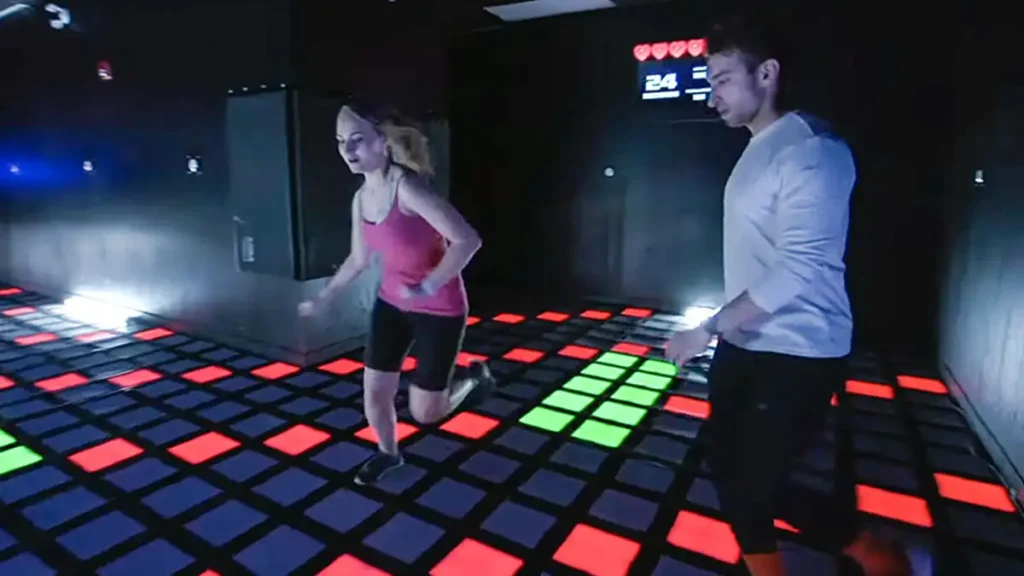
From attraction shopping to project planning
At the beginning, buyers often ask:
- How many games are included?
- How bright is the LED floor?
- Can children play it?
- What is the price?
- How fast can it be installed?
Later, the questions become more practical:
- Can the layout avoid the support column?
- Can children and teenagers use the same space safely?
- Can the software be updated later?
- Can the system expand if the venue performs well?
- Can floor games connect with wall interaction?
- Can damaged modules be replaced quickly?
- Can the interface match the venue brand?
This shift is important. It means the buyer is no longer thinking only about the attraction. They are thinking like an operator.
An FEC owner does not only need a product that looks good on opening day. They need a system that works during weekends, holidays, birthday parties, group events, maintenance periods, and future upgrades.
The venue becomes the starting point
Traditional entertainment planning often started with equipment.
Operators selected a product, checked the required dimensions, installed it, and opened the venue. That approach worked better when attractions were isolated products.
Modern FEC planning is different.
Many projects now include:
- shared event areas
- party rooms
- parent-child activity zones
- teen activity spaces
- retail crossover zones
- food and beverage areas
- mixed traffic paths
- non-standard architecture
In these spaces, the venue becomes the starting point.
The attraction must adapt to the venue, not the other way around.
This is one of the main reasons custom interactive game floor systems are becoming more popular. A standard system may look simple in a catalog, but real commercial spaces rarely look like catalog diagrams.
Why Standard Packages Often Fail in Custom Interactive Game Floor Projects
Most standard equipment packages are designed for ideal spaces.
Square rooms.
Straight walls.
Open floor plans.
No columns.
No narrow corridors.
No shared activity zones.
Real FEC projects are rarely that clean.
Common problems in real venues
Many commercial venues include physical or operational limitations that affect attraction planning.
| Venue Condition | Common Problem | Result for Standard Systems |
|---|---|---|
| Support column in play area | Blocks movement and visibility | Dead zones and poor player flow |
| L-shaped floor plan | Difficult to use side sections | Wasted space and uneven gameplay |
| Narrow entrance | Players and spectators crowd together | Traffic bottlenecks |
| Shared party room | Multiple activities overlap | Staff control becomes harder |
| Low ceiling | Limits certain equipment options | Reduced design flexibility |
| Mixed-age visitors | Different speed and safety needs | One game mode cannot fit all users |
These issues may not look serious during early planning. But after installation, they can affect daily operation.
A poorly adapted layout may reduce player capacity, create supervision problems, or leave part of the paid lease area underused.
For operators paying commercial rent, wasted space is not just a design problem. It is a revenue problem.
Why “it fits” is not enough
One mistake buyers often make is thinking that if the dimensions fit, the project is suitable.
But fitting the floor area is not the same as creating a good operating layout.
A system may technically fit inside the room but still create:
- weak traffic flow
- poor entry and exit movement
- limited spectator space
- difficult staff supervision
- uneven player distribution
- low hourly throughput
- unused corners
A custom interactive game floor solves this differently.
Instead of forcing the venue to match the product, the system can adjust around the venue.
Tile configuration can change. Game zones can move. Sensor placement can be adjusted. Entry and exit paths can be planned around real visitor behavior.
This flexibility often improves playable area and revenue potential per square meter.
What a Custom Interactive Game Floor Can Actually Customize
Many buyers initially think customization means adding a logo or changing the color theme.
That is only the surface layer.
In commercial FEC projects, customization usually affects layout, gameplay, software, hardware, branding, and maintenance strategy.
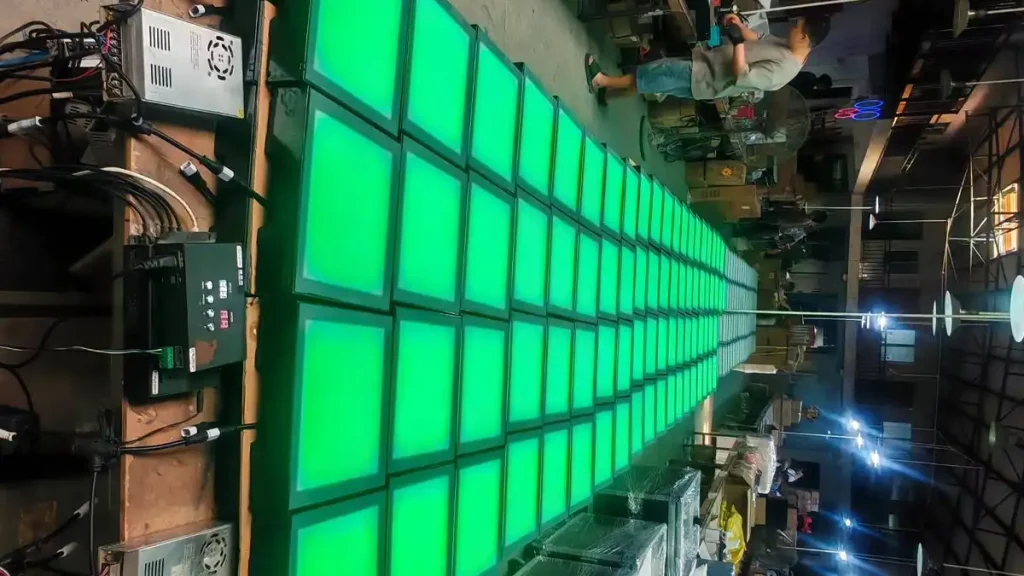
Layout customization
Layout customization is often the most valuable part of the project.
A custom interactive game floor can be planned around:
- irregular rooms
- columns
- curved walls
- L-shaped spaces
- narrow sections
- separate activity zones
- future expansion areas
- wall and floor combinations
| Layout Requirement | Standard Package Limitation | Custom Solution |
|---|---|---|
| Irregular floor plan | Fixed square layout wastes space | Flexible tile arrangement |
| Column in the venue | Blocks the game area | Game zones planned around obstacle |
| Shared party zone | Traffic conflict | Separated play and event movement |
| Future expansion | Difficult to add modules later | Modular planning from the start |
| Wall-floor interaction | Separate systems | Integrated layout and scoring |
For small venues, this can be especially important. A 60㎡ children’s center may not have the luxury of wasting corners. A better layout can make the same floor area feel more usable, safer, and easier to operate.
Software customization
Software flexibility often creates more long-term value than visual effects.
A modern interactive game floor can usually adjust:
- game duration
- difficulty level
- number of players
- scoring rules
- team modes
- cooperative modes
- target size
- reaction speed
- language settings
- theme screens
- game rotation logic
This matters because different visitor groups behave differently.
Young children need simple rules, slower reaction time, and larger targets. Teenagers often prefer competition, ranking, and fast challenges. Families need cooperative gameplay that allows adults and children to play together.
A venue may use one software mode during daytime family sessions and another mode for evening group bookings.
That kind of flexibility keeps the attraction useful for more than one customer type.
OEM branding customization
Branding is also becoming more important.
In the past, branding usually meant wall graphics, signage, and decoration. Today, the interactive system itself can become part of the venue identity.
OEM customization may include:
- startup screens
- venue logo
- interface colors
- game backgrounds
- score display
- ranking pages
- victory screens
- sound effects
- themed game skins
For premium projects, this is valuable because operators do not want their attraction to feel identical to another venue.
A custom interface helps the system feel like part of the venue, not just equipment placed inside the venue.
How Custom Interactive Game Floor Improve FEC Operation
Customization should not be treated as decoration. In most projects, it is an operating tool.
The right custom plan can improve space efficiency, visitor engagement, staff control, and future upgrade potential.
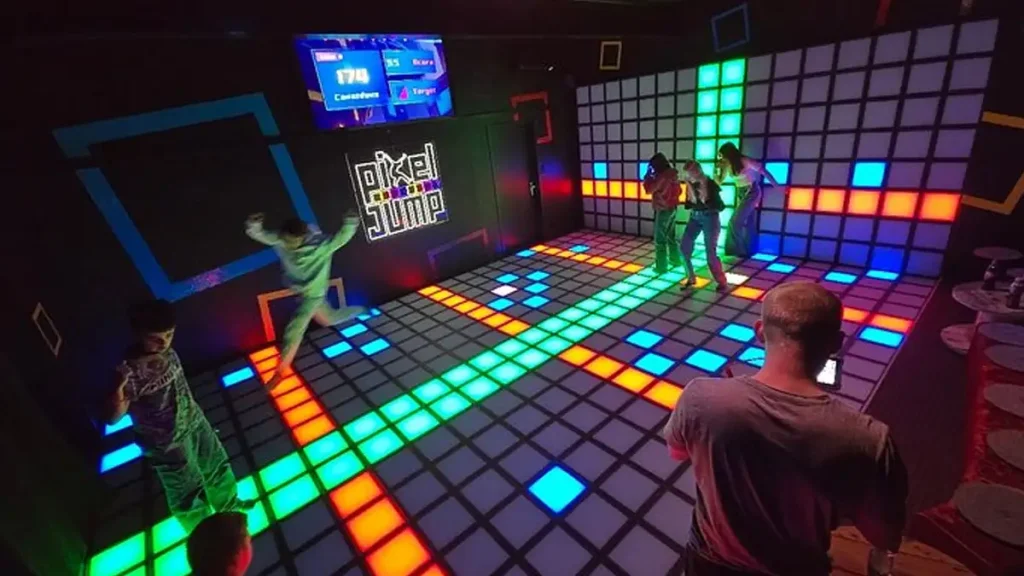
Better space utilization
Market research on indoor amusement centers points to growing demand for family-oriented and experiential entertainment, which makes efficient space planning more important for commercial venues.
Commercial space is expensive. This is especially true in shopping malls, urban entertainment centers, tourist areas, and mixed-use commercial properties.
If a standard layout wastes 10% to 20% of the available area, the operator continues paying rent for space that does not generate enough value.
Custom layout planning helps reduce this problem.
It can improve:
- playable area ratio
- movement paths
- player distribution
- spectator position
- staff supervision
- queue flow
- group capacity
In several project reviews, relatively small layout changes made a visible difference. Moving one game zone, adjusting tile direction, or creating two connected play areas instead of one fixed square area can make the venue feel more natural.
The result is not only better appearance. It is better operation.
Higher repeat engagement
First-time visitors may be attracted by LED effects.
Repeat visitors come back because the experience changes, challenges them, or gives them a reason to try again.
This is why active gaming has become more important in FEC planning.
Visitors increasingly expect:
- physical movement
- competition
- cooperation
- timed challenges
- team scoring
- changing missions
- social participation
- replay value
Static experiences may attract attention once.
Dynamic systems create more reasons to return.
A custom interactive game floor can support seasonal themes, updated games, different difficulty levels, and group modes. This makes it more useful for venues that depend on repeat local visitors rather than only one-time tourist traffic.
Easier staff operation
A good system should not create unnecessary staff pressure.
If the layout is confusing, staff need to constantly guide players. If the game rules are too complicated, children may need repeated explanation. If modules are hard to maintain, technical issues interrupt daily business.
Customization can improve staff operation by adjusting:
- session length
- reset speed
- interface simplicity
- game difficulty
- control panel design
- maintenance access
- traffic direction
For children’s centers and party venues, a simplified operating interface can be more valuable than a large game library.
The question is not always “How many features does the system have?”
A better question is: “Can staff operate it smoothly during peak hours?”
Technical Hardware Inside a Custom Interactive Game Floor
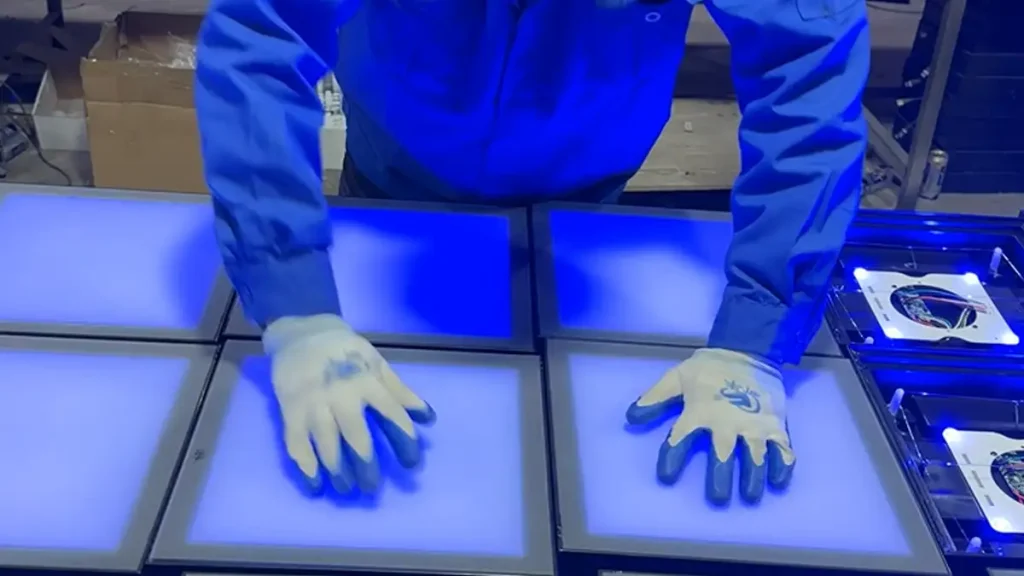
Technical Hardware Inside a Custom Interactive Game Floor
Many buyers spend a lot of time discussing game themes, visual effects, and LED colors, but the hardware structure is what decides whether a custom interactive game floor can survive long-term commercial use.
Two systems may look similar in a video. Both may show colorful lights, multiplayer games, and fast reactions. But under the surface, the sensor type, glass structure, power design, module replacement method, and heat management can be very different.
For FEC operators, these technical details directly affect maintenance cost, downtime, player safety, and long-term ROI. A custom interactive game floor should be evaluated as a commercial interactive floor system, not only as a visual attraction.
Sensor Type Comparison
Sensors are the core of an interactive game floor. Every step, movement, reaction, and scoring action depends on sensor accuracy.
| Sensor Type | Advantages | Limitations | Suitable Projects |
|---|---|---|---|
| Pressure sensors | Lower cost, simple structure | Mechanical wear over time | Entry-level or lower-traffic venues |
| Infrared sensors | Contact-free response | May be affected by lighting, reflection, or player blocking | Controlled indoor spaces |
| Capacitive sensors | High precision, less mechanical wear | Higher initial cost | Commercial FECs and active gaming venues |
Pressure Sensors
Pressure sensors are usually easier to understand and can work for lighter-use projects. However, because they depend on physical pressure, long-term wear should be considered in busy venues.
For a small custom game floor for FEC use, pressure sensors may be acceptable when traffic is moderate and the operating model is simple.
Infrared Sensors
Infrared sensors can respond quickly, but they require careful environmental planning. Strong lighting, reflective surfaces, or crowded movement may affect performance.
For shopping mall attractions, lighting and reflection should be checked before confirming the interactive game floor layout.
Capacitive Sensors
Capacitive sensors are often preferred for commercial custom interactive game floor projects because they have fewer mechanical wear points and can provide stable response for repeated movement.
For FECs, trampoline parks, and active gaming venues, capacitive sensing can reduce maintenance pressure over time and support higher player throughput.
Glass Thickness and Surface Durability
The surface material affects safety, durability, and maintenance risk. Buyers should not choose glass thickness only by looking for the strongest number. The right choice depends on visitor age, movement intensity, traffic level, and operating hours.
| Glass Thickness | Typical Use | Traffic Level | Recommended Venue |
|---|---|---|---|
| 8mm tempered glass | Light to medium activity | Medium | Small indoor playgrounds or children’s centers |
| 10mm tempered glass | Standard commercial use | Medium to high | FECs, mall attractions, and family venues |
| 12mm tempered glass | High-intensity movement | High | Active gaming venues and competitive play zones |
For children’s venues, 8mm or 10mm may be enough depending on the game style. For active gaming spaces with running, jumping, and competitive movement, 10mm or 12mm is usually more suitable.
A custom interactive game floor project should match the surface structure to the real operating environment instead of using one standard specification for every venue.
Power Consumption and Heat Management
Power planning is another detail buyers often underestimate. A larger custom interactive game floor requires stable electrical design, safe cable routing, and enough capacity for long operating hours.
| System Type | Estimated Power Consumption | Planning Notes |
|---|---|---|
| Pixel floor | 60–90W/㎡ | Better for visual display and light interaction |
| Interactive game floor | 80–120W/㎡ | Common for FEC game projects |
| Active gaming system | 120–150W/㎡ | Requires stronger electrical and heat planning |
Heat management affects LED lifespan, controller stability, and daily operating consistency. Before confirming a project, buyers should ask about controller placement, ventilation, cable routing, power distribution, and maintenance access.
These details may not look exciting in a product video, but they matter after the system runs every day.
Modular Replacement Design
Every commercial system will eventually need maintenance. The important question is not whether a module may fail one day. The important question is how quickly the venue can recover.
A better custom interactive game floor should support:
- independent module replacement
- plug-and-play structure
- separated controllers
- easy troubleshooting
- accessible maintenance points
- available spare parts
| Maintenance Structure | Operational Result |
|---|---|
| Full system shutdown | Higher downtime and lost revenue |
| Independent module replacement | Faster recovery |
| Plug-and-play modules | Easier basic maintenance |
| Separated controller design | Faster troubleshooting |
| Spare module support | Better for high-traffic venues |
For FEC operators, maintenance design affects real income. If one damaged section forces the entire attraction to close, the hidden cost can become much higher than the replacement part itself.
Custom Interactive Game Floor Project Examples
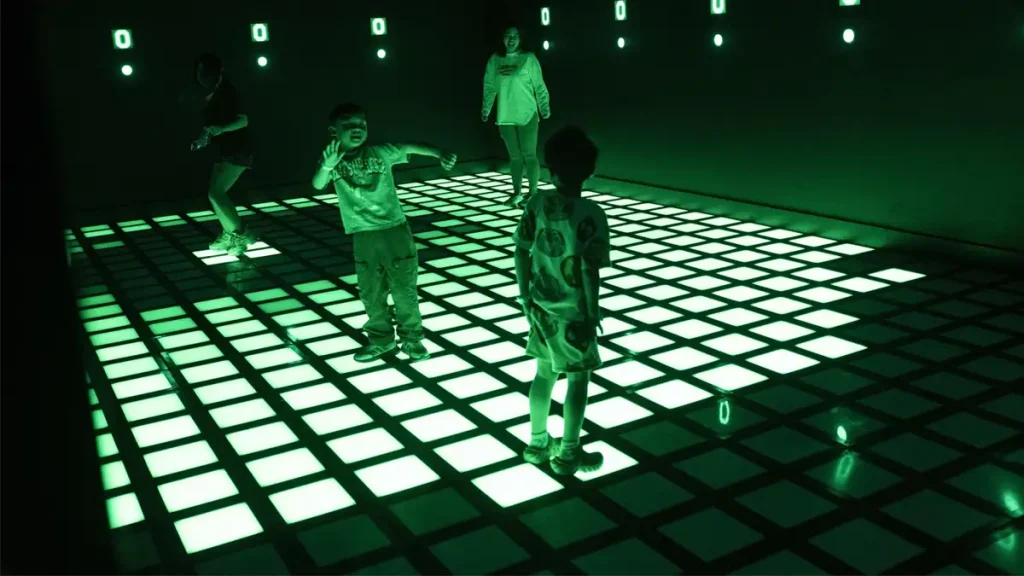
Every venue has different limitations. The following planning examples show why custom interactive game floor solutions matter in real FEC projects.
Mall FEC With an L-Shaped Layout
A shopping mall FEC had about 120㎡ available for an interactive attraction, but the lease area was not a clean rectangle. One side was narrow, and a support column affected player movement.
A standard square layout would have created dead zones and poor traffic flow.
The custom plan adjusted the tile arrangement around the column and divided the space into better activity paths. The game modes were also planned for families instead of only teenagers.
| Project Item | Details |
|---|---|
| Venue type | Shopping mall FEC |
| Area | Around 120㎡ |
| Main issue | L-shaped layout and support column |
| Customization | Tile layout, family game modes, traffic path planning |
| Planning result | Better space usage and smoother player movement |
The biggest lesson from this project is simple: the attraction did not need to be larger. It needed to fit the space better. A custom interactive game floor can help operators turn difficult layouts into usable play areas.
Active Gaming Venue With Wall and Floor Interaction
Another project focused on competitive active gaming. The buyer did not want only a simple LED floor. The venue needed movement, scoring, replay value, and group competition.
In this case, wall-floor integration became important.
The custom solution included:
- floor reaction games
- wall interaction
- team scoring
- competitive challenge modes
- synchronized lighting and sound
| Project Item | Details |
|---|---|
| Venue type | Active gaming center |
| Main audience | Teenagers, groups, team activities |
| Main issue | Need for replay value |
| Customization | Wall-floor synchronization and scoring system |
| Planning result | Stronger group engagement and better repeat-play potential |
This type of project is suitable for operators who want active gaming equipment that supports competition, physical movement, and repeat visits.
For this kind of venue, interactive LED floor customization is usually more important than simple visual branding. The system must support game logic, scoring rules, wall-floor response, and future software updates.
Small Children’s Center With Limited Space
A smaller children’s center had about 60㎡ available and needed to combine play sessions with birthday party use.
The buyer first considered a standard interactive floor package, but the size and operating logic were not ideal.
The custom solution used a smaller tile arrangement, simpler games, and a more child-friendly interface.
| Project Item | Details |
|---|---|
| Venue type | Children’s indoor center |
| Area | Around 60㎡ |
| Main issue | Limited space and mixed use |
| Customization | Smaller layout, simple software, child-friendly games |
| Planning result | Lower installation cost and better space efficiency |
This shows that a custom interactive game floor is not only for large premium projects. Small venues often need customization even more because every square meter matters.
Common Mistakes Buyers Should Avoid
Customization can create strong value, but only if buyers focus on the right details. A custom interactive game floor should improve operation, not only appearance.
Mistake 1: Only Comparing Visual Effects
LED brightness, animations, and game videos are easy to compare. But they do not tell the full story.
Buyers should also compare:
- sensor structure
- glass specification
- software flexibility
- module replacement method
- after-sales support
- OEM capability
- upgrade path
A beautiful custom LED floor game with poor maintenance design can become expensive later.
Mistake 2: Ignoring Future Expansion
Many operators buy only for the current floor plan. But FECs change over time.
If the venue performs well, the operator may want to add modules, update games, expand to wall interaction, or refresh branding.
Before purchasing, buyers should ask:
- Can the system add new games later?
- Can modules be expanded?
- Can the interface be redesigned?
- Can wall and floor systems connect later?
- Can the system support future venue upgrades?
A custom interactive game floor should support future growth, not block it.
Mistake 3: Choosing Only by Lowest Price
Price matters, especially for new projects. But the lowest initial price is not always the lowest total cost.
A cheaper system may become expensive if it has:
- frequent module failure
- slow replacement support
- limited software updates
- no OEM flexibility
- poor documentation
- difficult maintenance
For B2B buyers, the better question is not “Which system is cheapest?”
The better question is: “Which system gives better operating value over time?”
Mistake 4: Not Confirming Factory Capability
Many suppliers can sell interactive game floor products. Not all of them can support custom projects.
A true manufacturer should be able to discuss:
- layout engineering
- module production
- software modification
- OEM branding
- sensor configuration
- electrical planning
- replacement parts
- after-sales process
For complex projects, factory capability matters because customization requires engineering communication, not only sales communication.
If your project requires interactive game floor OEM support, make sure the supplier can handle both hardware production and software adjustment.
Custom Interactive Game Floor Buyer Checklist
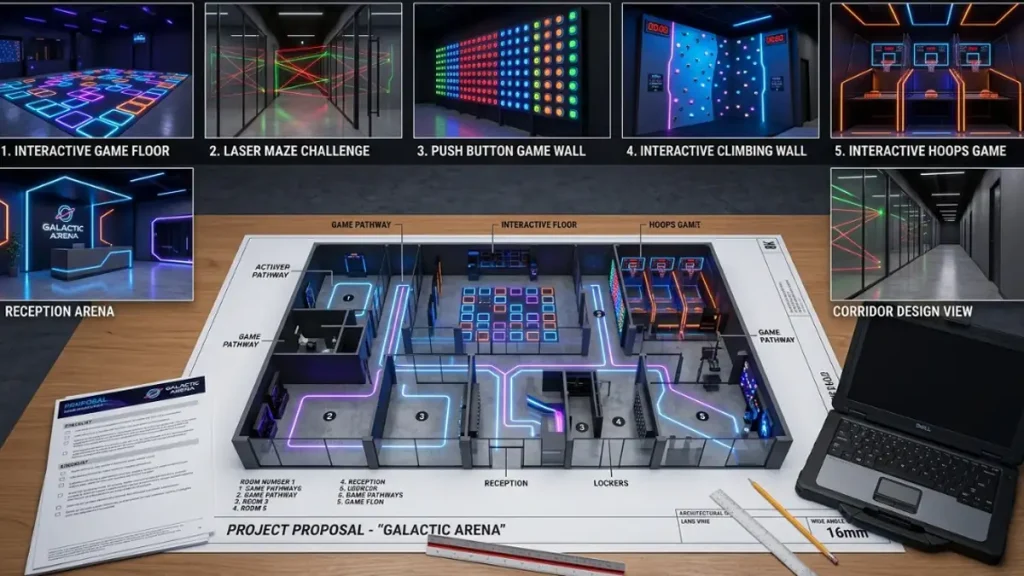
Before choosing a system, buyers should confirm the following points.
| Category | Questions to Ask |
|---|---|
| Venue layout | Are there columns, corners, low ceilings, or narrow paths? |
| Visitor group | Will the main users be children, teenagers, families, or groups? |
| Game style | Should the system focus on cooperation, competition, or party use? |
| Player capacity | How many players should the floor support per hour? |
| Sensor type | Which sensor structure fits the traffic level? |
| Surface material | What glass thickness is suitable for the venue? |
| Software | Can game rules, timing, and difficulty be changed? |
| Branding | Can the interface and themes match the venue identity? |
| Maintenance | Can modules be replaced independently? |
| Expansion | Can the system add modules or connect with wall games later? |
| Supplier capability | Is the company a manufacturer or only a reseller? |
This checklist helps buyers evaluate a custom interactive game floor as a commercial investment rather than a simple attraction purchase.
How to Plan a Custom Interactive Game Floor Project
A good custom interactive game floor project does not start with a quotation. It starts with basic planning information.
Step 1: Prepare the Venue Information
Before asking for a solution, prepare:
- floor plan with dimensions
- photos or videos of the venue
- column and wall positions
- ceiling height
- entrance and exit locations
- power access points
- expected visitor age group
- budget range
- branding requirements
- future expansion plans
The more accurate the information, the better the layout proposal will be.
Step 2: Define the Operating Model
Different venues need different operating models.
A children’s center may need short sessions and simple games. A shopping mall attraction may need high visibility and quick turnover. An active gaming venue may need competitive scoring and repeat challenges.
Buyers should define:
- session length
- player count
- age group
- staff control method
- ticketing model
- event use
- peak-hour traffic
- repeat visit strategy
This helps the manufacturer recommend a suitable interactive game floor layout and hardware plan.
Step 3: Confirm Technical Requirements
After layout and operation are clear, buyers should confirm technical details:
- sensor type
- tile size
- glass thickness
- power consumption
- controller structure
- installation method
- cable routing
- module replacement process
- software update method
These details protect long-term operation and help avoid hidden maintenance problems after installation.
Step 4: Review Branding and Software Options
Finally, confirm the customization layer:
- logo placement
- startup screen
- UI color
- game theme
- scoring display
- language
- difficulty levels
- game library
- update plan
This is where the custom interactive game floor becomes part of the venue identity instead of looking like a standard equipment package.
FAQ About Custom Interactive Game Floors
What is a custom interactive game floor?
A custom interactive game floor is a modular active gaming system designed around a specific venue’s layout, visitor group, branding, and operating needs. It can include customized tile arrangements, game rules, sensor structures, software interface, and OEM visual design.
Can interactive game floors fit irregular FEC layouts?
Yes. Custom systems can be planned for L-shaped rooms, support columns, narrow areas, curved spaces, and multi-zone layouts. This is one of the biggest advantages compared with fixed standard packages.
What can be customized in an OEM interactive game floor?
OEM customization can include layout, tile size, game themes, startup screens, logo placement, interface colors, scoreboards, language settings, difficulty levels, player count, and future software updates.
Which sensor type is better for commercial FEC use?
For high-traffic commercial FECs, capacitive sensors are often preferred because they offer strong response accuracy and less mechanical wear. Pressure sensors may be suitable for lower-budget or lighter-use projects, while infrared sensors require careful environmental planning.
How long does custom production usually take?
Most custom interactive game floor projects require around 15 to 30 days for production, depending on layout complexity, OEM branding, software modification, and module quantity. Larger wall-floor integrated projects may need more planning time.
Can the game software be updated later?
In most commercial systems, yes. Game duration, difficulty, scoring rules, player count, themes, and challenge modes can often be updated or adjusted. This is important for maintaining replay value.
Are custom interactive game floors suitable for small venues?
Yes. Small venues often benefit from customization because limited space must be used carefully. A custom layout can reduce wasted area, simplify operation, and avoid unnecessary hardware cost.
Plan Your Custom Interactive Game Floor Project
A custom interactive game floor is not only a flexible version of a standard product. For many FEC operators, it becomes part of the venue’s long-term entertainment infrastructure.
It affects how visitors move, how staff manage sessions, how games stay fresh, how the brand appears inside the experience, and how easily the system can be maintained or expanded later.
Standard packages can work well in simple spaces. But many real venues are not simple. They may have support columns, narrow paths, shared party zones, mixed-age visitors, and future expansion plans that cannot be solved by fixed layouts alone.
If your project includes an unusual floor plan, specific branding needs, wall-floor interaction, or long-term expansion plans, it is worth reviewing the space before choosing a standard package.
You can send your floor plan, venue photos, target audience, and expected visitor volume for a technical layout review.