

Activate Games vs VR: Which Is Better for FEC Venues? (2026 Guide)
Compare activate games vs vr for gameplay, cost, ROI, maintenance, and which attraction works better for FEC venues.
When FEC owners look for a new attraction, one comparison comes up again and again: activate games vs vr.
Both options look modern. Both promise immersive experiences. Both can attract attention inside a venue.
But once you move beyond the surface, the difference between activate games vs vr becomes much more practical. It is not only about how exciting the experience looks, but how well it works in a real commercial environment.
For a family entertainment center, the best attraction is not always the one with the most advanced technology. It is the one that can bring people in, keep them engaged, serve enough players per hour, and encourage repeat visits.
That is why this comparison matters.
What Are Activate-Style Games?
Activate-style games are physical interactive gaming experiences where players move inside a room and complete challenges in real time.
Instead of sitting in front of a screen or wearing a headset, players use their bodies to interact with the environment.
They may:
- step on LED floor tiles
- hit light-up wall targets
- avoid certain colors
- follow movement patterns
- work with teammates
- compete for higher scores
The room itself becomes the game.
If you want to understand the basic gameplay flow first, you can read our full guide on how Activate Games work.
This type of attraction is easy for new players to understand. Most people only need a few seconds to know what to do.
That simple onboarding is one of the biggest advantages when comparing activate games vs vr for busy entertainment venues.
What Is VR Gaming?
VR gaming uses headsets to place players inside a virtual environment.
Players usually wear a headset, hold controllers, and interact with a digital world through the device. VR can be very immersive, especially for storytelling, simulation, and visual experiences.
But for commercial venues, VR also comes with practical requirements:
- headset setup
- player instructions
- cleaning after use
- equipment charging
- staff assistance
- device maintenance
This does not mean VR is bad. It simply means VR is a different type of attraction.
When comparing activate games vs vr, FEC owners need to look at both customer experience and daily operation.
Activate Games vs VR: Core Differences Explained
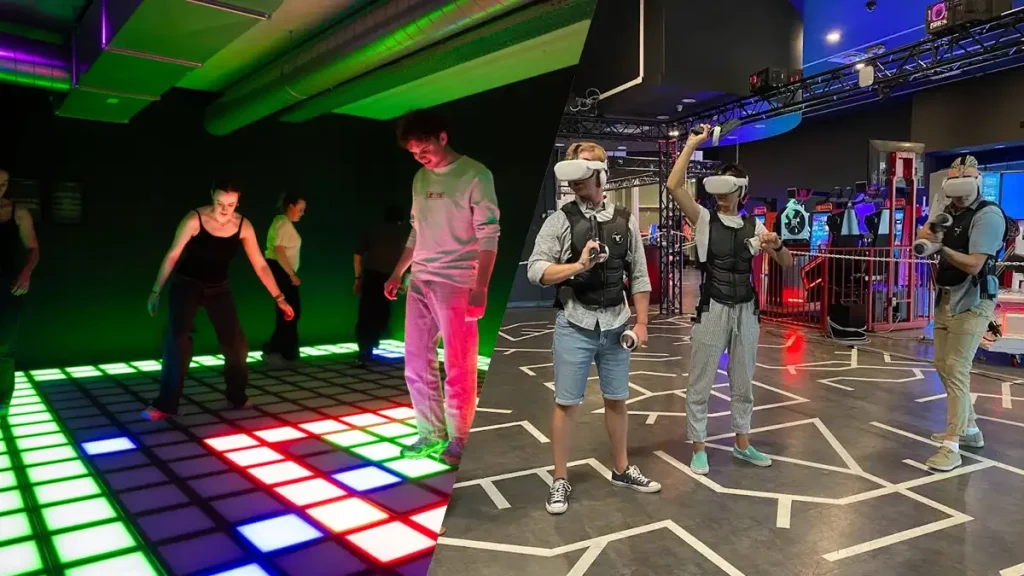
The biggest difference between activate games vs vr is simple:
Active gaming happens in the real world.
VR happens inside a headset.
That one difference affects almost everything: how players move, how groups interact, how staff operate the attraction, and how many people can play in a given time.
Physical Gameplay vs Virtual Gameplay
Activate-style games are based on physical movement.
Players run, step, jump, react, and communicate in the same room. Their body becomes part of the game.
VR is based on virtual immersion. Players enter a digital world, but their real-world movement is often more limited.
For some users, VR feels impressive. But for group entertainment, physical gameplay can feel more natural and more social.
No Equipment vs Wearable Devices
One major difference in activate games vs vr is equipment.
Activate-style games do not require players to wear anything. They walk into the room and start playing.
VR usually requires:
- headset
- controllers
- adjustment time
- safety explanation
For a venue with high traffic, that setup time matters.
The faster people can start playing, the easier it is to move groups through the attraction.
Shared Space vs Individual Experience
Activate-style games are built for shared energy.
Players see each other, laugh at mistakes, react together, and compete in real time.
VR can support multiplayer, but each player is still inside their own headset experience. From the outside, it is harder for spectators to understand what is happening.
This matters because FEC attractions often need to sell themselves visually.
If people walking past can instantly see the fun, they are more likely to join.
Deeper Comparison: Real Business Impact of Activate Games vs VR
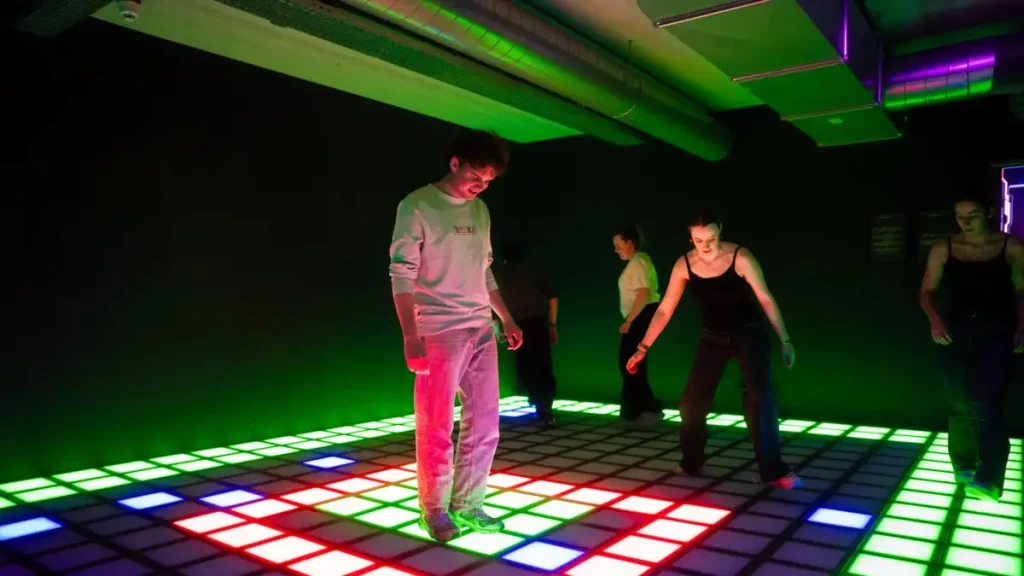
When operators compare activate games vs vr, they should not only ask which one is more exciting.
They should ask:
- Which one serves more players?
- Which one needs less staff support?
- Which one creates better group participation?
- Which one has stronger repeat play?
- Which one is easier to maintain?
These questions are more important than the technology itself.
Player Behavior and Retention
Active gaming often creates a simple but powerful loop:
play → fail → laugh → retry → improve.
This loop is valuable because players do not just finish one experience and leave. They often want to try again immediately.
They want a better score.
They want to beat friends.
They want to reach a harder level.
VR experiences can also be engaging, but many VR games are more session-based. Once the experience ends, players may feel they have completed it.
That is why repeat behavior is one of the strongest points in the activate games vs vr comparison.
Spectator Attraction and Conversion
Active gaming is easy to understand from the outside.
People can see:
- players moving quickly
- LED floors changing colors
- wall targets lighting up
- teammates shouting and reacting
This creates natural curiosity.
A person walking past may stop and think, “That looks fun. I want to try it.”
VR does not always create the same spectator effect. From the outside, a player wearing a headset may not look very exciting because the main experience is hidden inside the device.
For FEC venues, visibility is not a small detail. Visibility helps convert spectators into paying players.
Revenue Per Square Foot
Space is expensive in entertainment venues.
A good attraction should generate strong engagement from the space it occupies.
Activate-style games can support multiple players in one room and often use short game cycles. This can help improve player flow and revenue per square foot.
VR setups may require individual stations, safety zones, staff supervision, and longer session times.
This does not mean VR cannot make money. But when comparing activate games vs vr, active gaming often has an advantage in group-based, high-traffic environments.
Operational Differences That Matter
A game can look exciting in a video, but FEC owners also need to think about operation.
The attraction has to work every day.
It needs to handle busy weekends, birthday groups, first-time players, repeated use, and staff workflow.
This is where the difference between activate games vs vr becomes even clearer.
Throughput
Throughput means how many players can use the attraction in a certain time.
Active gaming usually has strong throughput because players can enter quickly, play a short round, and rotate out.
VR often requires more steps before gameplay begins:
- put on headset
- adjust fit
- explain controls
- check safety
- clean equipment afterward
Each extra step reduces player flow.
Maintenance
VR systems have more user-handled equipment.
Headsets and controllers are used repeatedly by different players. They need cleaning, charging, storage, updates, and replacement over time.
Active gaming systems still need maintenance, but the interaction is built into the room. Players are not constantly handling expensive wearable devices.
For many operators, that makes daily operation easier.
Staff Involvement
VR usually needs staff to help new players.
Some players may not know how to wear the headset. Some may feel dizzy. Some may need help with controllers.
Active gaming is usually more intuitive. Players can see the lights, follow simple rules, and start moving.
Less staff involvement can make the attraction easier to run during peak hours.
Where Interactive Game Floor Systems Fit In
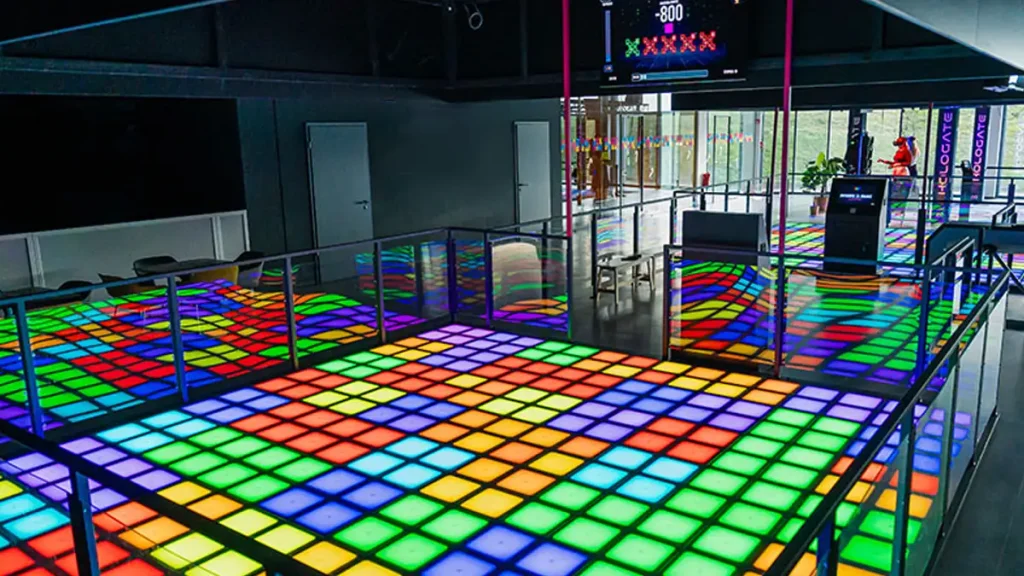
Many active gaming attractions are built around an Interactive Game Floor system.
The floor becomes the main controller.
Players step on LED tiles, avoid certain colors, follow patterns, or compete against each other. The system responds instantly, creating a fast and visual experience.
This is one reason interactive floors are becoming popular in FECs, trampoline parks, arcades, and shopping mall attractions.
They are easy to explain, easy to watch, and easy for groups to join.
Compared with VR, an interactive floor is more visible to people nearby. That visibility can help attract players without needing much explanation.
Connection to Pixel Floor Games
A pixel floor game is one of the easiest ways to understand this type of active gaming.
Players step on light-up floor tiles and react to changing patterns.
The rules are usually simple:
- step on the right color
- avoid the wrong color
- move faster as the level increases
- compete with friends
This style of gameplay is clear, visual, and highly repeatable.
It also shows why the activate games vs vr comparison is important. Pixel floor-style gameplay gives people a physical, social, and visible experience without wearable equipment.
Industry Trend: Why Active Gaming Is Expanding
Active gaming is not just a small trend.
The entertainment industry has been moving toward experiences that combine physical activity, digital interaction, and social gameplay.
Blooloop has described Activate as a physical, team-based gaming experience combining sports and video games, and has reported Activate’s expansion into new international markets.
This trend matters because it shows a larger shift in what players want.
People are not only looking for screens. They want experiences they can move through, share with friends, and remember afterward.
That is why many venue owners are now comparing activate games vs vr before investing in a new attraction.
Real-World Example: Why Some Venues Choose Active Gaming
Imagine a mid-size FEC planning to add a new premium attraction.
At first, VR looks like an obvious choice. It is modern, recognizable, and easy to explain as “immersive entertainment.”
But after testing the operation, the venue notices several issues:
- players need help wearing the headset
- staff must explain controls
- each headset needs cleaning after use
- session turnover is slower than expected
- spectators cannot easily see what the player is experiencing
Then the venue tests an active gaming room.
The difference is clear:
- groups can enter together
- rules are understood quickly
- people outside can watch the action
- players often ask to try again
- sessions rotate faster
This does not mean VR is useless. It means active gaming may fit better when the goal is high visibility, fast turnover, and group participation.
That is the real business side of activate games vs vr.
Which One Is Better for Your Venue?
There is no universal answer.
The best choice depends on your audience, space, budget, staffing, and business model.
But there are clear situations where one option makes more sense than the other.
Choose Activate-Style Gaming If You Want
Choose active gaming if your venue needs:
- high visibility
- group gameplay
- fast player turnover
- strong social interaction
- low equipment handling
- repeatable challenges
- a game that looks exciting from outside
This is especially useful for FECs, trampoline parks, arcades, and mall attractions where group participation matters.
Choose VR If You Want
Choose VR if your venue needs:
- immersive storytelling
- simulation-based gameplay
- individual player experiences
- controlled digital environments
- headset-based adventures
VR can still work well when the goal is deep virtual immersion rather than fast group interaction.
Final Thoughts
The comparison of activate games vs vr is not about which technology is more advanced.
It is about which attraction works better for your venue.
VR offers strong digital immersion, but it also requires headsets, cleaning, setup, and more staff support.
Activate-style active gaming offers physical movement, social play, visible action, and faster player flow.
For many FEC environments, active gaming provides a stronger balance of engagement, efficiency, and repeat play.
If your goal is to create an attraction that people can see, understand, join quickly, and play with friends, active gaming may be the better choice.
FAQ
-
hat is the main difference between Activate-style games and VR?
Activate-style games happen in a real physical room, while VR uses headsets to place players inside a virtual environment.
-
Is active gaming better than VR for FEC venues?
For group play, visibility, hygiene, and throughput, active gaming often has practical advantages over VR.
-
Does VR require more maintenance?
Yes. VR usually requires headset cleaning, charging, controller management, software updates, and more staff assistance.
-
Which option creates more repeat play?
Active gaming often creates strong repeat play because rounds are short, competitive, and easy to replay.
-
Can interactive game floors replace VR?
They may not replace VR in every venue, but interactive game floors can be a strong alternative for operators who want social, physical, and visible gameplay.