
What Is an Interactive Game Floor? (Complete Guide)
Discover how an Interactive Game Floor works, gameplay, cost, and ROI for commercial venues.
Introduction to LED Interactive Gaming Systems
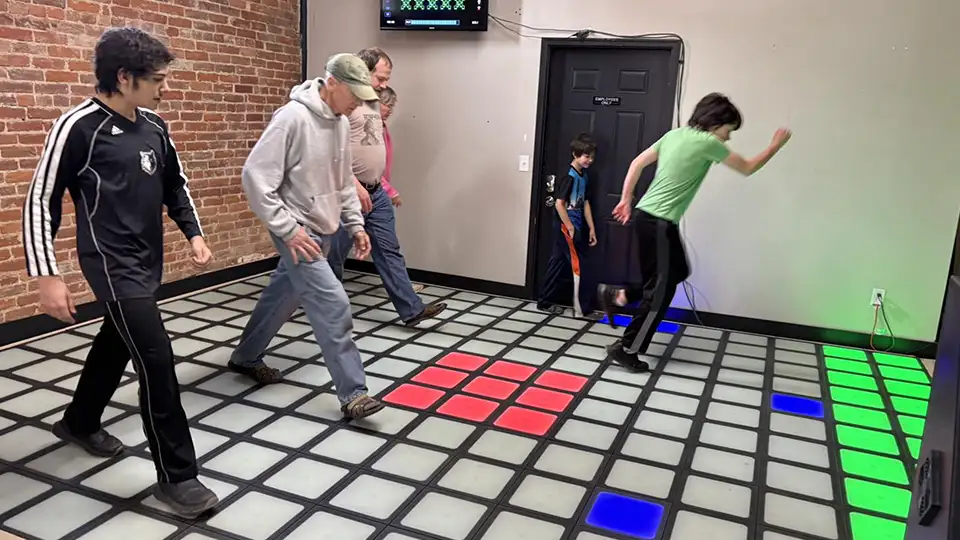
If you are planning to build a modern entertainment venue, understanding what an Interactive Game Floor is—and how to deploy it commercially—is essential. Over the past few years, immersive attractions inspired by activate game systle experiences have rapidly gained popularity across family entertainment centers (FECs), trampoline parks, and shopping malls. These systems combine motion tracking, LED feedback, and competitive gameplay into one scalable platform.
An Interactive Game Floor is a motion-based LED system that allows players to interact with digital games through physical movement. Unlike traditional arcade machines, a pixel game floor or led games floor creates a fully interactive environment where players move, react, and compete in real time. This shift from passive to active entertainment has significantly increased customer engagement and repeat visits.
Key Takeaways
An Interactive Game Floor combines LED tiles, sensors, and game logic
- An Interactive Game Floor combines LED tiles, sensors, and game logic
- Inspired by activate game systle, focusing on physical interaction
- Modular and scalable for different commercial spaces
- High ROI driven by replayability and throughput
- Supplier selection impacts long-term performance
What Defines a Modern Interactive Game Floor
A modern Interactive Game Floor system is designed for commercial environments. It integrates LED panels, motion sensors, and software into a unified platform that reacts instantly to player movement.
Core System Components
A standard system includes:
- LED floor tiles with anti-slip surfaces
- Pressure or infrared sensors
- Central control system
- Game engine software
How the System Works
When a player steps on a tile, the sensor detects movement and triggers a response from the game system. The LED panel changes color or pattern in real time, creating a dynamic interaction loop.
Example Gameplay Logic
For example, in a pixel game floor, players may:
- Step on specific tiles to score points
- Avoid dangerous zones like Lava Floor
- Follow light sequences under time pressure
This real-time interaction is what differentiates it from traditional arcade experiences.
Interactive Game Floor vs Activate Games
Many investors compare an Interactive Game Floor with Activate-style game rooms.
Key Differences
| Feature | Activate Game Rooms | Interactive Game Floor |
| Space | Multiple rooms | Room or Open layout |
| Cost | High | Medium |
| Gameplay | Floor only | Walls + floors |
| Scalability | Limited | Modular |
| Maintenance | Complex | Easier |
Which One Is Better?
For most commercial operators, an Interactive Game Floor offers better scalability and lower entry cost.
Practical Recommendation
If your venue has limited space or budget, choosing a modular system is usually the smarter investment.
Popular Game Modes and Player Experience
A major strength of an Interactive Game Floor is gameplay diversity.
Core Game Modes
- Speed Run
- Memory Grid
- Lava Floor Mode
- Team Battle
Speed Run Memory Grid Lava Floor Mode Team Battle
Gameplay determines user retention. The more interactive and competitive the system is, the higher the replay value.
Connection to Activate Style
These modes are heavily influenced by activate game style, focusing on movement, reaction speed, and teamwork.
Core Technologies Behind Interactive LED Game Systems
Hardware Technology
- High-strength LED panels
- Anti-slip tempered surfaces
- Load capacity ≥ 300 kg/m²
Software System
- Real-time game engine
- Scoring system
- Multiplayer support
System Stability
Commercial systems are designed for continuous operation, ensuring durability and safety.
Product Specifications
| Feature | Specification |
| Tile Size | 300mm x 300mm |
| Material | Tempered glass + ABS |
| Load Capacity | ≥300 kg/mz |
| Waterproof | IP65 |
| Sensor | Capacitive Sensing |
| Game Modes | 99+ |
| Lifespan | 50,000+ hours |
Commercial Applications and ROI Strategy
Application Scenarios
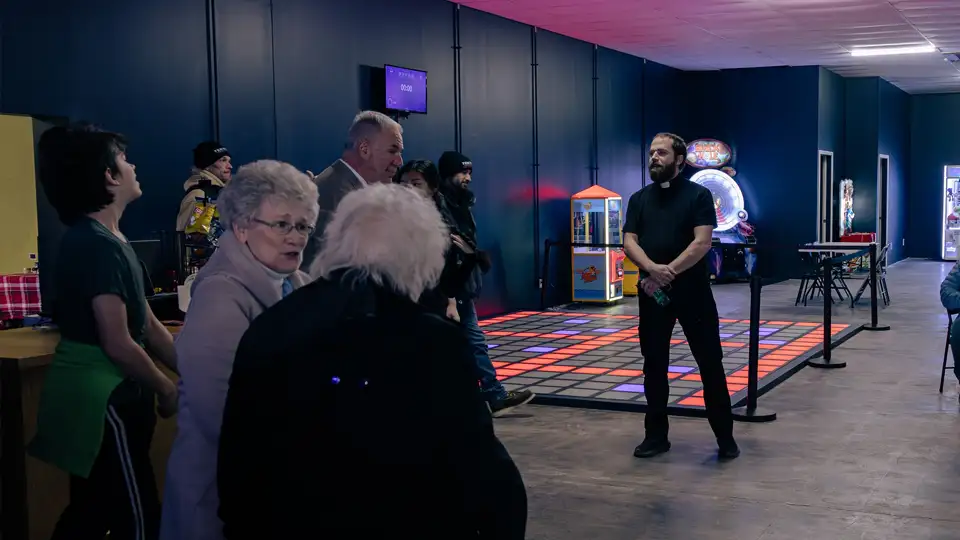
- Family entertainment centers
- Shopping malls
- Fitness spaces
- Event venues
Revenue Model
- Pay-per-play
- Membership
- Group packages
ROI Insight
A well-operated Interactive Game Floor can achieve ROI within 6–12 months due to high player turnover.
How Much Can an Interactive Game Floor Earn?
Operational Metrics
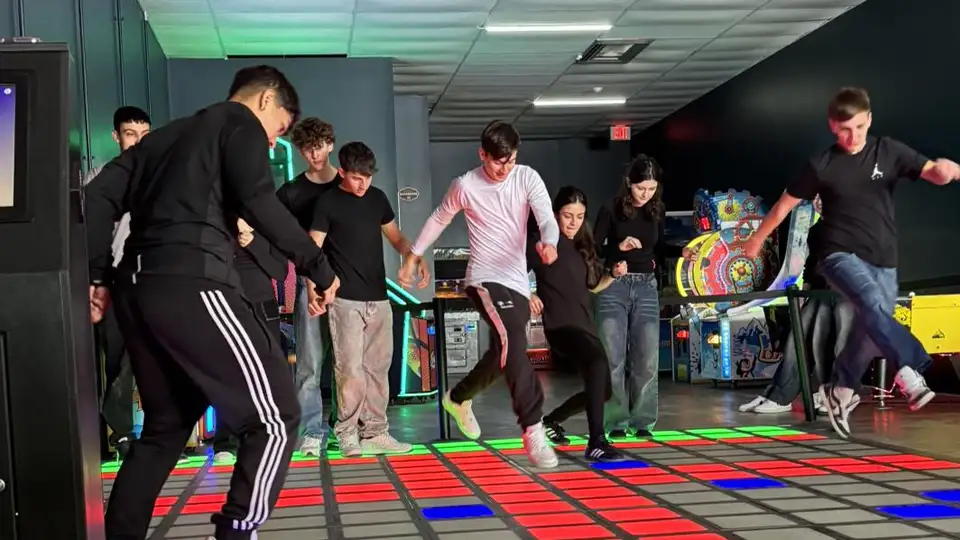
- Session time: 3–8 minutes
- Players per session: 2–6
- Hourly capacity: 40–100 players
Revenue Potential
Higher throughput = higher revenue.
Profit Optimization Tips
- Optimize pricing
- Increase replayability
- Add competitive modes
Planning Your Interactive Game Floor Layout
Planning Your Interactive Game Floor Layout
Large venues: multi-zone layouts
Small venues: compact modular design
Player Flow Design
- Ensure safety spacing
- Optimize movement paths
Experience Optimization
Open layouts attract players, while enclosed setups create immersive experiences similar to activate game systle environments.Open layouts attract players, while enclosed setups create immersive experiences similar to activate game systle environments.
FAQ
-
What is an Interactive Game Floor?
An Interactive Game Floor is an LED-based system that allows physical interaction with digital games.
-
How much does it cost?
Costs vary depending on size and customization.
-
Pixel game floor vs LED dance floor?
A pixel game floor focuses on gameplay, while LED dance floors focus on visuals.
-
Can I customize games?
Yes, most systems support updates and customization.
-
Yes, most systems support updates and customization.
Yes, modular systems work well in small spaces.
Explore a Complete Interactive Game Floor
Now that you know what an Interactive Game Floor is, see how ours is built for commercial venues durable tiles, sensors and a growing game catalog.